Benue State will commemorate its 50th anniversary of founding in February 2026, a milestone that is anticipated to be observed throughout the entire state.
The Benue South Senatorial District (Zone C) Idoma people, on the other hand, view the anniversary as both a time for celebration and introspection.
No Idoma individual has ever been elected governor of Benue State, fifty years after the state was split off from the former Benue-Plateau State under the military rule of the late Gen. Murtala Mohammed.
The Idoma, the second-largest ethnic minority in the state, have long harbored deep-seated sentiments of political marginalization, exclusion, and unfairness as a result of this situation.
The long-standing agitation has resurfaced with newfound intensity as the 2027 governorship election draws near, compelling political players and stakeholders to address a topic that many claim Benue has ignored for decades: can an Idoma person finally become the state’s most important citizen?
Tiv-speaking regions have maintained a tight hold on political power at the highest level since Benue State was established in 1976.
The first elected governor of the civilian era was Aper Aku (1979–1983), a Tiv man from Ikyobo in Ushongo Local Government Area.
On January 2, 1992, Very Rev. Fr. Moses Orshio Adasu, a fellow Tiv from the Shangev-Tiev district in Konshisha LGA, was elected governor of Benue State on the platform of the Social Democratic Party.
Following the military takeover that installed General Sani Abacha in November 1993, he resigned from government.
George Akume served from 1999 to 2007, Gabriel Suswam from 2007 to 2015, Samuel Ortom from 2015 to 2023, and Rev. Fr. Hyacinth Iormem Alia from 2023 to the present, all of whom were from Tiv-dominated Zones A and B. This trend has continued since the return to democracy in 1999.
Calls for political inclusion and power rotation are primarily motivated by this unbroken path of leadership, according to several Idoma leaders.
The sentiment was once summed up by retired military officer and Idoma land elder statesman Gen. Geoffrey Ejiga (rtd), who stated that the Idoma people have never been given the chance to choose a governor since Benue State was established almost 50 years ago and that this ongoing exclusion cannot go on forever.
According to Ejiga, “Benue needs to try a Ldoma governor to see if it will improve the fortunes of the State as the Tiv governors from 1999 till now have not improved the developmental fortunes of the State.”
Despite all of its promise, he bemoaned the fact that Benue remained Nigeria’s least developed state.
In the run-up to the 2023 elections, General Ejiga cautioned that “the unjust deprivation of the Ldoma people from leadership is bound to create insecurity in the state as very soon the Ldoma youths will revolt creating a massive problem for the Tiv governors and the federal government will be called to help.”
The Tiv people are aware of this marginalization as well.
Elder statesman Wantaregh Paul Unongo emphasized the importance of Benue State having an Idoma governor prior to his passing.
He claimed that this will strengthen the bonds and promote unity among the state’s three senatorial districts.
“I would advise Governor Samuel Ortom to think about choosing the next governor from Idoma land at the end of his tenure: that will give credence to our unity as a state,” Unongo stated at an emergency meeting of stakeholders in Makurdi in June 2018. “I like to see Benue people continue as one united people.”
Gurgur Japheth, a political analyst and administrator from a Tiv-speaking region, blamed internal division rather than outside influences for the Idoma people’s long-standing failure to elect a governor in Benue State.
Yes, according to the 1999 agreement, the governorship was expected to move to Zone C by 2007. Japheth stated, “I was one of those who insisted that this should take place.”
“Power is always taken; it is never given. Additionally, the taking must be accomplished with cooperation, deliberation, and successful math rather than by force.
The primary barrier has always been internal, Japheth said.
“Zone C is the adversary of itself. I always referred to some people’s claims that it should be a two-person show as “kindergarten statements.” Everyone understood it was Zone C’s turn, but several candidates divided the vote and hurt our chances by refusing to resign or streamline support, he added.
Numbers and structural disadvantage in politics
Demography has affected Benue politics for a long time.
The majority of people in the state are members of the Tiv ethnic community, which also controls 14 local government districts in Zones A and B.
Without broad coalitions, the Idoma people, who are concentrated in nine local government areas in Zone C, lack the numerical power to win statewide elections.
Thomas Ker, a political consultant in Makurdi, clarified that party structure and numbers have always been more important in Benue politics than zoning, a fact that has continuously worked against the Idoma.
He stated, “Opponents of zoning have frequently used this demographic reality to argue that governorship should remain open to any zone that can mobilize votes statewide.”
Those that aspired to Idoma but failed
Idoma politicians have made repeated attempts to break the gubernatorial ceiling despite the institutional disadvantage.
Chief Mike Onoja, Steve Lawani, Jerry Agada, Abba Moro, Ralph Igbago, and other prominent Idoma candidates expressed interest in running in 2006, but none of them were able to get a major party ticket.
In truth, Onoja was on the verge of winning the PDP ticket, but when the election was deadlocked, his relatives betrayed him by giving Suswam their votes.
The Idoma people have not before come this close to obtaining the governorship ticket.
Gabriel Suswam received the PDP ticket; he won the race and was re-elected in 2011.
Steve Lawani, the deputy governor at the time, ran for the PDP ticket in 2015; however, Terhemen Tarzor won it and was ultimately defeated by APC candidate Samuel Ortom.
2019 saw Ortom win a second term in office.
Idoma and then-deputy governor Benson Abounu ran in 2023 but was unable to secure the party ticket as Titus Uba prevailed in the primary.
Only Ogbadibo and Otukpo LGA cast ballots for Abounu; delegates from other Benue South LGAs voted against him.
Agitation for zoning to Benue South grew more intense in 2023, but big parties withered away and a number of Idoma candidates ran under smaller parties, splitting the vote. Rev. Fr. Hyacinth Alia of the APC won.
New resentment under the current administration
Although the Idoma agitation predates the current administration, many stakeholders have said that the current administration has made them feel even more marginalized, pointing to what they have called “lopsided governance patterns.”
The local government areas of Otukpo, Ogbadibo, Apa, Agatu, Ado, Ohimini, Okpokwu, Obi, and Oju have all seen an increase in complaints about exclusion.
The perceived inequality in political appointments and employment is one of the most persistent complaints.
Inconsistency among the Idoma people
The Idoma people have found it difficult to unite behind a single platform and create a consensus candidate over the years.
Many candidates from Idoma-speaking regions frequently refuse to resign or come to a consensus on a single candidate during party primaries. Votes are split as a result of this division, which gives the Tiv people a political edge.
Benue South Elders Forum member Noah Mc’Dickson attributed the Idoma people’s repeated electoral failures to political division.
“As I have always said, we are largely the cause of our own problems,” Mc’Dickson stated.
“Three factors determine electoral success: the strength of the party platform, the individual’s personality, and the unity of purpose among the people.”
He described earlier setbacks, saying, “What happened in 2006 remains a painful memory…about six Idoma aspirants emerged.” They were unable to reach a consensus, despite several of us advising them to do so. In the end, we divided our strength while the other two zones each provided one candidate.
Despite endorsements, Mc’Dickson observed that the same pattern of internal divides recurred in 2015 and even in the most recent election.
He emphasized that party-based political division has worked against the Idoma:
Nowadays, people only consider politics from a political perspective. “The advantage will be ours if we unite and back a candidate from our zone,” he said.
In order to advance political education and enlightenment, he proposed holding political conferences. Benue South will be able to deliver a governor in 2027 once we have that unity. We have to keep going. Unity is still essential.
Pro-inclusion groups’ voices have contributed to the exclusion narrative.
Air Vice Marshal (AVM) Monday Morgan (rtd), a former Chief of Defence Intelligence and National Coordinator of the Benue Rebirth Movement (BRM), stated at a recent political event in Abuja that the Idoma people are not a part of the political equation in the Benue APC and described what he called persistent sidelining as unacceptable.
He clarified that although the Benue Rebirth Movement (BRM) has been speaking with Tiv leaders for years in an effort to provide the Idoma a chance to rule Benue State, the intended political results have not yet been achieved.
The position and debate of Kennedy Angbo
Zone C elected leaders have participated in the discussion as well.
The position that Hon. Kennedy Angbo, the member of the Benue State House of Assembly for the Otukpo/Akpa State Constituency, has expressed has garnered a lot of attention.
Angbo publicly declared that he does not see an Idoma governor in 2027, contending that the agitation should be postponed until 2031 and that the current governor, Rev. Fr. Hyacinth Alia, should be given a second term before thinking about a transfer of power to Zone C.
Many people have criticized his position because they believe it betrays the interests of Zone C.
Government’s stance
Claims of ethnic bias have been denied by administration officials, who maintain that policy priorities, security concerns, and scarce resources—rather than tribal sentiment—drive governance decisions.
According to a government source, the governor is in charge of Benue State as a whole, and appointments are made based on trust and ability, and projects are happening throughout all zones.
Can history be altered in 2027?
A new generation of well-known Idoma leaders is now emerging, bringing with them both promise and a test of solidarity.
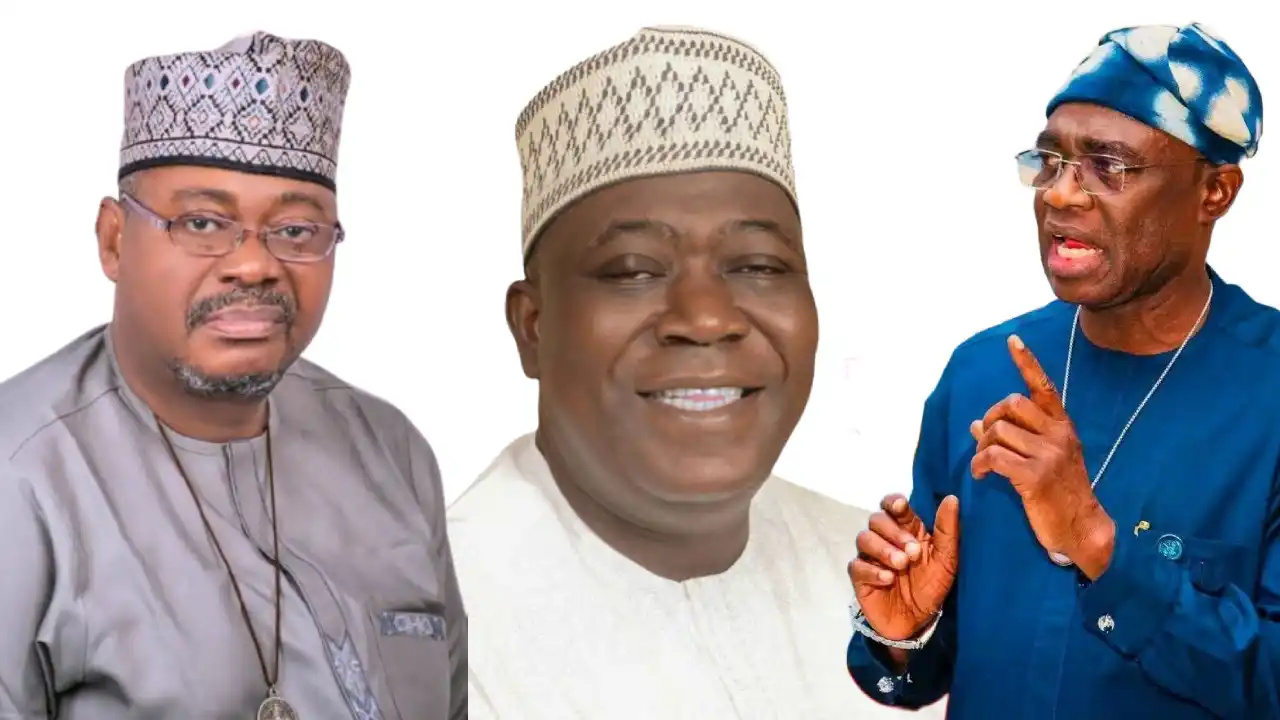
Approximately five Benue South residents have expressed interest in the top seat thus far.
Among them is Madaki Ameh, a grassroots political activist and lawyer running for the PDP seat.
Tony Obekpa from Owukpa, Oyeije Ocheakiti Ogbenjuwa, and Andrew Abah, a reputable technocrat, are all running for the APC ticket.
Speaking about the likelihood that the Idoma would produce a governor in 2027, candidate Arc Tony Obekpa emphasized the need of community cohesion.
Obekpa stated to our reporter, “I am not entering the race to look for a position,” indicating that his goal is not self-serving. In order to run for governor, I am running for a ticket.
“I’m not seeking the position of deputy governor. I’ll return to my construction site if they refuse to give me the ticket. Architect is what I do. I’ll feed my family, construct my homes, and mix concrete.
His campaign, he continued, is based on dedication and service: “I am not blackmailing anyone.” However, I am aware of my part if we are called in early to save the party. I should be one of the first two if you want two members in the APC. The money I spent is known to me. My input is known to me.
Analysts concurred that in order for an Idoma governor to be elected in 2027, a number of conditions must be met, such as cooperation among Idoma elites, obtaining a major party ticket, forming strategic alliances among Tiv regions, and engaging in negotiation rather than emotional agitation. Without them, the past might recur.
Right now,
Fifty years later,
As Benue celebrates its 50th anniversary, the Idoma’s pursuit of the governorship has evolved beyond a mere political aspiration. It has to do with trust, equity, and belonging in the Benue project.
It’s unclear if 2027 will bring the lengthy wait to an end. However, it is evident that the agitation is getting louder rather than lessening.