In an effort to modernize two of Nigeria’s largest marine hubs, Nigeria and the UK signed a historic £746 million (about $997 million) ports infrastructure contract yesterday. This action is anticipated to increase trade, generate jobs, and strengthen bilateral economic connections.
Additionally, according to President Bola Tinubu, Nigeria and the UK need to deepen their long-standing partnership by boosting mutually beneficial economic collaboration and fortifying trade connections.
According to a statement from his spokesperson, Bayo Onanuga, Tinubu commented during his meeting with UK Prime Minister Sir Keir Starmer in Downing Street, when the two nations reached an agreement to renovate two significant ports in Lagos.
The President called his first state visit to the UK in 37 years “very thrilling and significant” in terms of improving bilateral ties between Nigeria and the United Kingdom.
Prior to bilateral talks in Downing Street, the Nigerian leader stated, “We cannot forget the institutional development we have enjoyed over the years,” pointing out that the topics of discussion included trade, the economy, climate change, terrorism, and broader global issues.
“We will talk more about the significant economic reforms that Nigeria is currently undergoing in our bilateral talks. The world is currently facing difficulties. Nigeria is affected by global events as well. I’ve watched how you responded to some developments on TV.
The Nigerian leader stated, “As you correctly pointed out, my response is the economy and the welfare of the people and how we should collaborate to improve the livelihood of our people.”
Prime Minister Starmer called the visit historic in his speech and emphasized the importance of the State Banquet the King threw for the Nigerian delegation.
He reiterated how much the UK values its long-standing relationship with Nigeria, especially the strong interpersonal links that keep both countries stronger.
He pointed out that both nations currently work closely together in sectors like the economy, defense, and security, and he claimed that the recently signed agreements on trade and commercial dealings show a common commitment to expanding participation on international issues and strengthening cooperation.
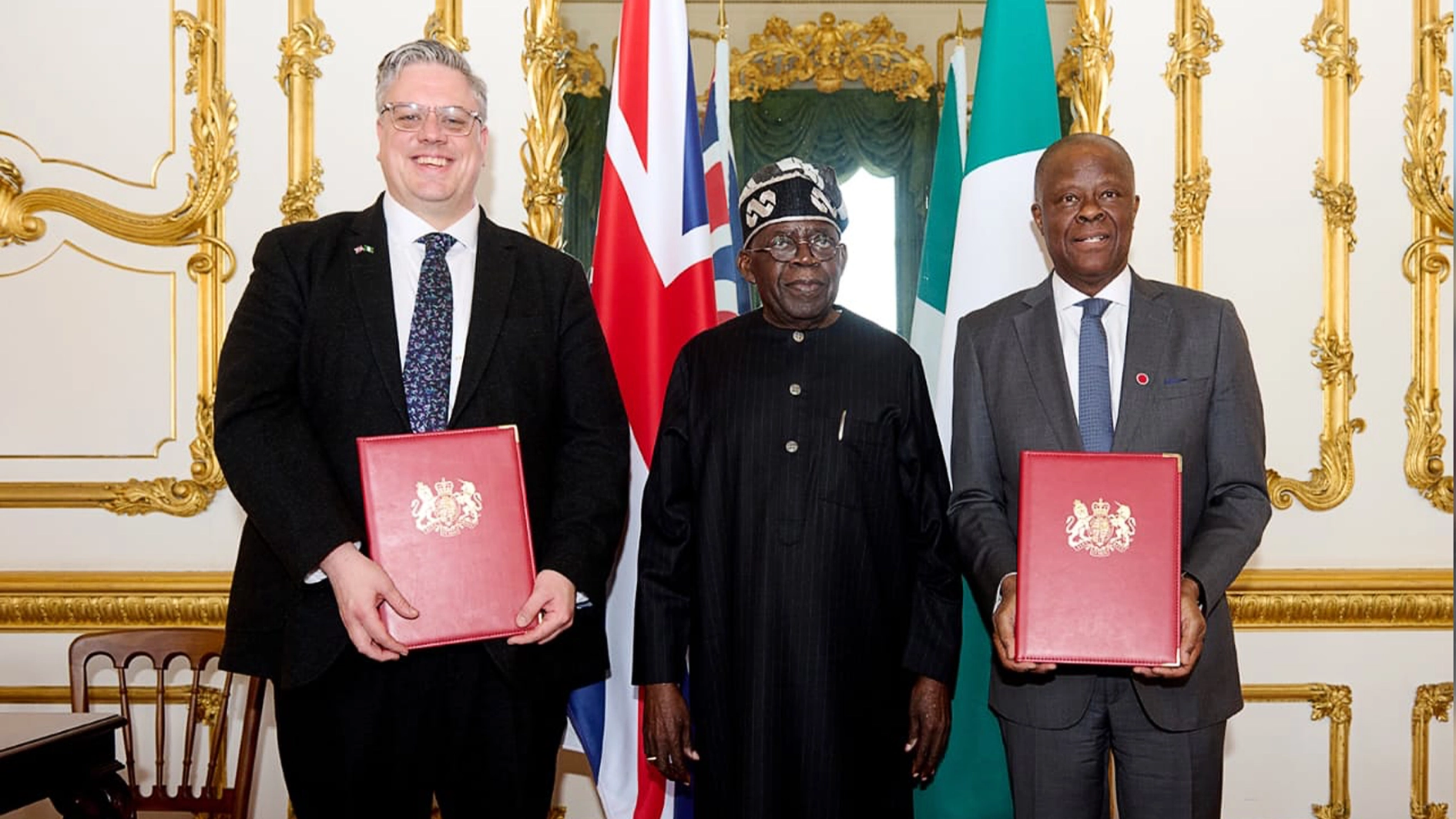
Later, President Bola Tinubu and his wife Oluremi Tinubu attended the £746 million deal for the modernization of the infrastructure at Lagos’ Apapa and Tin Can Island ports at Lancaster House.
Wale Edun, Nigeria’s Minister of Finance and Coordinating Minister of the Economy, and Blair McDougall, UK Minister for Small Business and Economic Transformation and Parliamentary Under-Secretary of State, signed the deal on behalf of the British government.
Edun clarified that the agreements align with Nigeria’s economic, energy, and infrastructure development priorities.
In keeping with the administration’s “Renewed Hope Agenda,” he pointed out that the growing focus on bilateral relationships will aid in luring the kind of investment needed to increase economic activity, generate jobs, and lower poverty.
According to him, the agreements demonstrated the two nations’ increasing mutual trust and confidence as well as their shared commitment to producing real economic results for both Nigeria and the UK.
The agreement, which was completed yesterday, would use a financing package guaranteed by UK Export Finance (UKEF) to finance the renovation of the Lagos Port Complex (Apapa Quays) and the Tin Can Island Port Complex.
Delivered under UKEF’s Buyer Credit Facility and overseen by Citibank N.A.’s London Branch, the initiative is anticipated to boost both countries’ economies by hundreds of millions of pounds and support thousands of skilled employment.
British companies would receive contracts worth at least £236 million under the accord, including a record £70 million steel supply agreement given to British Steel. For the port improvements, the company will supply 120,000 tonnes of steel billets to Hitech Nigeria and ITB Nigeria, two construction companies.
The deal, according to UK Secretary of State for Business and Trade Peter Kyle, is a major boost for British industry and UK-Nigeria relations.
“This is a significant victory for British Steel, made possible by UK Export Finance, which is a testament to the quality of UK-made steel and the booming UK-Nigeria relationship,” he stated, following our historic Steel Strategy.
Adegboyega Oyetola, Nigeria’s Minister of Marine and Blue Economy, stated that the program complemented the federal government’s efforts to fully realize the marine industry’s potential.
“Nigeria has made significant progress with the modernization and improvement of its ports. We are setting the groundwork for a new age of effectiveness, openness, and competitiveness in Nigeria’s port system through strategic alliances like this one with the UK,” he stated.
In addition to improving transparency and increasing government revenue, Oyetola stated that the deployment of digital and automated systems and modernized infrastructure would drastically cut down on logistical expenses, cargo stay times, and vessel turnaround times.
Both nations also signed a Memorandum of Understanding (MoU) to discuss potential future trade and investment opportunities as part of the larger engagement. Nigeria’s priority project pipeline was specified in the framework, which also sought further UKEF-backed funding. UK suppliers were expected to play a major role.
Additionally, British Steel’s CEO, Allan Bell, called the contract a “record-breaking” achievement for the business.
“This deal is a huge vote of confidence in British Steel and UK manufacturing, and it represents us moving from stabilization to building long-term sustainability for the business,” he stated.
The financing agreement was one of the biggest export credit agency-backed facilities in West Africa, according to Richard Hodder, Global Head of Export and Agency Financing at Citi.
“Citi, which has been in Nigeria for more than 40 years, is thrilled to assist the Federal Government of Nigeria and the Nigerian Ports Authority in funding this vital infrastructure project,” he said.
In a similar vein, Tim Reid, CEO of UK Export Finance, stated that the transaction highlighted the expanding commercial ties between the two nations.
“This agreement is a significant step forward for trade relations between the UK and Nigeria and establishes the groundwork for a more comprehensive, long-term partnership that will provide opportunities for British exporters throughout the region,” he stated.
In response to growing demand for long-term infrastructure investment and diverse trade ties, UKEF reported that it has boosted its financial support for West and Central Africa by over £3 billion since 2018.
It discovered that almost two-thirds of the country’s goods commerce is handled by the TinCan Port, which began operations in 1977, and the Apapa Port, which was constructed during British administration in the early 1920s.