

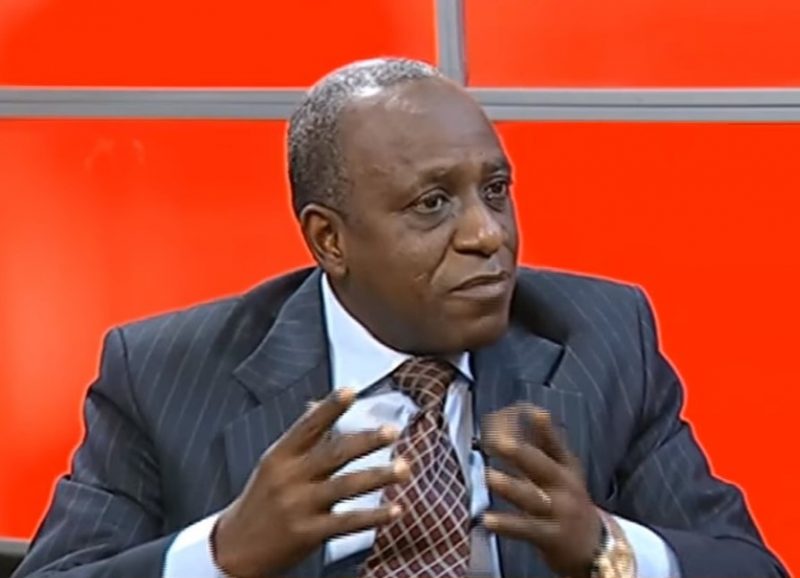
Chuks Nwachuku, lawyer and former presidential candidate. In this interview, JOY ANIGBOGU talks about the reasons why there are too many election petitions after every election cycle in the country and why Nigerians do not trust the courts. He also specifically asks the Supreme Court to question the process of an election, to place premium on the process and not the outcome of the election, among others. **Excerpts:**
What do you think of the high number of election petitions after every election cycle in Nigerian?
Summary of the analysis by AI going through different sections of the electoral act comparing with the provision of the law in Kenya. The bottom line is that our judiciary has a policy of protecting the outcome of elections. They think more, they protect the result over protecting the process. They care more about protecting the outcome of the election than protecting the process that produced that outcome. The process of election petitions, not only the standard of proof but the process of proving, it’s impossible. For example, this polling unit by polling unit focus, not giving enough attention, despite the efforts of the electoral act, to electronic evidence, to documents. This emphasis on producing physical witnesses, agents or political parties to give evidence. When in the world? The whole process is around 180 days from start to finish. So, what time do you have to take physical evidence or agents from a polling unit to another polling unit? So the result cannot be challenged on the basis of the evidence. The instruments of challenge are not accepted by the Supreme Court. The duplicates results , for instance the results . The instruments by which you can challenge outcome . But the key instrument is the Independent National Electoral Commission (INEC) Result Viewing (IReV) portal. The law has acknowledged the difficulty faced by the parties in proving their case, in proving the transparency of an election. That is why the law provides for the IReV, there everything will be seen. And now you went to an election, and that IReV, which is the means given to the petitioner to prove his case, was disabled. Still, you expected the petitioner, “Well, that’s your own business. If IReV is off, it was a glitch. I mean that’s your burden”. Now you have to go from polling unit to polling unit to bring your agents.
Why can’t it be?
You can’t carry a bunch of result sheets. Many Nigerians believe that you can go and pick all the result sheets of your polling unit agents and then bring to court to show that you won. they will not accept it. No. “Each polling unit, you brought a result and there has to be an agent through whom that result was presented and who, according to them, can speak to that document. So you can’t challenge outcome in Nigeria, especially presidential election, unless the court said it wants to change the outcome. In Kenya, however, it is different. Remember that the reason they come to court is because they don’t trust outcomes. So the only thing citizens can look to, can of a certainty interrogate is a process. Oh, INEC was meant to do this. They did not do it. This was destined to be. It never happened. Now, whether the result at the end of the day was genuine, you can’t expect the citizens, the petitioner to begin to establish that. I know the law is you have to prove a substantial irregularity that affected the result. But there is a level of irregularity that leads to the suspicion that no reasonable person can have faith in that outcome. So what citizens want of the Supreme Court is a court that protects that process. So they know that when the process is not followed, and what is not followed about the process is fundamental to achieving a free and fair election, Nigerians expect the Supreme Court to come out and say, no, we’re canceling this election. There is no way we can expect Nigerians to have confidence in this election, because the confidence is not in INEC. The law does not expect Nigerians to have confidence in INEC. “But, the law does not expect that Nigerians will put confidence on the result declared. As I always tell people, the law does not expect Nigerians to have confidence in the court. And that is where I differ from a lot of people. Confidence in the court is necessary for the smooth administration of justice. But a person coming to court is not expected to believe in a verdict which is there. Court will tell you how it comes to its conclusion. It is that process by which the court comes to its conclusion that a citizen is expected to have confidence in, not the bare pronouncement, not the result, but the conclusion of the court at the end of the day. If the evidence points one way, and the conclusion points another way, you don’t expect a citizen or a litigant to have confidence in that.” We believe in the court, we respect the court but there is no duty to believe in you just because you are a judge.
Who says that?
We believe in the process and we believe in you. It is the process that gives the judge confidence. This was even attested to by the Chief Justice of Nigeria (CJN) in her speech. That it is an adjudicatory process. When they say justice must not only be done, it must be seen to be done. It’s not enough that the judge says, okay, trust me, I’m the judge, I have pronounced justice here, you are guilty, you are liable. No. Justice must be seen to have been done. So it’s process. I think the Supreme Court has not fully understood that it is not the results of the election that Nigerians have at heart but the process of the election. They want the courts to question, not the person at the end of the day. They will not file any election petition if the law is that they should have confidence on the figure. The process, the Supreme Court is not putting enough premium on the process of election. The Supreme Court does not see the conduct of election by INEC as part of administrative law. The conduct of election by the INEC is not different from any other executive function where a function affects the rights and duties of citizens which the court has power to interrogate not with respect to what is concluded at the end of the day but the process by which that executive function was performed. I think that, with all due respect to our judiciary, I don’t know whether in their heart of hearts they expect that Nigerians should trust them. If I went to elections now, I would not go to election petition again. It’s a waste of time A lot of Nigerians have seen what I know about election petition. There is no point in filing an election petition. In fact they are even punishing lawyers for filing an election petition. So you’re still protecting the result. So the Nigerians will not want to go to court again. This is what I am afraid of. My fear is, this time, they will rather die on the streets than go to court. Let them help themselves, because they will tell you.

