

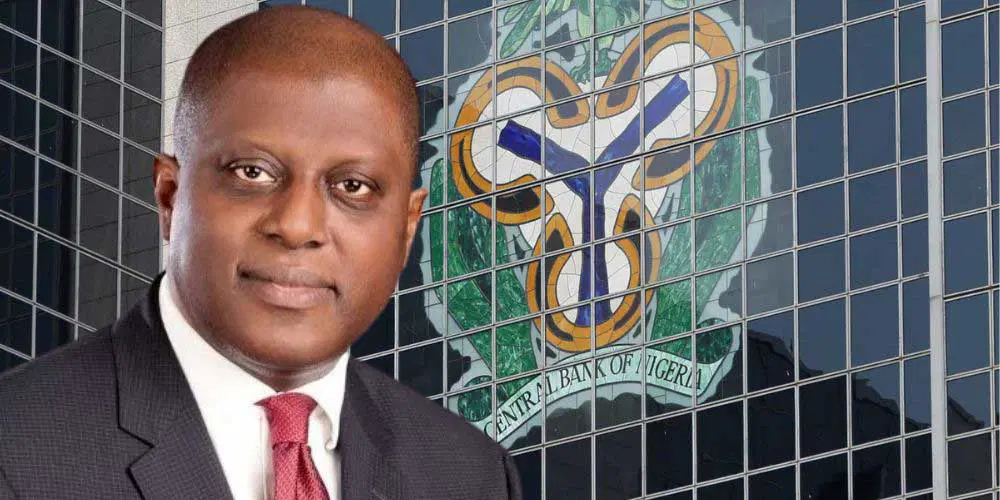
Nigeria’s financial system has been under the shadow of regulatory warnings, weak enforcement and recurring compliance failures for years.
But with the recent wave of sanctions by the Central Bank of Nigeria (CBN), it appears to be a more decisive era, one where penalties are not just corrective measures but instruments capable of reshaping the behaviour, structure and credibility of the banking and financial ecosystem.
Recently, the apex bank had ordered banks to freeze accounts, assets and transactions linked to six individuals and four bureau de change (BDC) operators accused of terrorism financing.
The directive, contained in a circular dated 24th June 2026 and supported by the June 18 update of the Nigeria Sanctions List, mandates regulated institutions to identify and freeze, without prior notice, all funds, assets and economic resources of the designated persons and entities.
It also applies to companies owned directly or indirectly to the extent of 50 per cent or more by those named, so the sanctions could be broader than the initial list suggests.
For Nigeria’s financial sector, the importance is not in the names on the list but in the compliance posture that the CBN is now demanding.
In practical terms, the move raises the bar for all regulated institutions. Now, besides the standard customer screening, commercial banks, merchant banks, payment service banks and other financial service providers are expected to be constantly checking accounts against updated sanctions lists, identifying aliases, tracing beneficial ownership and detecting attempts to move funds through third parties or shell structures.
That will certainly put compliance departments more into the centre of day-to-day banking decisions. Transaction monitoring systems need to get more responsive, more integrated with sanctions intelligence, and sharper. In an environment where even indirect control can lead to a freeze, institutions may be more conservative in opening accounts, clearing foreign exchange transactions or dealing with customers with opaque ownership structures.
A compliance officer at a commercial bank might put it like this: the risk is no longer whether a customer is sanctioned but whether the customer is connected to a sanctioned network via ownership, control or transactions. That distinction is important because the CBN’s directive makes it clear that institutions could be penalized for not identifying hidden links.
BDCs in the hotseat
It is particularly important to include four bureau de change operators, as it brings renewed focus to a segment that has long been prone to abuse. BDCs are legitimate actors in Nigeria’s foreign exchange ecosystem but have also been associated in public discourse with weak controls, cash-heavy transactions and exposure to illicit flows.
The apex bank, by naming Generation Currency Bureau De Change Limited, Manhattan Bureau De Change Limited, Nine to Nine Exchange Bureau De Change Limited and Abbal Bako & Sons Bureau De Change Limited, is effectively saying that the informal end of the FX market is not outside the reach of sanctions enforcement. That will likely compel the broader BDC sector to tighten record-keeping, customer identification and transaction screening.
That’s where illicit finance cases come in, the first policy response is often to target the channels that make quick, fragmented transfers possible.” A former regulator or anti-money laundering expert would likely see this as part of a broader pattern.
One of such channels in Nigeria are the BDCs. The current sanctions, then, are a warning to the rest of the industry that lax controls could lead to more oversight or tougher restrictions.
FX market impact
“I think the wider currency market could also be impacted. While targeted, the sanctions have the potential to change behaviour system-wide by making banks and BDCs more cautious about counterparties, especially in high-risk and/or cash-intensive or cross-border transactions.
That could increase transparency over time, but in the short term it could slow down some deals as institutions become more defensive.
The outcome for legitimate businesses reliant on quick FX access, notably importers and small traders, could be mixed. On the one hand, tighter controls could reduce the risk of dirty money entering the market and increase confidence in formal channels. But tighter screening can mean more paperwork, more delays and more friction in a market that is already sensitive to policy shifts.
This is why experts may see the sanctions as part of a bigger effort to discipline Nigeria’s FX ecosystem. If the message is sustained it could encourage more reporting discipline and more formalised transactions. But if enforcement is uneven, the market may simply adapt around the restrictions, leaving the underlying vulnerabilities intact.
International co-ordination
The sanctions also demonstrate how close Nigeria’s implementation is now to international counter-terrorism financing efforts. The Nigeria Sanctions Committee said the designations were made in conjunction with the United States Department of the Treasury’s Office of Foreign Assets Control under Executive Order 13224, as amended, and welcomed the U.S. action against Mukhtar Muhammad and associated companies.
That coordination matters because terrorism financing rarely stays in one jurisdiction. Financial trails are frequently traced through domestic accounts, cross-border transfers, cash conversion points and informal exchange networks. If Nigeria’s list of sanctioned entities overlaps with OFAC’s action, this expands the scope of the freeze orders and limits the space for sanctioned actors to shift to another system and continue operating.
However, there is a claim that this is the point at which the policy becomes more effective because it aims to deny access as well as penalize. Authorities make it more difficult for suspicious networks to use international banking railroads, trade channels, or money service companies to transfer wealth by restricting official financial routes and coordinating the response with foreign partners.
Regulatory outcome
The CBN has previously stated that regulated organizations are required to file reports and adhere to stringent anti-money laundering and counterterrorism funding regulations. In contrast to what many market players are accustomed to, the regulator’s directive to file STRs and furnish information about impacted accounts within 48 hours demonstrates a more assertive supervisory stance.
This could result in more frequent regulatory involvement and more invasive surveillance. As the CBN looks for evidence that institutions are implementing the directive rather than just accepting it, off-site assessments, on-site inspections, and penalties compliance checks may become more frequent. This implies that banks will probably pay more for non-compliance.
Longer term, this would encourage Nigerian organizations to spend more on staff training, sanctions screening software, and financial intelligence technologies. Additionally, it might strengthen collaboration between the CBN, the NFIU, the EFCC, the DSS, and the Office of the National Security Adviser, especially where financial trails are a component of larger security investigations.
The sanctions’ greater importance lies in their representation of a change from reactive enforcement to preemptive disruption. Instead of relying solely on criminal prosecution, the authorities are utilizing the financial system as a defense mechanism. Actors who previously depended on opacity now face harsher penalties and quicker identification, which may change incentives throughout the industry.
However, there is also a test of balance associated with the policy. Nigeria has to strengthen regulations without unnecessarily frightening legal market players or making routine transactions so difficult that consumers turn to unofficial channels. A framework that is strict, accurate, and constantly enforced is the most effective in preventing terror financing.
Analysts respond
Speaking to Daily Sun, experts applauded the action and noted that it targets the funding source for extremist organizations.
They claim that because money is required for recruiting, moving, communicating, and purchasing equipment, the general consensus in these situations is that denying a network access to money can be just as harmful as a kinetic hit.
David Adonri, vice chairman of Highcap Securities’ board of directors and a specialist in economics, praised the top bank for taking a proactive approach to the sanctions list.
Focusing on BDCs as potential sources of terrorist financing is a wise move. These actions target illicit flows, which is where they hurt. I hope this is not an isolated incident but rather a part of ongoing push to address the banking system’s underlying weaknesses.
Some of these BDCs have a lot of skeletons in their cupboard and their actions are unregulated. Therefore, it makes sense that the top bank took the initiative, Adonri stated.
However, he said that the mechanics of punishment are the difficulty, not the philosophy.
He continued, “It will depend on how fast institutions can identify all related accounts, how well they can trace indirect ownership, and whether they have systems strong enough to catch disguised relationships before money moves.”
Chief Business Officer Ayodeji Ebo expressed a similar opinion, stating that if enforcement is continuous, the action could boost Nigeria’s banking system’s confidence.
“Unambiguous adherence to penalties can boost anti-money laundering regulations, increase correspondent banking confidence, and demonstrate that the system will not tolerate misuse. However, he clarified that this is only true if regulators consistently enforce the regulations and maintain pressure on banks.
The way Nigeria’s banking system manages illicit finance may change if the current action is followed by ongoing oversight, improved data exchange, and reliable sanctions for violations.
The system will probably take it in and move on if it turns into an isolated headline. Whether or not the pressure persists long after the initial news of sanctions fades will be the true test of success.
Conclusion
As a result, the CBN’s most recent sanctions extend beyond a single circular and list of individuals. They are part of a larger effort to strengthen Nigeria’s financial architecture against misuse, compel institutions to investigate ownership and transaction trails more thoroughly, and coordinate domestic enforcement with international counterterrorism initiatives.
Therefore, the decision may have more to do with how the entire financial system acts going forward than it does with who was frozen last week.

