

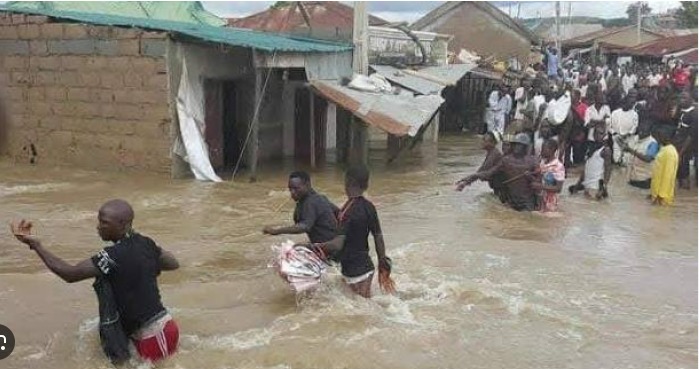
The Centre for Human Rights and Accountability Network (CHRAN) has expressed concern and sorrow over the recent flood disaster in Uyo, the Akwa Ibom State capital and other communities in adjoining local government areas, including Itam in Itu local government area.
The current rains which started last Thursday have wreaked havoc in several parts of the state resulting in loss of lives, destruction of property worth millions of naira and displacement of hundreds of residents battling the harsh socio-economic realities.
Otuekong Franklyn Isong, director of CHRAN, in a statement jointly signed by the secretary, Research and Documentation, Comrade Etimbuk Ekpenyong, described the flooding that started on July 8, 2026 as “a tragic incident that has left many families devastated.
The rights group said it was worried about the preparedness of relevant government agencies in view of the early warning signal by the Nigerian Meteorological Agency (NiMet) which identified Akwa Ibom State as one of the 28 states that are mostly hit by flooding as the thick rainy season commences.
Read Also: Funke Akindele Says Quitting Party Lifestyle Helped Her Make ₦2.7bn
The CSO stated that the volume of destruction seen in Uyo and its neighbouring communities raised questions about the efficacy of the existing flood prevention and management measures, stressing that reactive, instead of proactive, measures should have minimized the current level of destruction to the barest minimum.
The centre also said that the federal government had earlier issued flood forecasts and warnings to several states including Akwa Ibom, thereby giving the authorities enough time to undertake preventive measures such as desilting drainage channels, clearing waterways, strengthening emergency response systems and sensitising vulnerable communities.
“What were the proactive steps taken by the state government to mitigate the effects of the expected floods? It asked. Was there no proper mobilization of the ministries, departments (MDAs) and other relevant agencies to desilt the clogged drainage infrastructure before the rains?
CHRAN also fretted over what it called the lack of visible executive leadership after the disaster, pointing out that Governor Umo Eno had not visited the affected communities or families of the deceased in person, apart from media releases and advocacies, stressing that “the presence of the governor in a crisis situation is a comfort and reassurance to the victims.”

