

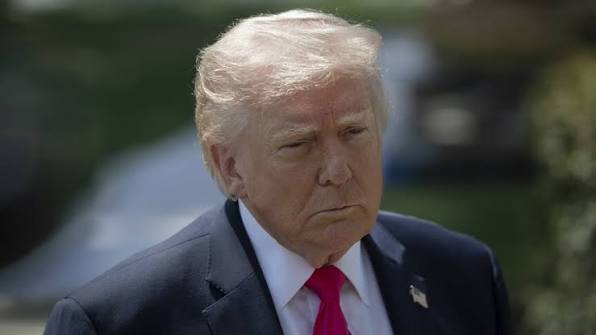
U.S. President Donald Trump said his administration had “very good discussions” with Iran after day-long negotiations on Tuesday, raising hopes the five-month conflict could soon move toward a resolution.
Asian stocks rose and oil prices fell Wednesday after Wall Street hit record highs on optimism that an agreement may reopen the blocked Strait of Hormuz for shipping.
“We were in a negotiation all day,” Trump told Fox News’ “@ Night.” Trump added that the Strait of Hormuz “is going to be open very soon.” “If they back out again, they’re going to get hit fairly hard.”
Trump has warned of major military action if Tehran does not reach an agreement, but also pointed to periodic progress in talks that have yet to end the conflict.
Washington and Tehran are close to an interim deal to reopen the Strait of Hormuz with the support of Oman, Axios reported, citing two regional sources and a U.S. official. The United States planned to announce the deal on Wednesday, the report said.
But an informed source quoted by Iranian state media said any deal with Oman over the strategically vital waterway would be put off “as long as the United States continues to threaten Iran.”
Qatar says advances in diplomacy
Trump has yet to achieve his stated war aims of dismantling Iran’s nuclear programme, limiting Tehran’s ability to attack regional enemies and creating conditions for political change inside Iran.
Iran has stopped most traffic through the Strait of Hormuz, while Washington persists with its blockade of Iran-linked shipping and ports.
Qatar said earlier that mediators were making progress towards ending the conflict although Tehran had earlier denied that talks were taking place.
Read Also: WHO Urges Immediate Action to Contain Ebola Outbreak in DR Congo
Qatar’s Emir Sheikh Tamim bin Hamad Al Thani and President Donald Trump discussed efforts to bridge differences between Washington and Tehran and improve prospects for a lasting settlement during a telephone call on Tuesday, the Emiri office of Qatar said.
Iranian Foreign Ministry spokesman Esmaeil Baghaei said talks with Oman on transit through the strait were constructive and ongoing, aimed at establishing safe shipping routes. The proposed arrangement is intended to protect the sovereign rights and national security of both Iran and Oman, he was quoted by state media as saying.
Iran has long maintained that it should share control of the Strait of Hormuz with Oman. But last week Tehran rejected an Omani proposal that would have introduced shared oversight and voluntary transit fees for ships.
Meanwhile, Yemen’s Iran-backed Houthis have imposed a naval blockade on Saudi Arabia in the Red Sea, adding to disruptions along regional oil export routes. Indian officials said a projectile hit and sank an Indian-flagged vessel off Yemen, killing four crew members and leaving another 14 rescued. Yemen blamed the attack on the Houthis.
Since the conflict began on 28 February, the United Nations’ International Maritime Organization has recorded 64 incidents in the Strait of Hormuz, in which at least 17 seafarers have been killed.
Those casualties are in addition to Iran’s reported death toll of 50 killed and 500 wounded in U.S. strikes since fighting resumed in late June. Iran later said a U.S. strike on Qeshm in late July killed a husband and wife and their two-year-old son.
Iran says more than 3,400 people have died in total since the U.S. and Israel launched their war on February 28. The United States has reported 18 military personnel killed.

