

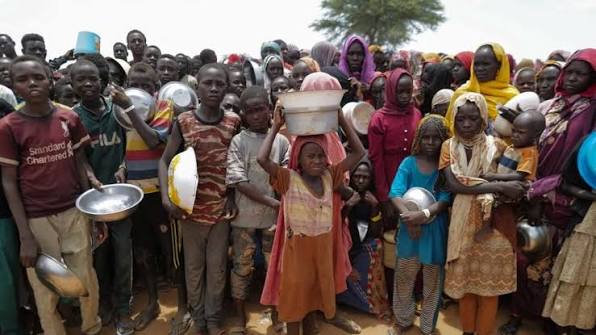
More than 650,000 refugees and asylum seekers in South Sudan could lose access to food aid in coming weeks due to a severe funding shortfall, the UN warned on Friday.
South Sudan was facing one of the world’s worst hunger crises with more than 7.8 million people — over half the population — suffering from acute food insecurity and 2.2 million children acutely malnourished, the World Food Program (WFP) and UN refugee agency (UNHCR) said.
South Sudan is also hosting some 3,000 refugees and returnees weekly from neighboring Sudan, where a conflict that erupted in 2023 has triggered one of the world’s largest displacement crises.
The UN agencies said the last food distributions for the most vulnerable 240,000 refugees in South Sudan are expected in September unless urgent funding is secured.
The 240,000 are the last refugees still receiving food aid, which has already been cut to half rations as WFP scaled back assistance due to funding constraints.
“This is not a scenario of the future. “Sadly, that is a reality that will be within weeks,” WFP Deputy Country Director in South Sudan Adham Effendi told reporters in Juba.
UNHCR Deputy Representative Mesfin Degefu said that no refugees in South Sudan would get food assistance from October if funding is not secured.
Read Also: BOTMA Steps Up Traffic Management With 25,000 Tricycles Registered
Degefu said families are already cutting meals, selling belongings, pulling children out of school and going into debt to survive. Women and children are also at greater risk of exploitation and abuse.
Some refugees have asked UNHCR to help them facilitate their return to Sudan, although the agency says the conditions there are not safe for return.
WFP requires $37 million to sustain refugee operations from October to December. Effendi said that food assistance for some 180,000 internally displaced people is set to expire from October, and that some 600,000 people in famine-risk areas could lose life-saving support by November.
UNHCR said it had received only 28 per cent of the $286 million needed for its operations in South Sudan this year, jeopardizing programs aimed at helping refugees become self-reliant thru farming, vocational training and other livelihood activities.

