

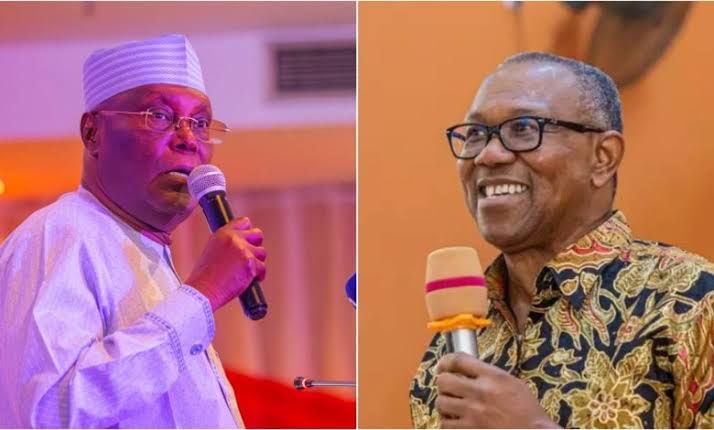
unresolved: who steps down for whom?
Neither Atiku nor Obi has so far shown a willingness to surrender his ticket to the other.
Efforts among some of the smaller opposition parties have fared no better.
A separate coalition involving Accord, the African Action Congress (AAC) and the Social Democratic Party (SDP) has also failed to produce a single candidate.
Sowore has resisted political alliances built principally around removing Tinubu, arguing instead for a coalition centred on the people and fundamental political change.
Adebayo has similarly shown little inclination to surrender his presidential bid merely for the purpose of constructing a single anti-APC ticket.
The effort has been further complicated by Accord’s national leadership publicly declaring support for Tinubu, exposing divisions even among smaller parties over whether to challenge the president or align with him.
Former Cross River State governor and Peoples Redemption Party (PRP) presidential candidate, Donald Duke, has taken a different position.
Duke has repeatedly said he is prepared to step aside for any candidate the opposition genuinely agrees upon, warning that a divided opposition could hand Tinubu victory even without the President securing a majority of the popular vote.
But Duke lacks the national political structure and electoral strength of the leading contenders, limiting the impact of his willingness to sacrifice his ticket.
The fear of another divided opposition is rooted largely in the outcome of the 2023 presidential election.
Tinubu won with 8,794,726 votes, representing about 36.6 per cent of valid votes cast.
Atiku, who contested on the platform of the Peoples Democratic Party (PDP), polled 6,984,520 votes, while Obi, then Labour Party candidate, secured 6,101,533 votes.
Together, Atiku and Obi attracted more than 13 million votes. Although votes secured by different candidates cannot simply be added together on the assumption that they would automatically transfer to a consensus candidate, the figures have sustained the argument that opposition fragmentation considerably eased Tinubu’s path to the Presidency.
It was partly to avoid a repeat of that experience that the post-2023 opposition coalition was conceived.
But with the 2027 election approaching, the same fault lines have resurfaced.
The Presidency has dismissed the opposition manoeuvres. Special Adviser to the President on Information and Strategy, Bayo Onanuga, has argued that even a combined Atiku and Obi ticket would not defeat a Tinubu-Shettima ticket, insisting that the ruling party does not regard the coalition as an electoral threat.
For advocates of opposition unity, however, the problem is increasingly one of time.
INEC’s publication of the final list at the weekend means the major contenders are no longer merely aspirants bargaining for party tickets. They are presidential candidates with running mates, party structures and campaign organisations built around their ambitions.
Any last-minute coalition would therefore require considerably greater political sacrifices than were necessary when negotiations began.
With the opposition unable so far to resolve the Atiku-Obi leadership question, Makinde pursuing his own presidential bid and Sowore, Adebayo and others unwilling to fall behind either of the two leading opposition figures, the prospect of a single challenger to Tinubu is rapidly receding.
Unless there is a dramatic last-minute compromise, the opposition could enter the 2027 election divided along essentially the same lines that shaped the 2023 contest — with its leading candidates fighting not only Tinubu, but also one another.

