

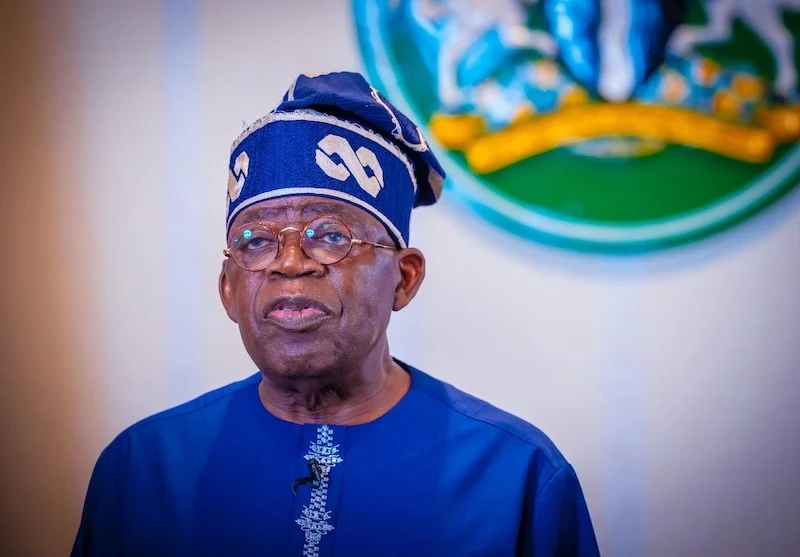
President Bola Ahmed Tinubu will conduct his 2027 re-election campaign without compromising governance, ensuring uninterrupted security operations, economic programmes and international engagements.
The Senior Special Assistant to the President on Media and Special Duties, Tunde Rahman made this known in a commentary titled “Tinubu’s Campaign Strategy and the Unnecessary Political Storm,” defending the President’s decision to limit physical campaign appearances across the 36 states to ensure continuity in governance.
Rahman explained that while President Tinubu would participate in campaign activities, he would equally remain actively engaged in office, ensuring continuity in governance, increasing Federation Account Allocation Committee (FAAC) disbursements to states, sustained funding for security operations and adequate attention to visiting foreign dignitaries and strategic international investors.
He maintained that the approach reflected the President’s determination to balance political engagements with the demands of national leadership, rather than allow months of electioneering to undermine the responsibilities of his office.
Rahman was reacting to criticisms trailing the October 14 inauguration of the APC Presidential Campaign Council, particularly the inclusion of opposition figures and the President’s acceptance of the Progressive Governors’ recommendation, led by Governor Hope Uzodimma, to limit his physical campaign appearances.
The Presidential aide noted that both criticisms reflected outdated political thinking rather than an understanding of the administration’s emerging campaign strategy, which he described as inclusive, results-driven and firmly anchored on the President’s record in office.
Addressing the composition of the Campaign Council, Rahman argued that mature democratic politics should encourage political inclusion rather than exclusion, describing the participation of opposition figures as evidence of President Tinubu’s capacity to build alliances across party boundaries.
Read Also: Kwankwaso Declares: We Won’t Step Down for ADC
He identified Governor Ademola Adeleke of Osun State, a member of the Accord Party; Governor Charles Soludo of Anambra State, of the All Progressives Grand Alliance (APGA); and the Minister of the Federal Capital Territory, Nyesom Wike, of the Peoples Democratic Party (PDP), as prominent opposition figures appointed to coordinate the President’s campaign.
He described the Renewed Hope political coalition as a national movement extending beyond the APC, maintaining that “the willingness of political opponents to participate in the President’s re-election effort demonstrated the growing appeal of his leadership and policies.”
He said; “the inclusion of opposition politicians should therefore be interpreted as a demonstration of political strength rather than evidence of weakness within the ruling party.”
Drawing parallels with previous presidential elections, Rahman recalled that successful re-election campaigns in Nigeria in 2003, 2011 and 2019 were supported by strategic alliances that expanded the political influence and electoral reach of incumbent administrations.
He cited former President Olusegun Obasanjo’s alliance with Afenifere and governors of the defunct Alliance for Democracy in 2003, following his loss of the South-West in the 1999 presidential election, as an example of political coalition-building.
He further recalled that former President Goodluck Jonathan reached out to the incumbent President, then leader of the Action Congress of Nigeria, in an effort to secure electoral support in Lagos during the 2011 presidential election.
Similarly, he noted that the coalition of legacy political parties that produced the APC and facilitated former President Muhammadu Buhari’s victory in 2015 was subsequently consolidated ahead of his successful re-election in 2019.
The presidential aide maintained that these historical precedents demonstrated the importance of political partnerships in winning national elections, describing the current Campaign Council as “a reflection of Nigeria’s diversity, bringing together progressives, technocrats and former political rivals.”
Rahman argued that the inauguration of the Presidential Campaign Council indicated a transition from emotionally driven political mobilisation to a campaign anchored on measurable achievements, policy outcomes and evidence of performance.
He maintained that the expanding political coalition was a reflection of the administration’s reform achievements, while the decision to delegate campaign responsibilities demonstrated an understanding of the competing demands of governance and electioneering.
The presidential aide expressed confidence that the administration’s projects across the six geopolitical zones, complemented by campaign coordinators operating at state, local government and ward levels, would provide the organisational foundation for communicating the President’s achievements and future priorities.
He said; “the central message of the re-election campaign would focus on hope, economic reforms, measurable results and the prospect of improved prosperity, with campaign structures expected to demonstrate how government policies were translating into benefits for ordinary Nigerians.”
Rahman concluded that electoral success would ultimately depend less on the number of states where political rallies were held and more on the extent to which an administration had delivered meaningful improvements to the lives of citizens.
“In the end, elections are not won by who shouted in the most states, but by who delivered in the most homes,”he said.

