

Residents of communities affected by the Boko Haram insurgency in Borno State have recounted the painful memories of violence, displacement and economic hardship suffered during the height of the crisis, expressing renewed hope for recovery and a better future.
The residents said the insurgency left deep scars on families and communities, with many still grappling with the loss of loved ones, destruction of livelihoods and years of fear and uncertainty.
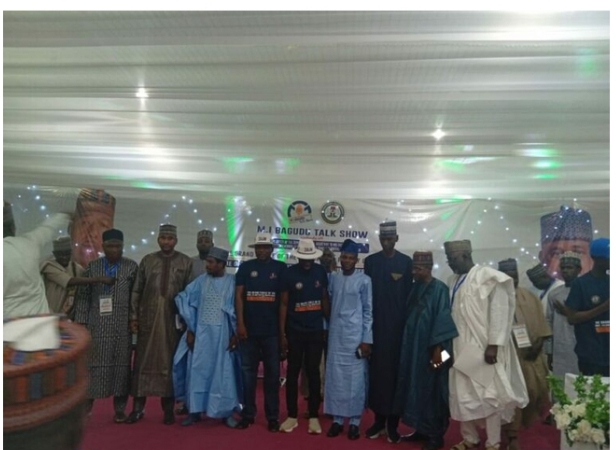
They spoke at a poetry competition organised by M.I. Bagudu Talk Show as part of the grand finale of the Prof. Zulum Poetry Competition and the official launch of Beyond His Era: The Prof. Zulum Poetry Anthology, held on Tuesday in Maiduguri.
The poetry competition featured 400 entries who were later screened to 40, before five of them eventually emerged winners with cash prizes awarded on them.
Speaking at the event, the All Progressives Congress (APC) governorship candidate in Borno State for the 2027 election, Engr. Mustapha Gubio, recalled how the insurgency disrupted everyday life and weakened the local economy.
Gubio, who was represented by the chairman of Gubio Local Government Area, Hon. Mali Gubio, said the devastating effects of the crisis remained a painful part of the state’s history.
“Again and again, we swallowed the madness of those days. The economy could not be saved, and grief became a permanent currency,” he recalled.
He noted that the years of insurgency forced many residents to abandon their homes and livelihoods, while communities struggled to recover from repeated attacks and displacement.
Also speaking, the Senior Technical Adviser on Print and Digital Media to Governor Babagana Umara Zulum, Hon. Abdulrahman Ahmed Bundi, described poetry and other creative platforms as powerful tools for communicating government policies, achievements and the experiences of citizens.
Bundi said creative expression could complement conventional means of government communication, including press releases, newspaper advertisements and official statements.
According to him, poetry has the capacity to tell stories that ordinary speeches may struggle to capture, while preserving ideas, values and experiences for future generations.
“Through poetry, we can tell stories that ordinary speeches will struggle to capture,” he said.
He described poetry as more than entertainment, saying it could serve as an instrument for documenting experiences, celebrating achievements and reflecting the challenges confronting society.
Bundi commended the organisers, participants and guests for supporting the initiative, saying the competition provided a platform for young people to express their understanding of Borno’s past, present and future through creativity.
One of the young poets, Fatima Sabo, in her entry titled: “The Next Generation,” celebrated the leadership and development strides of Governor Babagana Umara Zulum, describing his administration as a source of hope and inspiration to young people.
Sabo described the governor’s leadership journey as one characterised by vision, responsibility, progress and transformation, stressing that genuine leadership should be measured by its impact on the lives of the people.
“There are men whose character speaks louder; men whose humility and respect, whose kindness inspires hope and whose footprints remain in the hearts of the people,” she said.
Reflecting on the experiences of families affected by the insurgency, Sabo said years of violence had disrupted the lives of children and deprived many young people of opportunities to develop their potential.
She, however, said the ongoing transformation in the state had rekindled hope and encouraged young people to dream of a better future.
According to her, the younger generation deserves an environment where they can develop their talents, access quality education and contribute meaningfully to society.
She challenged the audience to see Borno’s development as an example of what committed leadership could achieve.
“If you ask me what excellence looks like, I will not give you a definition. I will point you to Borno and say, ‘Look,’” she said.
Sabo said her presentation was not merely a poem but a reflection of her experiences and an expression of hope for the people of Borno.
“And this is not just a poem. It is an answer,” she added.
The event brought together young creative talents, government officials, sponsors and other stakeholders, with participants using poetry to reflect on leadership, development, resilience, the painful legacy of insurgency and the prospects of a brighter future for Borno.

