

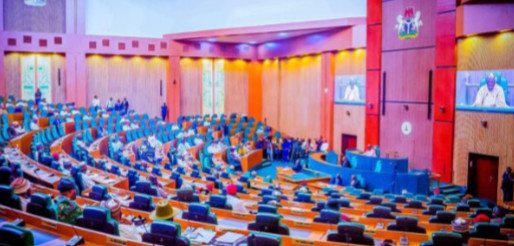
The House of Representatives Public Accounts Committee (PAC) has waded into the dispute between the Nigeria Revenue Service (NRS) and the Tertiary Education Trust Fund (TETFund) over the deduction of four per cent cost of collection on Education Tax, totalling N123.48 billion.
The dispute emerged during the committee’s ongoing consideration of audit queries involving revenue collections and remittances, in which officials of the NRS, represented by Executive Director Shettima Tamadi, and TETFund, represented by Director of Finance and Accounts Dr Gloria Olotu, presented opposing positions on the legality of the deductions.
The committee was informed that the Auditor-General had identified discrepancies between the Education Tax collected by the NRS and the amount remitted to TETFund, prompting further examination of the deductions made as cost of collection.
Presenting its position, TETFund representative, Olotu, explained that the law provides that the four per cent cost of collection applies only to non-oil revenue, not to the entire Education Tax collected from companies operating in both the oil and non-oil sectors.
She disclosed that the Auditor-General initially raised the issue, following which it reviewed the deductions and discovered that the NRS had applied the four per cent charge to the total Education Tax collected without excluding the oil revenue component.
Olotu said the calculations were based on the NRS’s own submissions , which showed the oil and non-oil components of the revenue and established that the excess deductions between 2012 and 2024 amounted to N123,486,953,796.24.
She told the committee that the Fund had written several letters to the revenue agency seeking a resolution of the matter but had yet to receive the requested refund.
READ ALSO:
- NRS: Why Nigeria’s Creative Industry Must Embrace Tax Formalisation
- Gov Yusuf Proposes 30% of ₦1.107trn 2027 Budget for Education
- Tinubu Writes Reps, Seeks Approval To Implement N10.79trn External Borrowing Plan
Responding, the NRS representative maintained that no refund was due, defending the deductions on the basis of the relevant provisions of the law, particularly Sections 15A and 69 of the NRS Act.
Tamadi insisted that Section 69 defines non-oil revenue as all revenue other than that derived from Petroleum Profits Tax (PPT). It therefore maintained that Education Tax paid by oil companies does not constitute Petroleum Profits Tax and remains subject to the four per cent cost-of-collection deduction.
The NRS official explained that oil companies pay Petroleum Profits Tax separately, adding that the Service does not deduct cost of collection from such payments.
The committee, however, observed that the NRS’s interpretation appeared straightforward from an ordinary reading of the provision but insisted on the need to establish the authoritative legal position of the Attorney-General of the Federation (AGF).
TETFund clarified that it had sought the legal opinion of the Attorney-General of the Federation on the matter and would forward the response to the Committee for consideration.
The committee, however, resolved to independently seek the Attorney-General’s legal opinion on the matter and would take a decision.
The panel noted that although the relevant law appeared to provide a definition of non-oil revenue, the disagreement between the two government agencies over its application to Education Tax required further legal clarification.
The hearing was subsequently adjourned pending the submission of written positions requested from TETfund and the legal advice of the Attorney-General of the Federation.

