

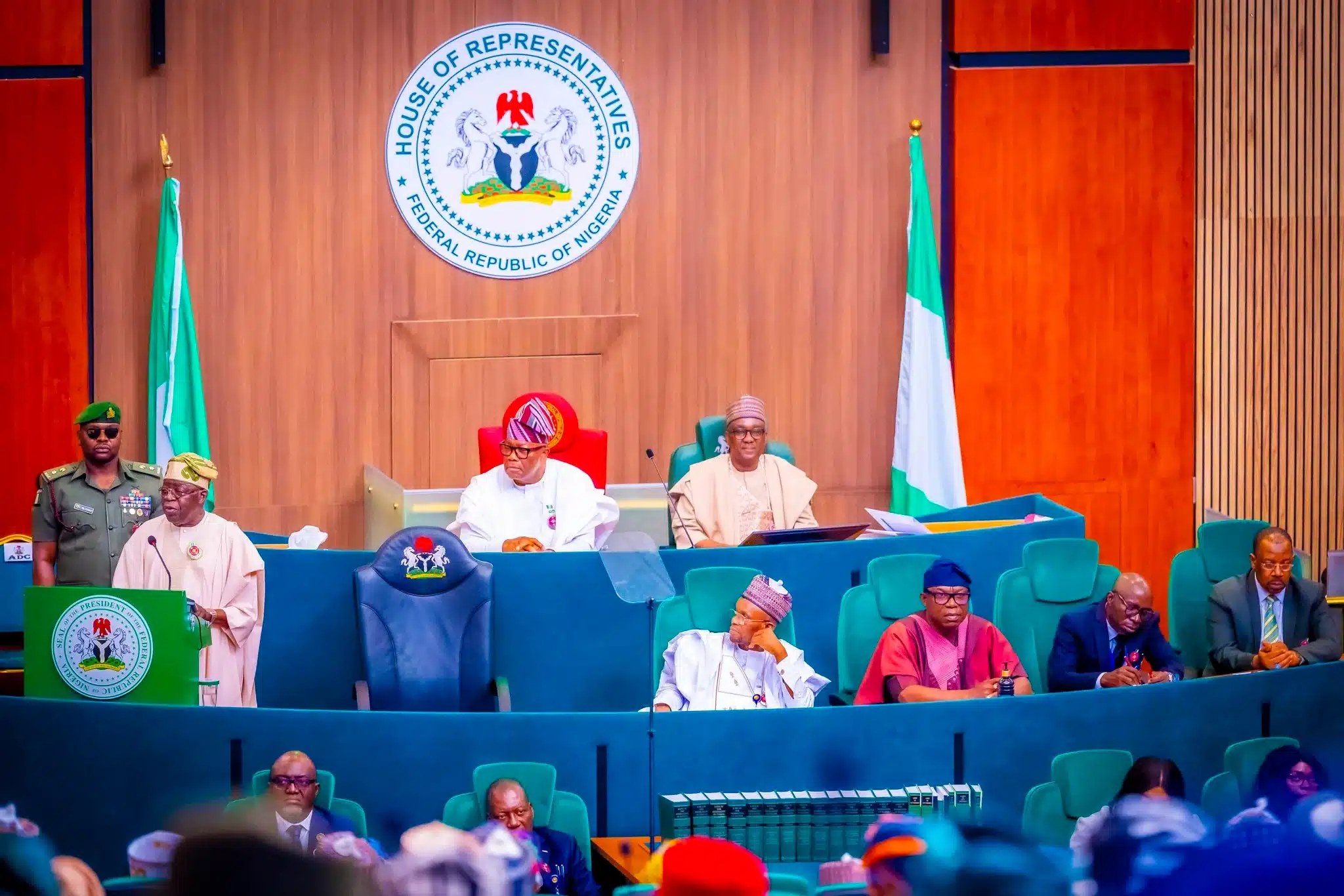
In a letter to the Senate, President Bola Ahmed Tinubu asked for permission to send Nigerian forces to the Benin Republic.
According to reports, Senate President Godswill Akpabio revealed this at plenary on Tuesday in a letter.
According to Tinubu, the deployment is for a peace mission in reaction to the ongoing coup attempt in Benin.
The President clarified that the deployment was made in response to President Patrice Talon’s request for assistance in the wake of the recent unsuccessful coup attempt.
The deployment complies with the Economic Community of West African States, or ECOWAS, regional bloc’s protocol.
In collaboration with the Nigeria Defence Council, Tinubu made this statement in accordance with section 30 sub-5 of the Nigerian constitution.
The Senate forwarded the request for prompt consideration to the committee of the whole.
After the Benin Republic’s unconstitutional violation, Nigeria had already intervened by air.
As previously reported, a source in the 10th Senate disclosed that before sending troops to engage in battle in another nation, President Tinubu must meet with legislators for approval for at least 14 days.
The source, who talked with Vanguard, revealed this in response to assertions in some quarters that the President had to ask the Senate for approval 24 hours before to or following the deployment of soldiers.
Nigeria’s response to the attempted coup, according to the administration, was an example of President Bola Tinubu’s leadership in advancing constitutional order and peace throughout West Africa.
After some soldiers working under the “Military Committee for Refoundation,” under the command of Lt. Col. Pascal Tigri, momentarily took control of the state television station in Cotonou on Sunday and declared the overthrow of President Patrice Talon’s government, troops were sent to Benin.
Nevertheless, President Tinubu’s deployment of troops and fighter jets in the neighboring countries prevented the coup.
Section 5(5) of Nigeria’s 1999 Constitution, which deals with the President’s authority to send armed forces outside of Nigeria for limited combat duty due to impending national security threats, was cited by the source to explain the circumstances that led to Tinubu’s intervention in the Benin coup. This clause requires Senate approval within 14 days of actual combat, with the Senate having seven days to approve or deny, ensuring executive power is balanced with legislative oversight.
The source, who wished to remain anonymous, claimed that the Constitution highlights checks and balances on military deployment by emphasizing that the President can act after consulting with the National Defense Council but must promptly notify the Senate for ratification.

