

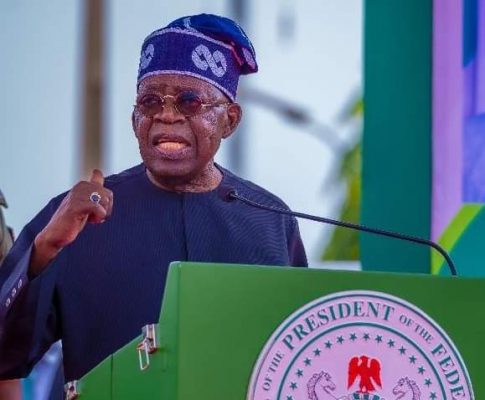
With the 2027 general election drawing near, President Bola Tinubu faces a contest more complicated than his party’s growing dominance suggests.
Beyond the number of governors under the All Progressives Congress (APC), shifting alliances, regional loyalties, opposition strongholds and emerging presidential ambitions could reshape the electoral landscape. In this report, JAMES KWEN examines the states that could determine Tinubu’s fate at the polls.
‘The 2027 presidential election is already shaping up to be a major political battle, with shifting loyalties, emerging alliances and competing ambitions redefining Nigeria’s political landscape. For President Bola Tinubu, securing a second term will require more than the numerical strength of the ruling party; it will demand the ability to consolidate existing support, win over sceptical voters and neutralise the growing influence of opposition forces across the country.
Though his party, the All Progressives Congress (APC), controls 31 out of the 36 states of the federation, there are indications that President Bola Tinubu may not have a smooth ride back to the Aso Rock Presidential Villa in 2027.
This is due to the growing influence of the opposition, even in some states controlled by the APC, in the build-up to the 2027 general election.
However, there are still some opposition-controlled states, such as Osun and Anambra, where Governors Ademola Adeleke and Charles Soludo have declared support for President Tinubu and are coordinators of his campaign in their respective states.
Generally, what many analysts view as hurdles to Tinubu’s re-election are economic hardship, occasioned by the removal of the fuel subsidy, inflation, rising food prices and the cost of living, all of which will remain important considerations for voters.
Another critical issue is the rising wave of security challenges, particularly in parts of the North-West, North-East and North-Central, leading to banditry, insurgency, kidnapping, killings and other acts of terrorism.
Other than that, Tinubu’s party has made inroads across all regions of the country since the 2023 general election, when the APC had 21 governors, mostly in the North and South-West.
However, as of now, the party has 31 governors, controlling 18 out of the 19 Northern states and 13 out of the 17 states in the Southern region. The non-APC states are Abia (Labour Party – Alex Otti), Anambra (APGA), Bauchi (APM –
Bala Mohammed), Osun (Accord) and Oyo (APM – Seyi Makinde).
Pundits argue that although the ruling APC has expanded its control of state governments through defections and political alliances, the growing number of governors does not automatically translate into presidential votes.
The argument is backed by the results of the 2023 general election, in which Tinubu of the APC, Atiku Abubakar of the Peoples Democratic Party (PDP) and Peter Obi of the Labour Party each secured victories in 12 states, while Obi, in addition, won the Federal Capital Territory (FCT).
The 12 states won by Tinubu were Ogun, Oyo, Osun, Kwara, Benue, Rivers, Borno, Zamfara, Jigawa, Ondo, Kogi and Niger.
Atiku cleared Taraba, Osun, Akwa Ibom, Adamawa, Kaduna, Sokoto, Yobe, Bayelsa, Kebbi, Bauchi, Gombe and Katsina.
Obi won the following states: Ebonyi, Enugu, Imo, Anambra, Abia, Delta, Edo, Plateau, Nasarawa, Lagos and Cross River, as well as the FCT.
For the 2027 general election, too, the trio of Tinubu, Atiku and Obi are still on the ballot for the presidential election.
However, while Tinubu retains his party, the APC, Atiku and Obi are running on the new platforms of the African Democratic Congress (ADC) and Nigeria Democratic Congress (NDC), respectively.
In another development, Senator Rabiu Kwankwaso, the New Nigeria People’s Party (NNPP) presidential candidate who won his home state of Kano and came fourth in the 2023 presidential election, is now the running mate of Obi.
Also, the governor of Oyo State, Seyi Makinde, whose state was won by President Tinubu in the last general election, is now on the ballot as the presidential candidate of the Allied Peoples’ Movement (APM).
States To Watch:
Adamawa
This North-Eastern state is the home of the ADC presidential candidate, Atiku, who has a longstanding influence on its political direction. The former Vice-President, who holds the chieftaincy title of Waziri of Adamawa, is regarded as the political leader of the state and has won it in previous presidential contests. However, in the build-up to the 2027 general election, his erstwhile political associate, if not godson, Governor Ahmadu Fintiri, joined the APC and is working for the re-election of President Tinubu, who is the candidate of his new party.
Whether Atiku would maintain his firm grip on Adamawa or his influence would be whittled down by the new political alliance of Governor Fintiri can only be determined as events unfold.
Anambra
Anambra presents a different challenge for Tinubu, as Obi’s political influence in the South-East, particularly in his home state, remains an important factor in the 2027 calculations.
However, Governor Soludo’s relationship with Tinubu introduces another dimension to the contest. Soludo has publicly declared support for Tinubu’s second-term ambition, creating an interesting political situation in a state where Obi enjoyed considerable electoral support and secured victory in 2023. The central question is whether Soludo’s political influence can translate into substantial support for Tinubu or whether Obi’s grassroots appeal will continue to shape voting patterns.
READ ALSO:
- 2027: South West Monarchs’ Endorsement Will Boost Tinubu’s Chances – Stakeholders
- 2027: ADC-PCC Demands Withdrawal Of Tinubu’s ‘All Is Fair In Politics’ Remark
- 2027: Wike’s 700-man Campaign Council will deliver 4m votes for Tinubu – APC chieftian
Kano
The key North-Western state is the home of the NDC vice-presidential candidate, Kwankwaso, who governed the state twice, represented its Central Senatorial District in the National Assembly and also held the position of Minister of Defence. He equally won the state in the 2023 general election on the platform of the NNPP. Kwankwaso, through his Kwankwasiya Movement, wields strong political influence in the state. However, his close political associate, nay godson, Governor Abba Yusuf, has since dumped the NNPP and joined the APC. He is working with the party’s bigwigs, such as former governors Abdullahi Umar Ganduje and Ibrahim Shekarau, Deputy Senate President Barau Jibrin, among others, for the re-election of President Tinubu.
Whether this situation works in favour of Tinubu or Obi, only time can tell.
Oyo
While Tinubu won this South-Western state in the 2023 general election, it cannot be easily said whether he could retain it because of the presidential ambition of Oyo’s Governor, Makinde, who is the flag bearer of the APM for the same election.
Bauchi
The North-Eastern state is the only one under opposition control in the entire Northern region. Though Atiku, not Tinubu, won the state in the 2023 election, recent political alignments have altered the situation, as Bala Mohammed and Makinde are the only APM governors in the country. Hence, party solidarity may likely play out. Governor Mohammed, the Kauran Bauchi, a former senator and FCT Minister, exercises strong political influence in his state, and his new party has won some by-elections since he joined its fold. It was also in Bauchi that the party’s presidential candidate flagged off his campaign for the 2027 polls.
Katsina
The North-Western state is the home of the APM vice-presidential candidate and former Director-General of the Department of State Services (DSS), Lawal Daura. The APM vice-presidential candidate hails from Daura, just like the late former President Muhammadu Buhari, and was his close confidant. The people of Katsina hold Buhari in high esteem, and that may translate into support for the joint ticket of Makinde/Daura. Also, Katsina has a pattern of voting in elections according to candidates and not necessarily their parties. This was demonstrated in the 2023 general election, when the state voted for Atiku of the PDP during the presidential election but voted for Dikko Umaru Radda of the APC in the governorship polls.
Sokoto
The state of the Caliphate in the North-West is another state to watch closely ahead of the 2027 general election. Atiku of the ADC has ancestral roots in the state; hence, he wields political influence in Sokoto. Atiku had said that his father, Garba Atiku Abdulkadir, was a Nigerian by birth who hailed from Wurmo in present-day Sokoto State, while his mother, Aisha Kande, was also a Nigerian who hailed from Dutse in present-day Jigawa State. He made this clarification while debunking notions that he was Cameroonian by birth and, therefore, not qualified to contest the election of 23 February 2019. He also won the 2023 presidential election in the state and flagged off his 2027 presidential campaign in Sokoto amid a huge crowd. The state also has a voting pattern demonstrated in the last general election, when it voted for Atiku of the PDP during the presidential election and Ahmad Aliyu of the APC in the gubernatorial polls. Also, political heavyweights such as former Speaker/Governor Aminu Tambuwal are in the ADC with Atiku, while the incumbent and former governor, Aliyu Wamakko, among others, are with Tinubu.
Gombe
The North-Eastern state, which borders Adamawa, Atiku’s home state, to the east, with Fulani as the predominant ethnic group, is also a stronghold of the ADC presidential candidate, who won the state in 2023 while on the platform of the PDP. However, at the governorship election, the people voted for the incumbent, Muhammad Inuwa Yahaya of the APC. Also, the outcome of the APC primary election in Gombe State did not go down well with some stakeholders, including aspirants, creating cracks in the party. For instance, the former Minister of Communications and Digital Economy, Isa Pantami, had withdrawn from the APC governorship primary in Gombe State in protest over alleged violations of the Electoral Act 2026 and the party’s failure to provide a channel of communication and information essential for a credible contest. Pantami, now a governorship candidate of the PDP who is gaining support, is believed to be working for Atiku in the 2027 general election.
Bayelsa
While Atiku won the South-South state in the 2023 general election and Governor Douye Diri dumped the PDP for the APC, the advent of the NDC may alter the calculations for 2027. This is because the National Leader of the NDC, Senator Seriake Dickson, is a former governor of Bayelsa State who many believe was instrumental in the emergence of the incumbent governor and Atiku’s success in the state when they were all together in the PDP. Whether Diri will deliver Bayelsa to Tinubu or Dickson will secure it for Obi, only time can tell.
Imo
Though the influence of Governor Hope Uzodimma and the APC’s general mobilisation efforts in the South-East may be yielding fruits, the agitation for an Igbo presidency, the demand for the release of the leader of the Indigenous People of Biafra (IPOB), Nnamdi Kanu, and Obi’s home advantage in the geopolitical zone make Imo a state to watch as far as Tinubu’s re-election is concerned.
Enugu
The headquarters of the South-East geopolitical zone is also a state to watch because of Obi’s influence in the NDC. While Governor Peter Mbah dumped the PDP for the APC, the outcome of the 2023 general election showed that the people of Enugu voted for Obi of the Labour Party in the presidential election and stood by Mbah, who was the PDP’s gubernatorial flag bearer.
Ebonyi
Though an APC state even at the 2023 general election, Obi, then of the Labour Party, won in Ebonyi. Whether the combined influence of the Minister of Works, David Umahi, and Governor Francis Nwifuru can deliver the state for Tinubu remains to be seen, since Obi is still on the ballot for the presidential election.
For political analysts, the 2027 presidential election will be about much more than the number of governors flying the APC flag. It will be a test of political influence, party loyalty, regional sentiment, personal popularity and the ability of competing political forces to convert their support into actual votes.
For Tinubu, controlling 31 states may offer a significant political advantage, but it does not guarantee electoral victory. The opposition, on the other hand, must overcome its own internal divisions and translate its growing alliances into a formidable national challenge. From Adamawa to Kano, Sokoto to Bayelsa, and Anambra to Oyo, the political calculations in these states could prove consequential.
As the campaigns gather momentum, one thing is certain: the battle for 2027 will not be decided by the number of governors alone, but by the voters who ultimately hold the power to determine who occupies Aso Rock for the next four years.

