

Presidential candidate of the African Action Congress (AAC), Omoyele Sowore, has faulted a new documentary on the annulment of the June 12, 1993 presidential election, accusing its producer of overlooking the activists, workers, students and journalists who risked their lives to confront military dictatorship.
Sowore, who attended a private screening of the documentary on late Chief MKO Abiola, winner of the annulled election, described it as revealing, emotional and unsettling but insisted that it failed to tell the full story of the struggle against military rule.
The documentary was produced by US-based journalist Ose Oyamendan, a former schoolmate of Sowore at the University of Lagos. In a post following the screening, Sowore said the production explored the political intrigues, alleged conspiracies and manoeuvres surrounding the annulment, one of the darkest episodes in Nigeria’s political history.
He recalled a historic interview in which veteran journalist and broadcaster, Danladi Bako, asked Abiola during an appearance on the Nigeria Television Authority’s Morning Ride programme whether he would become Nigeria’s president. Sowore said watching the exchange decades later was particularly haunting.
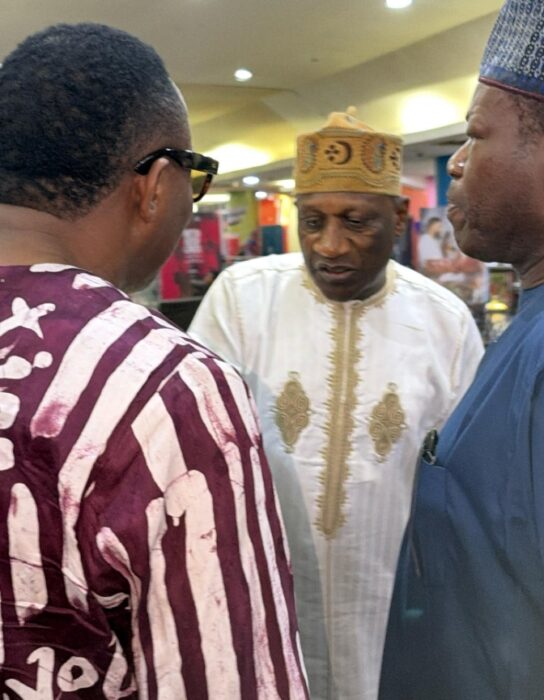
Among those who attended the screening were former Civil Liberties Organisation Executive Director and ex-member of the House of Representatives, Abdul Oroh; THISDAY Editorial Board Chairman, Segun Adeniyi; PREMIUM TIMES Editor-in-Chief, Musikilu Mojeed; public affairs commentator, Waziri Adio; and African Democratic Congress spokesperson, Bolaji Abdullahi. Some individuals featured in the documentary were also present, while several others have since died.
Sowore singled out the account of Bello Buhari, who headed the Legal Department of the then National Electoral Commission under Professor Humphrey Nwosu, as one of the documentary’s most striking revelations. Bello reportedly recounted how he instituted legal proceedings against the Association for Better Nigeria, led by Arthur Nzeribe, which was accused of attempting to frustrate the 1993 democratic transition.
He also narrated an incident involving late Senior Advocate of Nigeria, Philip Umeadi, counsel to the association, who was allegedly found wearing only a towel at the residence of the then Attorney-General of the Federation, Clement Akpamgbo, during legal manoeuvres to stop the election. Sowore said the account exposed the extraordinary political intrigues allegedly deployed to frustrate Nigerians’ democratic aspirations.
He highlighted Bako’s account of his unsuccessful attempt to interview late environmental rights activist, Ken Saro-Wiwa, who was executed by the military regime of General Sani Abacha in 1995.
According to Sowore, the account captured the censorship, intimidation, repression and fear that characterised military rule and the dangers journalists faced while documenting resistance to dictatorship.
Drawing parallels between Abiola and Saro-Wiwa, Sowore argued that both became victims of an era in which military authorities and powerful corporate interests treated democratic demands, environmental justice and fundamental freedoms as threats.
However, he identified what he described as the documentary’s biggest shortcoming: its failure to adequately document the people who sustained the June 12 resistance. He argued that the struggle was not fought only in courtrooms, political meetings and diplomatic corridors but also in universities, factories, newsrooms, labour unions and communities across the country.
According to him, the resistance involved strikes, mass demonstrations, civil disobedience, underground operations and even the hijacking of a Nigerian Airways aircraft by pro-democracy activists. He questioned why the sacrifices of prominent figures such as Gani Fawehinmi, Beko Ransome-Kuti, Olisa Agbakoba, Frank Kokori, Femi Falana, Ayo Obe, Shehu Sani, Clement Nwankwo, Frederick Fasehun and Alfred Rewane were not given sufficient attention.
Sowore also demanded greater recognition for students who confronted soldiers during protests, labour unions whose industrial actions disrupted economic activities and independent media organisations whose journalists and publishers suffered arrests, detention, harassment and proscription.
Nigerians in the diaspora, he added, played crucial roles in taking the campaign against military dictatorship to the international community, often at considerable personal and professional costs.
He insisted that the history of June 12 must also document the assassinations, attempted assassinations, disappearances, torture and imprisonment that followed the annulment.
READ ALSO:
- Sowore Campaign Hits Back At Afegbua, Questions Tinubu’s Public Acceptance
- Family Accuses Abductors Of Betrayal As 47-year-old Kaduna Farmer Killed After N56m Ransom
- Military Eliminates 15,000 Terrorists, 130,000 Boko Haram Fighters Surrender – APC
While acknowledging that the documentary addressed the murder of Kudirat Abiola, he faulted its failure to adequately examine the assassination of Alfred Rewane and the wider persecution of activists, journalists and ordinary Nigerians.
Describing the resistance as a nationwide struggle, Sowore maintained that it was much bigger than the political personalities who eventually inherited its legacy. He said the true history of June 12 must recognise the students, workers, journalists, lawyers, underground activists, exiles and ordinary citizens who risked their freedom and lives to challenge military tyranny.
Sowore also challenged the documentary’s portrayal of President Bola Tinubu as a major participant in the June 12 protest movement. He disclosed that he and Abdullahi questioned the portrayal during the screening, arguing that the production did not provide sufficient documentary evidence establishing Tinubu’s participation in the street protests.
He insisted that history must be told accurately, without exaggerating the contributions of individuals simply because they later attained political prominence. He stressed that his criticism was not intended to diminish Oyamendan’s work but to demand a more comprehensive account of the struggle.
On the annulment itself, Sowore condemned former military Head of State, General Ibrahim Babangida, describing the action as one of the greatest betrayals of the Nigerian people. He also questioned the conduct of influential figures in the military and civilian political establishments, including former President Olusegun Obasanjo, whose role during the period, he said, deserved continued scrutiny.
He further said the documentary raised disturbing questions about the possible involvement of the United States security and political establishment in the events surrounding Abiola’s death. He called for further investigation into what he described as a possible conspiracy involving Nigerian and international political elites.
For Sowore, the central lesson of June 12 is that Abiola paid the price for winning a free and fair election, while powerful political interests allegedly worked to deny Nigerians their democratic choice. He described the annulment as a monumental assault on the democratic aspirations of Nigerians, with consequences that continue to shape the country.
He urged Nigerians, particularly younger generations, to watch the documentary and understand the sacrifices behind the struggle for democracy. However, he maintained that another documentary devoted exclusively to the unsung heroes of June 12 was long overdue.
Sowore insisted that the contributions of those who fought, suffered, went into exile, endured imprisonment and lost their lives must never be erased, forgotten or appropriated by politicians who later assumed power.
He expressed hope that Oyamendan’s documentary would soon become widely accessible, describing it as essential viewing for Nigerians interested in the country’s political history, democracy and struggle for justice.

