

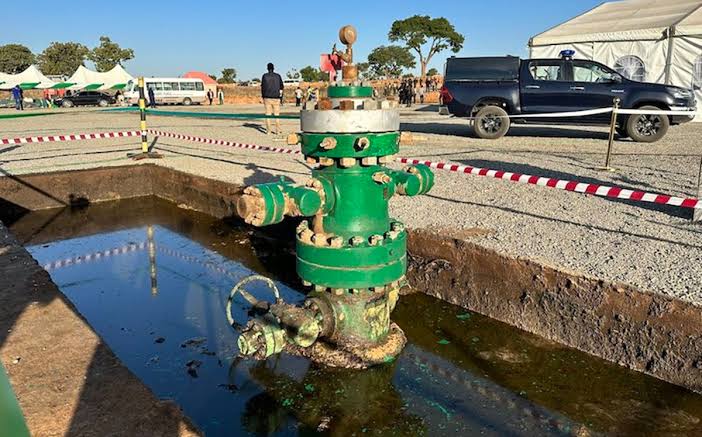
Nearly four years after the Federal Government launched the Kolmani Integrated Development Project with promises of oil production, industrialisation and thousands of economic opportunities, the project is again expected to resume as the Gombe State Government announces a fresh date for the resumption of exploration.
The Gombe State Commissioner for Energy and Mineral Resources, Sanusi Ahmad Pindiga, disclosed during a briefing after Monday’s State Executive Council meeting that drilling activities at the Kolmani oil field were expected to resume in the first week of December 2026.
Pindiga said the state government had made progress through its engagement with Rift Oil Nigeria Limited, a consultant engaged to facilitate Gombe’s institutional recognition and registration as an oil and gas producing state.
According to him, the consultant has completed 12 of its 14 planned deliverables, including training 100 graduates in artisan skills such as plumbing, carpentry, information and communication technology and welding. The beneficiaries also received starter kits and financial support to establish businesses.
He said the engagements had provided relevant documentation and institutional support towards the anticipated resumption of exploration activities.
However, the latest announcement comes after years of uncertainty surrounding a project that was presented as a major economic breakthrough for Nigeria’s Northeast.
On November 22, 2022, former President Muhammadu Buhari inaugurated the Kolmani Integrated Development Project, covering Oil Prospecting Licences (OPLs) 809 and 810 in the Gongola Basin, along the boundary between Gombe and Bauchi states.
The project was announced with projections of more than one billion barrels of crude oil and about 500 billion cubic feet of gas. It also featured plans for a 120,000-barrel-per-day refinery, a fertiliser plant, gas processing facilities and a power plant, with an estimated investment of $3 billion.
Plans yet to translate into oil production
In July 2024, Gombe State Governor Muhammadu Inuwa Yahaya expressed frustration over the lack of progress, blaming unresolved issues involving the Nigerian National Petroleum Company Limited (NNPC) and its development partners.
Speaking after meeting President Bola Tinubu in Abuja, Yahaya said the problems had prevented the integrated project from taking off as expected. He sought presidential intervention, noting that petroleum and gas operations were under federal jurisdiction.
The concerns also reached the House of Representatives. In June 2024, lawmakers considered a motion sponsored by Inuwa Garba, representing Yamaltu/Deba Federal Constituency, expressing concern over declining activities at the site and the absence of regular progress reports.
The House subsequently called for an investigation into the project’s operations, including the status of the proposed investments and the circumstances surrounding the slowdown.
In May 2025, NNPC’s Group Chief Executive Officer, Bayo Ojulari, reportedly indicated that the company was preparing to resume drilling in Kolmani after nearly two years of inactivity. The announcement raised fresh expectations that work would return to the site.
READ ALSO:
- 2027: Diri, Nwifuru Promise Tinubu Massive Votes In Bayelsa, Ebonyi
- Kaduna: Bandits Abduct 12 In Latest Kajuru Attack
- Sokoto City Boy Movement Trains ICT, Mobilisation Officers For Tinubu’s 1 Million Votes In 2027
There were reports of renewed activities between January and June 2025. However, Bauchi State Commissioner for Natural Resources Development, Muhammad Bello, disclosed during an August 2026 oversight visit by the Revenue Mobilisation, Allocation and Fiscal Commission (RMAFC) that the operating company demobilised its rigs around July 2025.
He said the development followed a directive from a higher authority, although the specific reasons were not publicly established during the visit.
In July 2025, Pindiga had offered a different explanation for concerns about the removal of drilling equipment. He said the smaller rig had completed its assigned work and that a bigger rig would be required for further operations, including re-entry into the KR2, KR3 and KR4 wells.
The repeated interruptions have continued to generate concerns among host communities, particularly over the gap between government assurances and actual progress at the site.
During its August 2026 visit, RMAFC Chairman, Muhammad Shehu, said the commission would submit its findings to President Tinubu and recommend the remobilisation of equipment and resumption of exploration.
He also recalled assurances by the President to the governors of Bauchi and Gombe that exploration would resume and the investment would be fully exploited.
But the Pali Development Association, which represents the host community, warned against turning the project into an election campaign tool.
Its chairman, Hashim Pali, said residents would welcome genuine efforts to restart exploration but insisted that governments must demonstrate their commitment through concrete action rather than repeated announcements.
He recalled that Tinubu had made commitments concerning the project’s continuation during his 2023 presidential campaign in Gombe, but said residents had waited for years without seeing the expected progress.
In July 2026, reports highlighted concerns about the project’s commercial prospects, noting that nearly four years after its launch, commercial production had not commenced and the proposed refinery, fertiliser and other industrial facilities had not materialised.
The reports also noted that the actual size of the discovery, recoverable reserves and commercial viability had not been publicly established through independent certification.
Against this background, residents such Ya’u Mohammadu Akko, the December 2026 resumption date raises questions about what has changed since the previous assurances and whether the latest announcement is backed by an approved operational programme.
He said it also remains unclear whether the completion of 12 of Rift Oil’s 14 deliverables translates into a firm commitment by the actual operators to return drilling equipment to the field.
For him, with the 2027 elections approaching, the renewed promise has added a political dimension to a project that has repeatedly featured in public discussions about the economic prospects of Gombe and Bauchi states.

