

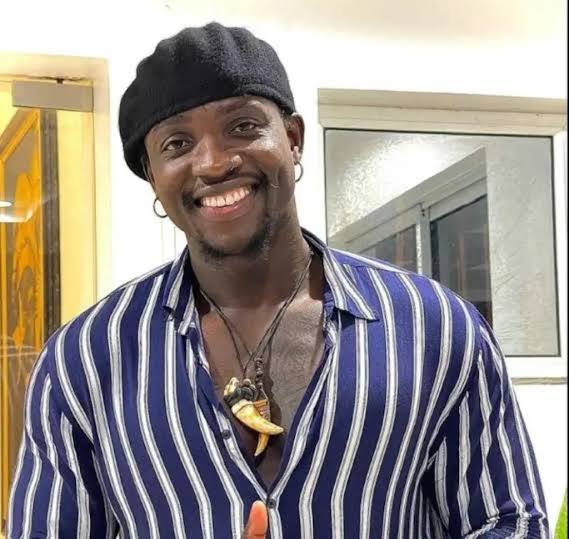
Social media activist, Martins Otse, popularly known as VeryDarkMan, has recounted how he nearly lost his life after developing a severe form of malaria while in China, where he is currently receiving medical treatment and undergoing quarantine.
The activist disclosed this in a video shared on Thursday, revealing that he spent four days in hospital after doctors diagnosed him with a potentially life-threatening form of the disease.
VeryDarkMan said the experience was particularly frightening because it was the first time in his 32 years that he had spent nights in a hospital.
He attributed the worsening of his condition to his decision to disregard medical advice and take oral malaria medication despite warnings from a Chinese doctor that his infection required intravenous treatment.
“In all my 32 years of living, I have never spent a day in the hospital. But this particular one, I have to spend a whole four days in quarantine. It’s quite crazy,” he said.
Recounting how the illness began, the activist said he initially visited a hospital in China, where medical tests confirmed that he had malaria.
According to him, the doctor who examined him stressed that it was not an ordinary case of malaria but a severe form of the disease that required urgent medical attention.
“When we got to the first hospital and the doctor did the whole test and everything, then he said, ‘You have malaria.’ I said, ‘Okay, cool.’ He said, ‘No, this is not the normal malaria. This is the life-threatening malaria you have. You have to take care of that now,’” he recounted.
However, VeryDarkMan said he contacted a doctor friend in Nigeria and shared his test results, but the Nigerian doctor reportedly dismissed the diagnosis as a common form of malaria.
He said the response made him doubt the Chinese doctor’s assessment, prompting him to seek medication through members of the Nigerian community in China.
The activist explained that the Chinese doctor had specifically warned him against taking oral medication, insisting that the drugs needed to be administered intravenously.
He quoted the doctor as saying, “Before I left, the doctor looked at me and told me, ‘They have to make things go through your veins. Oral is not going to work. It’s going to make it worse.’”
Disregarding the warning, VeryDarkMan said he obtained medication from someone in the Nigerian community after the first drugs offered to him were found to have expired.
He requested another batch, which he eventually took, adding that he initially felt better and returned to his hotel to rest ahead of his scheduled activities the following day.
However, his condition reportedly deteriorated dramatically later that night, leaving him fearing for his life.
“My brothers and sisters, yesterday night, I swear to God, I nearly died, bro. No jokes. Exactly what the doctor said. The drugs turned against me. It became two times worse,” he said.
The worsening symptoms forced him to return to the hospital, where doctors conducted further examinations and insisted that he remain admitted for treatment.
READ ALSO:
VeryDarkMan said he was informed that patients diagnosed with the severe form of malaria were required to remain in the hospital because of concerns about possible transmission to others.
According to him, the medical team initially recommended a seven-day hospital stay but later reduced the period to four days after assessing his condition and expressing confidence in his recovery.
“They initially said seven, but they said that they’ve seen me, that I look like I was going to recover quickly. Four days,” he said.
The activist also spoke about China’s malaria control efforts, claiming that the country had eliminated local malaria transmission through measures targeting mosquitoes.
He expressed surprise at the country’s reported success, suggesting that Nigeria could learn from its approach to malaria prevention and control.
“They don’t have malaria because they killed the malaria in all their mosquitoes. So even if their mosquitoes bite them, it’s not going to affect them. I don’t know how they did that, but that’s crazy,” he said.
Reflecting on his experience, VeryDarkMan expressed concern about Nigeria’s malaria burden, arguing that many people could be dying from severe cases of the disease without receiving appropriate medical care.
“If this thing, as strong as I am, can keep me here, this thing don kill a lot of people in Nigeria,” he said.
He called for increased public awareness about malaria, particularly its severe forms, and urged Nigerians to seek proper medical attention rather than rely on assumptions, self-medication or inappropriate treatment.
“Malaria awareness needs to be done in that country. People need to know that there are five grades of malaria. There are a lot of education that needs to be done,” he added.
He also appealed to the federal government to intensify malaria prevention and mosquito control efforts, suggesting that Nigeria could adopt some of the strategies used in China.
“Why will the government just do what the Chinese do? Just eradicate the malaria from the mosquito. I don’t know how they do it, but whatever money they spent, they probably spent twice that on campaigns and other things,” he said.
The activist further expressed concern about residents of rural communities, particularly those with limited access to healthcare, who he believes could be more vulnerable to severe malaria and its complications.
“I just imagine all the people that live on the village side where they live. Jesus, God. A lot of them will die like this,” he said.
Malaria is a mosquito-borne disease caused by parasites transmitted through the bites of infected female Anopheles mosquitoes. While some infections present with mild symptoms, severe malaria can cause life-threatening complications, including organ failure, and requires urgent medical attention.
Nigeria remains one of the countries with the highest malaria burden globally. Prevention measures, early diagnosis and access to effective antimalarial treatment remain critical to reducing infections and deaths.
Health experts also caution against self-medication, as the appropriate treatment for malaria depends on the type and severity of the infection. Severe malaria requires urgent hospital-based treatment, typically with intravenous artesunate, in line with medical guidelines.

