

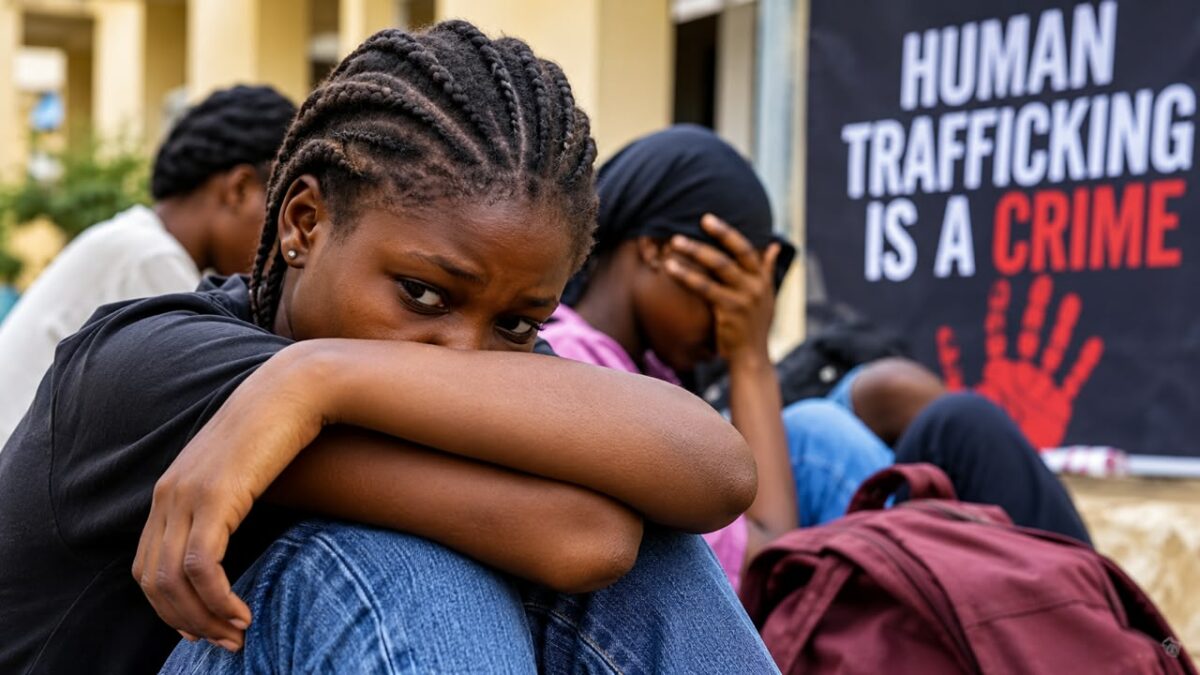
The recent conviction of three persons for human trafficking in Bayelsa State has renewed concerns over the safety of vulnerable children and young people, with stakeholders warning that the absence of adequate shelters, rehabilitation facilities and family-based care arrangements could expose victims to further exploitation.
The concerns have become more pressing as the National Agency for the Prohibition of Trafficking in Persons (NAPTIP) disclosed that its Bayelsa command lacks an operational vehicle, a dedicated shelter and a holding centre for rescued victims, making it difficult to provide adequate care and support after rescue.
She explained that the absence of a shelter meant rescued victims were sometimes counselled, made to give statements and reunited with their families immediately because the agency had no suitable facility to accommodate them while investigations and court proceedings continued.

Opara said the situation could discourage victims from cooperating with investigators, particularly those who travel from distant communities and cannot afford repeated journeys to Yenagoa.
“Most of these girls come from far away. So, when you ask them to come again, you have to fund their transportation. If we could have a shelter where we can keep them while they undergo counselling and learn one or two things, it would give them hope and discourage them from returning to where they were exploited,” she said.
The Bayelsa State Chairperson of the International Federation of Women Lawyers (FIDA), Dr. Boma Miebai, said poverty, ignorance, child neglect and the misuse of informal family arrangements were among the factors exposing children to trafficking and abuse.
She warned that sending children to live with relatives or other people without proper safeguards could expose them to domestic exploitation and sexual abuse.
Miebai said some parents wrongly regarded child abuse and trafficking as family matters, thereby shielding perpetrators instead of reporting them.
She stressed that children had legally protected rights and that handing them over to other people under the guise of providing care did not automatically make such arrangements lawful.
READ ALSO NAPTIP Receives 105 Nigerians Rescued From Ghana Cybercrime
The FIDA chairperson also identified street hawking, begging and child labour as other forms of exploitation, urging the government to strengthen social welfare structures and provide adequate funding for organisations involved in child protection.
The Bayelsa State Coordinator of the National Human Rights Commission (NHRC), Dr Eugene Baadom, identified the lack of safe facilities for children requiring protective custody as a major weakness in the state’s child protection system.
He recalled a case involving a girl allegedly sexually abused by her guardian, explaining that the Commission struggled to find a safe place for her while the matter was being investigated.
Baadom also said that although Bayelsa had a Child Rights Law, implementation remained a major challenge.

He cited another case involving a 10-year-old girl allegedly sexually abused by three men over several months, saying the suspects were arrested and the matter referred to the Ministry of Justice for prosecution.
He called for greater parental vigilance and improved handling of evidence in sexual abuse cases.
Meanwhile, the Secretary of the Bayelsa State Peace Architecture (SPA), Dr Inebraton Preye, said the conviction of the three traffickers should be treated as a starting point for a broader response rather than an end to the problem.
Preye argued that human trafficking was not merely a law enforcement issue but also a social protection and community security challenge driven by poverty, unemployment, school exclusion, family separation, unsafe migration and weak community reporting systems.
He called for a coordinated response involving government agencies, traditional rulers, religious organisations, schools, youth and women’s groups, security agencies and civil society organisations.
He also advocated community-based early warning systems to identify children at risk and ensure suspicious recruitment activities were promptly reported.
“The conviction is an important enforcement signal, but prosecution alone does not protect vulnerable children before recruitment, during risk or after exploitation.
“The response must go beyond arresting and prosecuting offenders to ensuring that victims have access to safe accommodation, counselling, education, family support and opportunities for reintegration,” Preye said.

