

The National Economic Council (NEC) has endorsed two major development projects involving proposed $850 million World Bank financing to strengthen disaster preparedness, climate resilience and early childhood development across Nigeria.
The projects comprise a $350 million Accelerating Resilience through Investment Systems and Engagement (ARISE-Nigeria) Project and a $500 million State-Led Early Childhood Development Programme.
National Economic Council Targets Oil Exit, Eyes Non-Oil Revenue
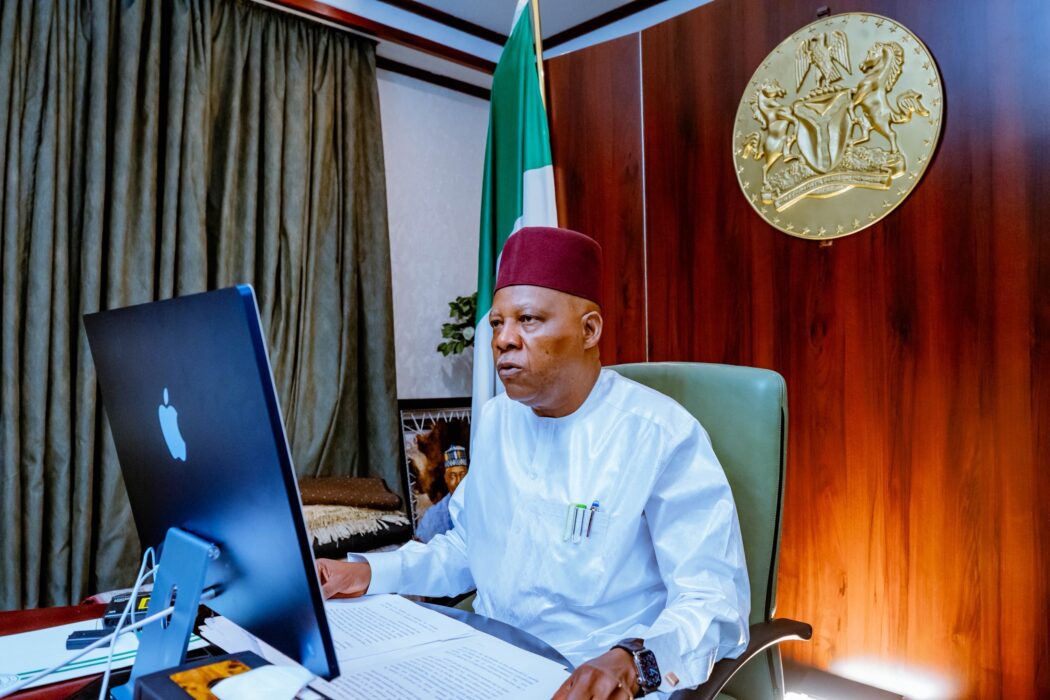
The approvals were among the key decisions reached on Monday at the Council’s 162nd meeting, chaired by Vice President Kashim Shettima.
According to a statement by the spokesman of the vice president, Stanley Nkwocha, the ARISE-Nigeria Project is a six-year programme designed to strengthen Nigeria’s capacity to anticipate, prepare for and respond to floods, droughts, fires and other natural disasters.
The initiative will support improvements in emergency operations centres, early warning systems, weather monitoring and disaster response financing at both federal and state levels.
Between five and 10 states are expected to participate in the initial phase, with selection based on their exposure to disaster risks, institutional readiness and commitment to emergency preparedness.
The second initiative, the State-Led Early Childhood Development Programme, is designed to improve children’s access to healthcare, nutrition, early learning and protection services across the 36 states and the Federal Capital Territory.
The programme is expected to receive support through a proposed $500 million World Bank financing arrangement, while the Global Financing Facility has indicated potential additional grant support of $30 million.
Under the initiative, early childhood development hubs will connect primary healthcare facilities with childcare, preschool education and other essential social services, particularly in underserved communities.
The two memoranda were presented through the Federal Ministry of Budget and Economic Planning, headed by Senator Atiku Bagudu.
Speaking at the meeting, Shettima stressed the importance of building strong institutions capable of sustaining the benefits of President Bola Tinubu’s economic reforms.
READ ALSO:
- Kebbi Women Groups To Receive World Bank Intervention Funds
- State Police: NEC Approves Fresh N130bn For Police Colleges
- Bayelsa Boat Disaster: MOSIEND Holds FG Accountable For Safety Failure
“While His Excellency, President Bola Ahmed Tinubu, GCFR, makes the difficult reforms to stabilise the economy, we must all participate in establishing institutions capable of sustaining the benefits of those reforms,” he said.
The Vice President added that ministries and states must work together to address practical responsibilities without losing sight of the people affected by government policies and interventions.
On the disaster resilience project, Shettima said the initiative should be driven by the responsibility to minimise the economic and social consequences of natural disasters.
He said it was necessary “to reduce the damage that disruption can do to incomes, enterprises and public services.”
According to him, resilience begins with decisions taken before disasters occur, stressing that investments should strengthen the ability of communities and institutions to withstand shocks and recover from them.
“This matters especially where a family or business has little room to absorb another loss. The capacity to recover should never depend entirely on the resources a person already possesses,” he stated.
Shettima also emphasised the importance of involving communities affected by government interventions in shaping the projects, noting that their experiences could help identify gaps in proposed solutions.
“The strength of a project rests partly on the institutions and citizens that will carry it,” he added.
The NEC meeting also received an update on Nigeria’s economic performance, with the Minister of Finance and Coordinating Minister of the Economy, Taiwo Oyedele, reporting that the economy grew by 4.43 per cent in the second quarter of 2026.
He disclosed that headline inflation declined for the fifth consecutive month to 14.06 per cent in October, while the country’s external reserves stood at $54.87 billion as of November 12, 2026.
However, Oyedele noted that the improving economic indicators had yet to translate sufficiently into relief for households and businesses, particularly in food prices, electricity costs, access to affordable credit and employment.

