

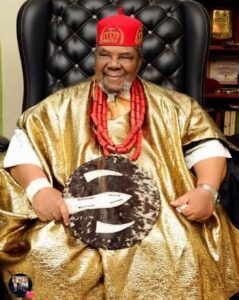
Before streaming platforms brought Nigerian films to audiences across the world, before Nollywood became an internationally recognised film industry, Pete Edochie had already established a screen presence that would become familiar to generations of viewers.
His deep, commanding voice, measured delivery and ability to bring traditional expressions to life made him one of the most recognisable actors in Nigerian entertainment. Whether playing a traditional ruler, a wealthy businessman, a family head or a respected community elder, Edochie developed a screen identity that audiences could easily recognise.
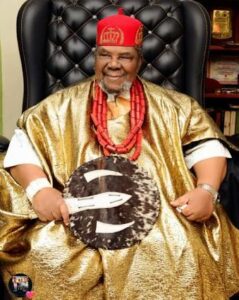
For many Nigerians, his name remains closely associated with Okonkwo, the central character in Chinua Achebe’s Things Fall Apart. His portrayal of the proud and influential Igbo wrestler brought the literary character to television and became a defining moment in his acting career.
However, the story of Edochie goes beyond the character that introduced him to a wider audience. Before becoming one of Nollywood’s most familiar patriarchs, he spent decades in broadcasting, developed an interest in theatre and television drama, and built a career that eventually placed him among the notable figures in Nigerian film history.
His journey also offers a glimpse into the development of Nigerian television and the film industry, from the era of television drama to the emergence of the home-video market that would later grow into Nollywood.
The broadcaster behind the voice
Born on March 7, 1947, in Zaria, Kaduna State, Edochie was of Igbo descent and hailed from Akamnato, Ifite Nteje, in Anambra State.
His early education took place in northern Nigeria, where he attended St Patrick’s and St James Primary Schools in Zaria before proceeding to St John’s College. He later studied journalism and television in England, an educational background that would become relevant to his eventual career in broadcasting and entertainment.
Edochie began his professional career in 1967 when he joined the Eastern Nigeria Broadcasting Corporation as a junior programmes assistant.
He gradually rose through the ranks, taking on greater responsibilities and eventually becoming Director of Programmes. He also served in senior management positions, including Deputy Managing Director and Acting Managing Director.
His broadcasting career was not limited to administrative responsibilities. He was involved in programme production and presentation and developed a strong interest in music and cultural programming.
In a 2022 interview with Vanguard, Edochie recalled presenting a classical music programme titled Music from the Masters. He explained that he had a collection of classical music recordings and used the programme to introduce listeners to the works of composers and musicians.
His years in broadcasting gave him considerable experience in voice delivery, communication and working with scripts. These skills would later become important elements of his acting career.
His professional journey also coincided with a significant period in Nigeria’s history. During the Nigerian Civil War, he worked in broadcasting and had experiences connected to the Voice of Biafra, an aspect of his career he discussed in an interview with Vanguard in 2015.
For Edochie, broadcasting was more than a stepping stone into entertainment. It was a profession in which he had invested several years and risen to a senior position.
However, a change in circumstances would eventually take him in another direction.
From broadcasting to acting
Edochie’s transition into acting was not simply a decision to abandon broadcasting for a new career. It followed a difficult period in his professional life.
In an August 2023 interview with The Nation, he explained that losing his broadcasting job became a turning point. He also credited his wife, Josephine, with encouraging him to pursue acting, an interest he had developed long before that period.
One of the details he shared was the financial difference between his broadcasting career and the acting opportunity that followed.
According to him, he earned about N9,000 monthly as a broadcasting director, while his first film offer was N50,000.
The difference was significant at the time and helped make the transition more attractive.
Yet, acting was not entirely unfamiliar territory. Edochie had participated in school plays and television productions before becoming widely recognised. In interviews, he recalled performing in stage productions including Shakespeare’s Macbeth, Julius Caesar and The Merchant of Venice, alongside other theatrical and television works.
These experiences provided an early foundation for the discipline and character interpretation that would later distinguish his performances.
His entry into acting also came at a time when Nigerian television was developing its capacity for local drama and literary adaptations. Television productions were creating opportunities for actors to interpret Nigerian stories and bring African characters to life before home-video filmmaking became a major commercial force.
It was within this environment that Edochie secured the role that would define much of his public identity.
Okonkwo: The role that changed his career
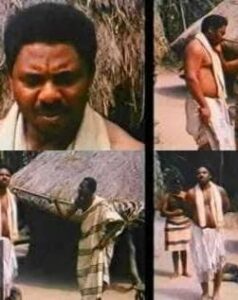
In the mid-1980s, Edochie portrayed Okonkwo in the Nigerian Television Authority’s adaptation of Chinua Achebe’s Things Fall Apart.
Published in 1958, Achebe’s novel remains one of the most influential works of African literature. It explores the traditions, social organisation and changing circumstances of an Igbo community through the story of Okonkwo, a respected wrestler and influential man whose fear of weakness shapes many of his decisions.
Okonkwo is not a simple heroic figure. His strength and ambition are accompanied by pride, anger and an inability to adapt to changing circumstances. His personal struggles eventually contribute to his tragic downfall.
Bringing such a character to television required more than portraying a powerful man. It required an understanding of the character’s cultural environment, emotional conflicts and the social expectations that shaped his decisions.
Edochie’s performance gave the character a commanding screen presence. His deep voice, use of proverbs and deliberate delivery helped audiences connect with the character’s authority and personality.
The production introduced him to a wider audience and attracted attention beyond Nigeria. His portrayal became closely associated with the character, and he later spoke about the positive reception he received from Achebe.
In an interview with Vanguard, Edochie recalled that Achebe appreciated his interpretation and gave him the name Ebubedike, which became closely associated with his identity as an actor.
The success of the adaptation also demonstrated the importance of television in bringing African literature to wider audiences. It showed that stories rooted in local communities, languages and traditions could command national and international attention.
For Edochie, Okonkwo was more than another acting assignment. It became the performance against which much of his subsequent career would be remembered.
Beyond Okonkwo: Building a Nollywood identity
Although his portrayal of Okonkwo established his reputation, Edochie’s career continued to develop as Nigeria’s film industry expanded.
The growth of the home-video market in the 1990s created new opportunities for actors, directors and producers. Nigerian filmmakers increasingly produced films for audiences who wanted stories that reflected their everyday experiences, family relationships, cultural traditions and social realities.
Edochie became one of the familiar faces of this period.
His film appearances included Rituals, Igodo, Egg of Life, Narrow Escape and several other productions.
He became particularly associated with roles involving traditional rulers, influential community figures, wealthy businessmen and family patriarchs.
READ ALSO:
- Pete Edochie: 15 Movies That Made Him Nollywood Legend
- Pete Edochie: ‘Whenever You Feel It’s Time, Take Me’ — Last Emotional Prayer Of Veteran Nollywood Actor Before Death
- 10 Things You May Not Know About Pete Edochie
These characters often occupied positions of authority within their families or communities. They were men expected to make decisions, settle disputes, preserve traditions and sometimes confront the consequences of their own actions.
His performances helped establish a recognisable screen language around the traditional father and community elder in Nigerian films.
However, reducing his career to these roles would overlook the range of stories in which he participated. His filmography covered different themes and generations of Nigerian filmmaking.
In 2018, he appeared in Lionheart, directed by Genevieve Nnaji, playing Chief Ernest Obiagu, a businessman and family patriarch.
His appearance also illustrated his continued relevance as Nollywood developed new approaches to filmmaking and reached wider audiences through international distribution and streaming platforms.
His career demonstrated that an actor could maintain a recognisable identity while working across different periods of an evolving film industry.
The voice, the language and the screen presence
One of the most distinctive aspects of Edochie’s acting was his voice.
His deep baritone became a familiar feature of his performances, but his appeal went beyond its sound. He understood the importance of timing, pauses, dialogue and the delivery of traditional expressions.
His background in broadcasting provided years of experience in using his voice professionally. It also gave him an understanding of how words could communicate authority, emotion and meaning.
In many of his films, proverbs were not simply decorative additions to dialogue. They helped establish relationships between characters, communicate cultural values and reveal the thinking of the people he portrayed.
His performances also brought attention to the place of indigenous expressions and cultural references in Nigerian cinema.
At a time when Nollywood was developing its storytelling identity, actors such as Edochie helped demonstrate that local languages, traditions and familiar social structures could form the foundation of commercially successful films.
His screen presence became so recognisable that his name was often associated with the very type of character he played.
Yet, his career was not without professional disagreements. In 2005, the Actors Guild of Nigeria reportedly placed him and other prominent actors under a one-year filming ban following disagreements over actors’ fees and their influence within the industry.
The dispute reflected some of the challenges that emerged as Nollywood grew, particularly around the commercial value of established actors and the relationship between performers and film producers.
Edochie later returned to acting and continued to feature in productions.
Recognition and a career beyond the screen
Over the years, Edochie’s contribution to Nigerian entertainment attracted national and international recognition.
In 2003, he received the national honour of Member of the Order of the Niger from former President Olusegun Obasanjo.
He also received industry recognition, including the Africa Magic Industry Merit Award and the Africa Movie Academy Awards Lifetime Achievement Award, according to published career profiles.
In 2020, he was recognised as an African Film Legend at the African Film Festival.
His influence also extended to activities outside film. In 2017, he participated in a campaign encouraging older Nigerians to use Wikipedia, drawing on his public profile to promote access to digital information.
His career was also marked by personal challenges. On August 16, 2009, he was kidnapped near Onitsha, Anambra State, and later released unharmed.
The incident attracted widespread attention and brought renewed public concern about kidnapping and the safety of prominent Nigerians.
Despite these experiences, he remained a familiar figure in the entertainment industry and continued to participate in public events and film-related activities.
Family and the next generation
Away from the screen, Edochie maintained a family life that spanned more than five decades of marriage to Barrister Josephine Edochie.
The couple had six children, including Leo, Linc, Uche and actor Yul Edochie.
Through his sons, particularly Yul, the family’s connection with Nollywood continued into a younger generation of performers.
His family life also formed part of his public identity, with his views on marriage, family relationships and traditional values often attracting attention.
In October 2026, he attended the launch of the Pete Edochie Legacy project in Ghana, an initiative celebrating his contribution to African entertainment.
During the event, he spoke about his health challenges, including difficulties with walking and occasional swelling, while expressing hope for recovery.
The appearance offered another opportunity to recognise a career that had spanned broadcasting, television drama and several generations of Nigerian filmmaking.
A legacy beyond the characters
The significance of Pete Edochie’s career cannot be measured only by the number of films in which he appeared or the awards he received.
His journey reflects important changes in Nigerian entertainment, from the development of television drama and the adaptation of African literature to the expansion of the home-video industry and the growth of Nollywood.
Through his portrayal of Okonkwo, he helped bring one of Africa’s most recognised literary characters to television. Through his subsequent film roles, he became part of the generation of actors who gave Nigerian cinema some of its most familiar screen identities.
His work also demonstrated the importance of cultural context in storytelling. The traditions, languages, family structures and social expectations represented in many of his films helped audiences see aspects of their own communities reflected on screen.
For younger actors, his career offers an example of the value of experience, preparation and professional discipline. His movement from broadcasting into acting also shows how skills developed in one creative profession can provide a foundation for another.
As Nollywood continues to evolve through new filmmakers, changing audience preferences and digital distribution, the contributions of earlier generations remain important to understanding the industry’s history.
Edochie’s voice may have become closely associated with the traditional ruler and family patriarch, but his larger contribution was helping establish a place for African stories and characters within Nigerian popular culture.

