

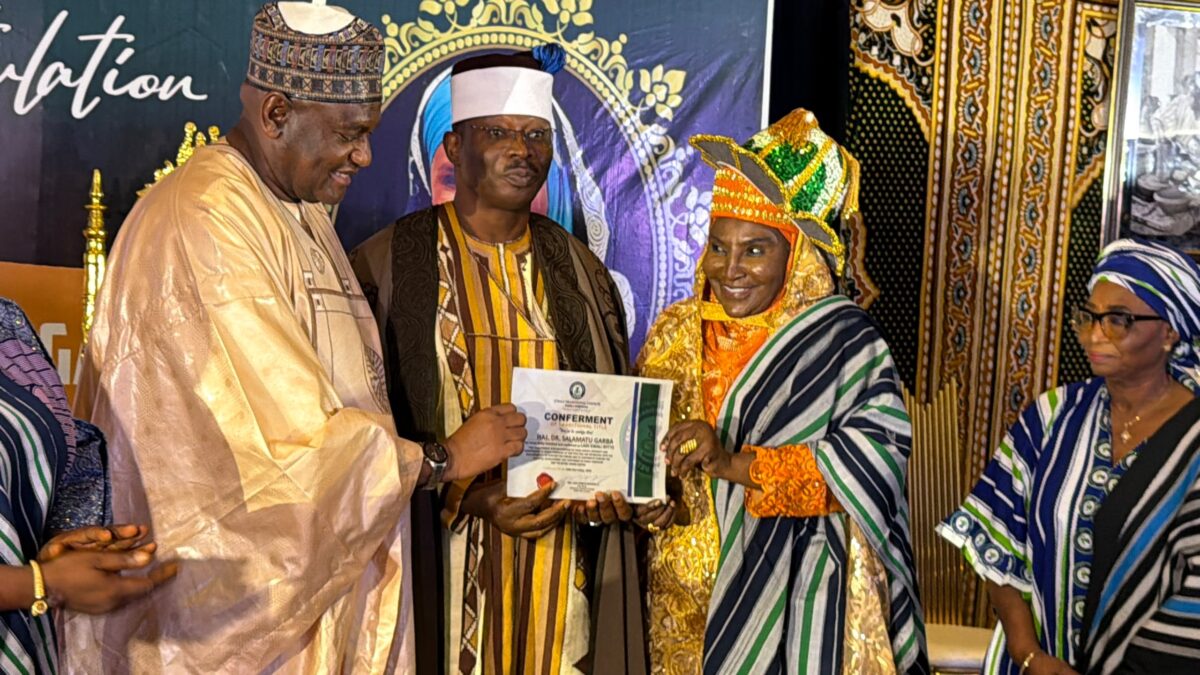
The Etsu of Kwali, His Royal Highness, Luka Ayedoo Nizassan III, has conferred the traditional title of ‘Daughter of Ladi Kwali’ on the Founder of Women Farmers Advancement Network (WOFAN), Dr Salamatu Garba, in recognition of her contributions to rural development and community empowerment.
The monarch said the honour was in recognition of Garba’s efforts to improve the living conditions of rural communities through initiatives promoting self-reliance, community participation and inclusive development.
Speaking at the conferment ceremony, Nizassan said development should not be measured solely by the construction of skyscrapers but by efforts to address the challenges of underdevelopment, particularly in rural communities.
“Development is not all about having skyscrapers but targeting the indices of underdevelopment. And that’s exactly what she’s doing,” he said.
He noted that Garba had demonstrated commitment to mobilising local resources, strengthening community participation and building the capacity of rural residents to take ownership of their development.
The traditional ruler expressed hope that the recognition would encourage the WOFAN founder to intensify her efforts and inspire others to contribute to the development of their communities.
In her response, Garba described the honour as humbling, saying it reflected the importance of commitment, patience, persistence and service to humanity rather than wealth or privileged background.
READ ALSO:
- CAS Set To Rule On Senegal-Morocco AFCON Title Dispute
- Morocco Rejects CAS Verdict, Vows Legal Battle Over Senegal’s AFCON Title
“When I started the journey of WOFAN, I never advocated for this. I didn’t know anything about NGO. I was just delivering whatever my heart told me about working with humanity,” she said.
She dedicated the recognition to rural women, peasant farmers, widows, single mothers and other vulnerable groups whose contributions to society, particularly food production, often go unrecognised.
Garba urged Nigerians to reject poverty and embrace collective action, stressing that communities must take responsibility for identifying and addressing their development needs.
She cited WOFAN’s intervention in Bagauda community in Kano State, where residents pooled resources with the organisation to improve agricultural production and rebuild a dilapidated school.
She also disclosed that the organisation had facilitated the acquisition of two tractors in the Federal Capital Territory through collective contributions by community members.
According

