

Why are qualified doctors, nurses and other medical professionals struggling to secure jobs while hospitals across Nigeria continue to battle staff shortages? A new research project is seeking answers to this growing contradiction in the country’s healthcare system.
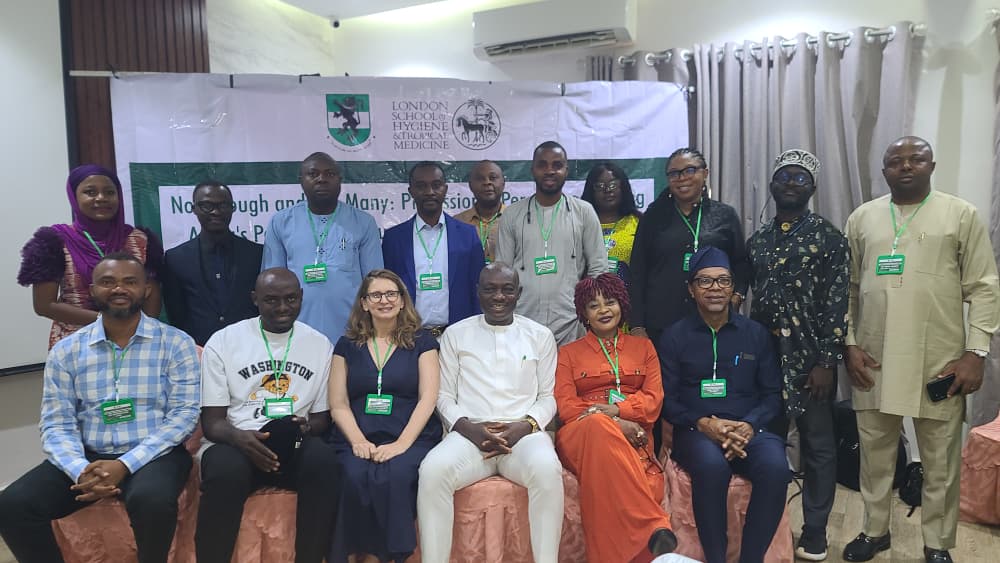
The project, titled: Not Enough and Too Many: Professional Personhood Among Africa’s Paradoxically Surplus Health Workers (NETOMA), was officially launched in Abuja on Wednesday, 25 November 2026, by the London School of Hygiene & Tropical Medicine in collaboration with the University of Nigeria, Nsukka (UNN).
At the launch, stakeholders identified systemic challenges in the health sector as a major area requiring investigation, particularly the disconnect between the availability of qualified professionals and healthcare facilities’ ability to employ them.
Speaking at the event, Professor Chidi Ugwu, the Project Investigator for Nigeria, said the research sought to understand why many doctors, nurses and midwives struggled to secure employment while hospitals and clinics lacked sufficient personnel.
He described the situation as a paradox in which qualified health workers remained outside the system even as healthcare facilities struggled to recruit enough professionals.
READ ALSO: Medical, Legal Experts Seek Stronger Laws, Accountability In Health Sector
“You have many people graduating from medical training institutions, including nurses, midwives and doctors. Yet, when you visit public hospitals and clinics, there are not enough hands to provide care,” he said.
Ugwu said the study would examine the issue from historical, social, cultural and political perspectives, while investigating its implications for health workers, their families and communities.
He noted that many families made significant financial sacrifices to train their children as medical professionals, expecting them to secure jobs and support their households after graduation.
He also raised concerns about the possible impact of the situation on public confidence in the medical profession and young people’s interest in pursuing careers in medicine and nursing.
“Will this situation eventually affect the desire to become a doctor or nurse, or will the attraction of the profession continue because of the Japa syndrome? We do not have the answers yet,” he said.
He said the research would gather perspectives from relevant stakeholders to understand the causes of the paradox and its implications for Africa’s healthcare workforce.
Also speaking, Dr Aloysius Odii, Project Co-investigator and lecturer at the University of Nigeria, Nsukka, said existing health policies in Nigeria focused more on addressing workforce shortages through increased training and production, with limited attention to the unemployment and underemployment of qualified professionals.
Presenting findings from a policy review, Odii said existing policies largely emphasised producing more healthcare professionals without adequately addressing how to absorb those already available but excluded from the health system.
“Our understanding is that policy discussions have been much more concentrated on shortages, with the emphasis being on the need to produce more health workers,” he said.
He added that only a few policy documents recognised unemployment and underemployment as part of the challenges confronting the health workforce.
“We need to draw more policy attention to this paradox. There are facilities that need health workers, yet there are people who are not properly engaged in the health system,” he said.
Odii called for a shift in policy focus towards ensuring that unemployed, underemployed and precariously employed health professionals were effectively absorbed into the workforce.
On her part, Dr Eleanor Hutchinson, International Project Investigator, said the research had identified a recurring contradiction across the countries studied, where healthcare facilities faced staffing shortages despite the existence of unemployed health professionals.
“What we have found across all the countries for which we have data is an interesting paradox: there is a great need for health workers, yet unemployment exists at the same time,” Hutchinson said.
She said the trend had been established among doctors and nurses in Uganda and Zambia, adding that the Nigerian study would examine whether the same situation existed across different categories of health workers.
According to her, the research in Nigeria would focus particularly on doctors and nurses, while also considering the role of community health extension workers.
Hutchinson noted that Nigeria’s relatively stronger economy could mean a more established private healthcare sector, making it important to examine the working conditions of professionals employed in private facilities.
“One of the things I want to understand in Nigeria is the working conditions in the private sector. Are health workers receiving adequate training? Are they earning good salaries? Are they working reasonable hours?” she asked.
She said understanding these issues would help establish whether the private sector was providing suitable employment opportunities and working conditions for healthcare professionals.

