

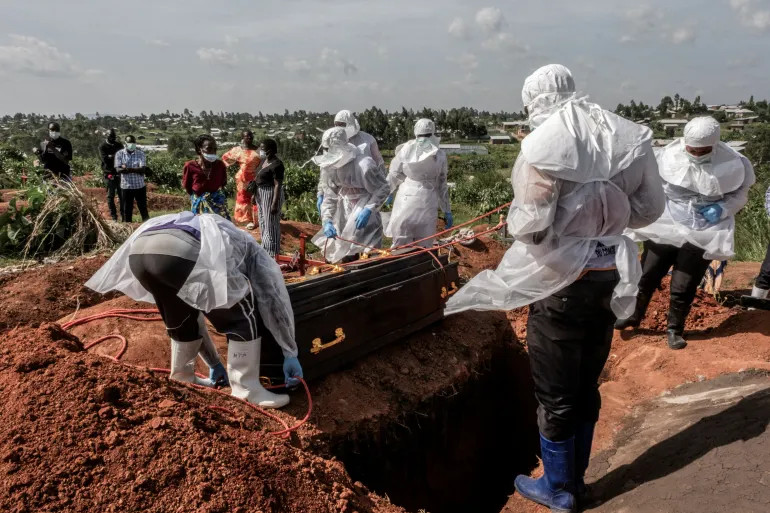
The Ebola outbreak in the Democratic Republic of Congo (DRC) has killed 5,904 people, with confirmed infections reaching 12,021 as fighting in the country’s eastern region continues to disrupt efforts to contain the disease.
Government data released on Thursday showed that the outbreak, caused by the Bundibugyo species of the Ebola virus, has spread to eight of the country’s 26 provinces.
The outbreak was declared in mid-May in Ituri Province, northeastern DRC, where delayed detection, insecurity and overstretched health facilities have complicated efforts to contain the virus.
The Bundibugyo strain is one of the rare species of the Ebola virus, and there are currently no approved vaccines or specific treatments for it, making early detection, isolation, infection prevention and supportive medical care critical to managing the outbreak.
Ebola is a severe and often fatal disease caused by the Ebola virus. It spreads through direct contact with the blood, bodily fluids or tissues of infected people or animals and contaminated materials. Symptoms can include fever, weakness, vomiting, diarrhoea and, in severe cases, internal or external bleeding.
The disease has caused several outbreaks in Central and West Africa, with the DRC among the countries most frequently affected. The country has recorded multiple Ebola outbreaks over the years, including the 2018–2020 outbreak in eastern DRC, one of the deadliest in the country’s history, which claimed more than 2,200 lives.
READ ALSO:
- Bayelsa Boat Accident: Death Toll Rises To 32 As 28 Victims Get Mass Burial
- Yul Edochie Breaks Silence On Father’s Death
- Pete Edochie’s Death A Loss To African Cultural Heritage – Shettima
The latest outbreak has been further complicated by insecurity, with armed conflict and fighting in parts of eastern DRC restricting access to affected communities and putting health workers and humanitarian personnel at risk.
Sandrine Buju, a humanitarian worker involved in the Ebola response, said her team came under gunfire on Monday while returning to Bunia after training community volunteers.
“We were surprised by gunfire about 15 metres (50ft) from where we were,” she told The Associated Press news agency. “I was very frightened.”
Buju said the driver immediately turned around, prompting the team to seek protection at a United Nations peacekeeping base.
Peacekeepers later escorted them through two areas of fighting towards Bunia.

