

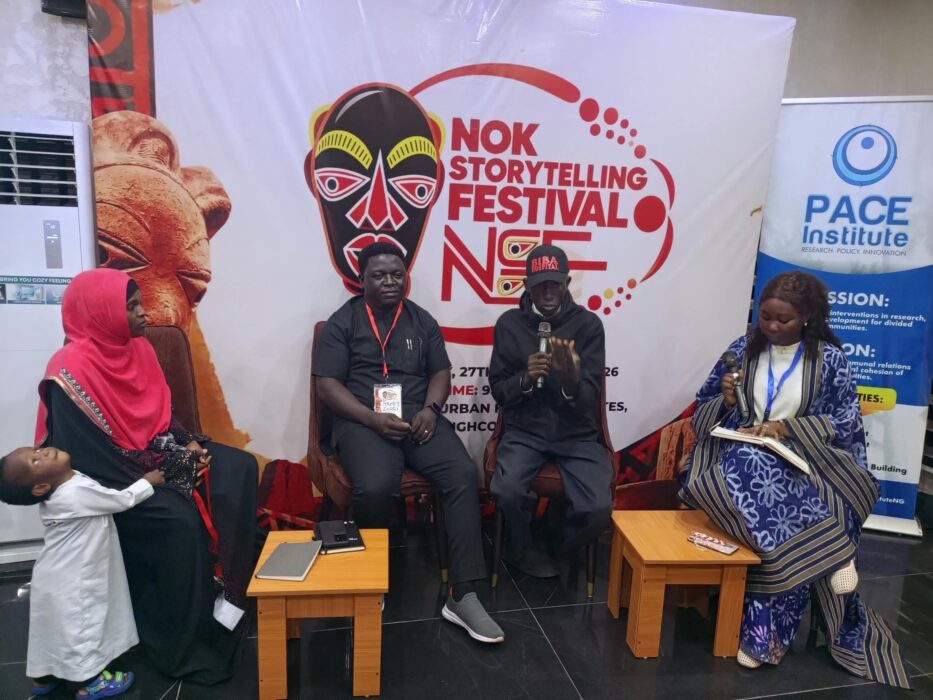
Poetry, indigenous music, traditional dance and colourful artworks took centre stage as the ancient Nok civilisation came alive at the second edition of the Nok Storytelling Festival 2026 in Kaduna.
The festival, which attracted cultural enthusiasts, artists, traditional leaders and young people, celebrated Nigeria’s rich cultural heritage while highlighting the need to rescue indigenous stories and traditions from extinction.
Held on Friday under the theme, Cultural Memory and the New Media, the event used storytelling, artistic performances and cultural exhibitions to reconnect communities with their ancestral roots.
Organisers called for increased investment in cultural preservation, saying Nigeria’s ancient heritage could become a major attraction for tourism, economic development and peaceful coexistence.
Richard Dambo, Team Lead of PACE Institute for Research and Development and festival coordinator, said the initiative emerged from research conducted in 2024, which identified poor documentation and limited promotion of indigenous cultures, particularly across the Middle Belt.
He said the festival was designed to bring different ethnic groups together through stories that celebrate their shared history, cultural experiences and identity.
Dambo urged governments to provide dedicated budgetary allocations for cultural festivals and support the documentation and preservation of indigenous knowledge.
He also advocated proper archiving of cultural materials in museums and relevant government ministries, stressing that recovering stolen African artefacts and returning them to their original communities would help restore important pieces of the continent’s history.
Also speaking, Dr Gyuro Joseph, Coordinator of NOK Tour, said the festival offered an opportunity for people to rediscover their ancestral origins and appreciate the remarkable achievements of the ancient Nok civilisation.
Joseph described Nok culture as a globally recognised African civilisation whose heritage was increasingly threatened by neglect and inadequate preservation.
He said the civilisation, believed to have existed between 1500 BC and 500 AD, demonstrated remarkable knowledge in medicine, iron smelting, terracotta production and traditional justice administration.
According to him, the Welfare Cave in Nok provides evidence of traditional healthcare practices, including maternal healthcare arrangements and record-keeping systems.
READ ALSO:
- INEC Expands Mock Election To 510 Polling Units In Kaduna
- Diri, Sanwo-Olu, Radda receive NewsDirect Governor of the Year Awards
- 2027: Wike Mocks Lulu-Briggs Over 23-Year Governorship Ambition, Compares Him To Atiku
He also highlighted the community’s traditional justice structure, which featured community courts, appeals and a final judicial process.
Joseph explained that the first human-sized terracotta discoveries were excavated in Nok by archaeologist Bernard Fagg, giving the civilisation its name.
He said the Nok terracotta belt extended across parts of Kaduna, Plateau and Benue states, calling for stronger government-community partnerships to develop the heritage into an international cultural tourism destination.
Sunday Hayab, Chairman of the Ham People in Kaduna, commended young people for taking an interest in preserving their cultural identity.
Hayab said understanding one’s cultural background was essential to appreciating one’s identity and shaping the future, expressing optimism that the younger generation would help prevent valuable traditions from disappearing.
Earlier, Hajia Aisha Yunusa, Senior Special Assistant to the Kaduna State Governor on Women Affairs, described storytelling as a powerful tool for transferring indigenous knowledge, values and experiences from one generation to another.
She identified women as important custodians of cultural heritage through language preservation, traditional skills and the transmission of family values.
She also encouraged young people, particularly women, to deploy digital platforms, documentaries, photography and podcasts to preserve indigenous stories and make them accessible to wider audiences.
According to her, technology should strengthen cultural identity rather than encourage communities to abandon their heritage.
She added that cultural resources could unlock opportunities in tourism, entrepreneurship, creative industries, education and employment.
The festival was organised by the PACE Institute for Research and Development to promote underrepresented cultures through storytelling and renewed appreciation of indigenous heritage.

