

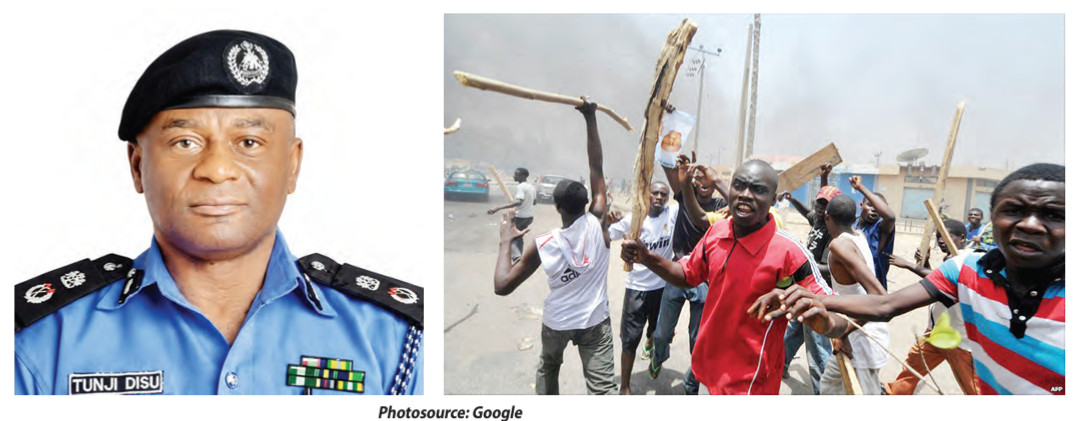
As Nigeria moves towards the 2027 general elections, growing concerns over political killings, intimidation and attacks on political opponents are raising fears of a repeat of the violence that characterised previous electoral cycles. From attacks on political gatherings and campaign convoys to the alleged recruitment and arming of political thugs, the warning signs are becoming increasingly difficult to ignore. EJIKE EJIKE reports.
As Nigeria moves towards the 2027 general elections, a disturbing pattern of political violence, attacks on campaign convoys and intimidation of political opponents is raising concerns about the possibility of another period of electoral bloodshed.
From attacks on political gatherings to clashes among political supporters and the use of dangerous weapons, the unfolding situation has become a major concern for security agencies, political stakeholders and Nigerians who fear that the struggle for political power could once again come at the expense of innocent lives.
The growing concerns have prompted the Inspector-General of Police, Olatunji Rilwan Disu, to repeatedly warn politicians, political parties and their supporters against turning the electoral process into a contest of violence.
In different speeches and engagements with senior police officers, political party leaders and electoral stakeholders, Disu has made it clear that the police will not tolerate political violence before, during or after the elections.
At the 2026 Conference and Retreat for Senior Police Officers in Owerri, Imo State, the IGP warned police commanders that securing the 2027 elections would require early intelligence gathering, proper planning, inter-agency collaboration and professionalism.
“Nigeria is about to ask its people to choose their leaders. How safe those elections are will depend heavily on the officers in this hall,” he said.
He also cautioned politicians against using force to achieve their political ambitions, declaring: “Compete with ideas, not with thugs.”
Disu reinforced the warning at a stakeholders’ meeting on political violence and security during political activities at the Force Headquarters, Abuja, on Tuesday, November 24, 2026.
He expressed concern over violent clashes among political supporters, attacks on campaign venues and convoys, intimidation of opponents and the increasing use of dangerous weapons.
He described the developments as warning signs that must be addressed before they escalate into a wider national security crisis.
“No political ambition is worth the life of a Nigerian, and no electoral victory is worth the destruction of our national peace,” he declared.
His warning came against the backdrop of reported attacks on political gatherings in different parts of the country.
One of the latest incidents occurred in Delta State, where four persons were reportedly killed and several others injured following an attack on the campaign entourage of former Deputy Senate President, Ovie Omo-Agege, in Ughelli North.
The incident prompted the IGP to order an investigation into the killings, including the conduct of police personnel involved in the incident. The police subsequently announced the arrest of 21 suspects in connection with the violence.
Beyond the immediate tragedy, the incident has renewed concerns about the safety of political actors and their supporters as political activities gather momentum ahead of the 2027 elections.
The Warning Signs
The scale of the emerging threat is also reflected in figures presented by former Chief Justice of Nigeria, Justice Olukayode Ariwoola, who has warned against a repeat of the violence that followed the 2011 general elections.
Addressing journalists on behalf of the Savannah Centre’s Council of the Wise, Ariwoola cited reports documenting 70 election-related incidents and 27 deaths as of October 27, 2026.
He also disclosed that the National Peace Committee had documented 109 breaches of the National Peace Accord across 26 states and the Federal Capital Territory between August and October 2026.
Of the breaches, 33 were attributed to political violence and thuggery.
The former CJN warned that Nigeria must not allow political disagreements to degenerate into killings and destruction of property.
He recalled the violence that followed the 2011 general elections, during which more than 800 people were reportedly killed, according to Human Rights Watch.
“It will be an unfortunate national shame if Nigerians collectively allow a repeat of what happened after the 2011 elections,” he warned.
Ariwoola stressed that the 2027 elections must be decided through the ballot box rather than intimidation and bloodshed.
His concerns reflect wider fears that increasing hostility among political actors, coupled with the activities of armed groups and political enforcers, could undermine the credibility of the electoral process.
Police Under Pressure
For the Nigeria Police Force, the challenge goes beyond deploying personnel to polling units on election day. The IGP has repeatedly emphasised that election security must begin long before voting takes place.
At the Owerri conference, he outlined a six-point roadmap covering intelligence gathering and early-warning systems, training, joint command structures, communication and technology, community partnerships and police neutrality.
He also directed commissioners of police to identify potential flashpoints and criminal networks in their respective areas of responsibility.
The IGP warned that officers who compromise their neutrality or collude with political actors would face disciplinary action.
“Impunity is the greatest encouragement to electoral crime,” he said, stressing the need to ensure that electoral offenders are prosecuted rather than merely arrested.
At the November stakeholders’ meeting, Disu also warned that politicians who finance, sponsor or direct attacks would be treated with the same seriousness as those who physically carry out the violence.
READ ALSO:
- 2027 Elections: No Youth Should Die For Politicians, TMS DG Warns
- 2027: Don’t Be Distracted By Political Noise, Plateau Monarch Tells Amupitan
- 2027: INEC, NSA Read Riot Act To Sponsors Of Electoral Violence
“Our neutrality in the political process is non-negotiable. We owe allegiance to the Constitution, the law and the Nigerian people, not to any political party or individual,” he declared.
He further urged political party leaders to take responsibility for their candidates, youth wings and supporters, announcing plans for a Joint Peace and Security Undertaking to secure commitments from political parties against violence.
Former Security Chiefs Speak
Beyond the warnings from the Inspector-General of Police, retired security chiefs have raised concerns about the possibility of powerful political interests financing and sustaining electoral violence.
For former Director of the Department of State Services (DSS), Mike Ejiofor, the biggest challenge is not necessarily identifying the youths carrying out attacks but going after those who recruit, arm and finance them.
“It’s a well-known fact that politicians also buy weapons, but the question is how many of them have been arrested,” he said.
The former intelligence chief argued that arresting suspected political thugs without investigating their sponsors would amount to addressing only the symptoms of a much bigger problem.
He also warned young Nigerians against allowing themselves to be recruited for political violence, noting that politicians who send them to fight often protect their own children from the dangers.
He cautioned that youths recruited as political thugs could lose their lives without receiving compensation or assistance from their sponsors.
Also, former Inspector-General of Police, Mike Okiro, has drawn attention to the influence of powerful individuals and alleged criminal sponsors on the country’s security architecture.
Speaking at the Conference and Retreat for Senior Police Officers in Owerri, Imo State, Okiro warned that unresolved allegations linking influential political, traditional, military and business figures to criminal activities could undermine public confidence in security institutions.
He advocated stronger inter-agency cooperation and clear operational procedures for arresting suspects, preserving evidence and prosecuting electoral offenders.
Another former IGP, Usman Alkali Baba, who supervised the police during the 2023 general elections, stressed the importance of planning, partnership and professionalism.
Drawing from his experience managing security during the 2023 elections, Baba called for a permanent framework that would institutionalise lessons from previous elections and strengthen intelligence-led, data-driven deployment.
He identified three critical factors behind effective election security: adequate planning, inter-agency cooperation and professionalism.
He highlighted the importance of the Inter-Agency Consultative Committee on Election Security (ICCES), which provides a platform for security agencies and INEC to coordinate election-security operations.
Baba also acknowledged that attacks on INEC facilities, isolated violence and misinformation remained challenges during previous electoral cycles.
The Role Of Intelligence Agencies
However, the responsibility for preventing electoral violence cannot rest on the police alone.
The Department of State Services (DSS), other intelligence agencies, the Nigeria Security and Civil Defence Corps (NSCDC) and security institutions are expected to play critical roles in identifying threats, monitoring criminal networks and providing intelligence that could prevent attacks before they occur.
Political violence rarely begins with the actual attack. In many instances, warning signs emerge through inflammatory political statements, the mobilisation of armed supporters, recruitment of youths, illegal movement of weapons and the financing of violent groups.
These activities require intelligence-led monitoring and timely intervention.
The challenge for security agencies is to distinguish legitimate political mobilisation from criminal activities without undermining the constitutional rights of Nigerians to participate in political activities.
Security agencies must also demonstrate impartiality. Selective enforcement of the law, failure to investigate politically connected individuals and the inability to bring sponsors of violence to justice could further undermine public confidence.
Beyond Election Day
Another major concern is the possibility of violence after the announcement of election results.
Nigeria’s electoral history shows that political tensions can escalate when candidates and their supporters reject results or resort to self-help instead of seeking legal redress.
Disu has therefore urged political parties to discourage reprisals and pursue electoral grievances through established judicial processes. The IGP has also assured that the police will protect all lawful political gatherings, irrespective of political affiliation.

