

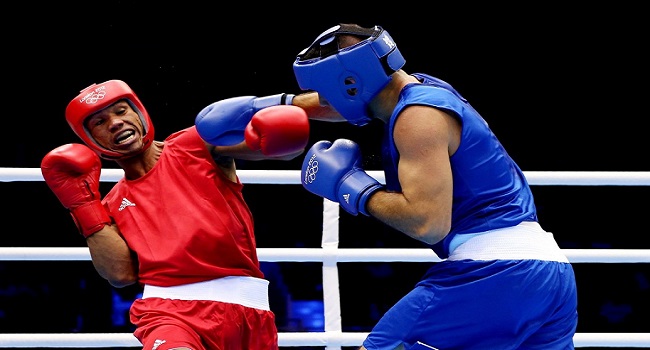
As the Nigeria Boxing Federation prepares for a board retreat in Lagos, AFFA ACHO examines the sport’s dwindling fortunes, inadequate facilities, weak grassroots structures and funding challenges, and asks whether the meeting can provide a credible roadmap for revival.
The Nigeria Boxing Federation (NBF) will hold a board retreat in Lagos from November 30 to December 1, 2026, against the backdrop of a prolonged decline in a sport that once brought Nigeria considerable international recognition.
With the theme, “Rebuilding Nigerian Boxing: Governance, Development and Sustainable Performance”, the retreat is expected to address some of the challenges confronting the sport, including grassroots development, club development, talent identification, coach education, funding and financial management.
The agenda appears to acknowledge the structural problems undermining Nigerian boxing. However, the bigger question is whether the meeting will produce practical solutions capable of reversing the decline or become another gathering whose resolutions fail to translate into meaningful action.
For a sport that delivered Nigeria’s first Olympic medal and once occupied a prominent position at major international competitions, the need for a sustainable revival has become increasingly urgent.
From Olympic Glory to International Disappointment
Boxing holds a special place in Nigeria’s sporting history. It gave the country its first Olympic medal when Nojim Maiyegun won bronze at the Tokyo 1964 Games.
Since then, Nigerian boxers have won three Olympic silver medals and three bronze medals, with Duncan Dokiwari’s bronze at Atlanta 1996 remaining the country’s most recent Olympic boxing medal.
The sport has also enjoyed considerable success at the Commonwealth Games, where Nigeria ranks seventh on the all-time boxing medal table with 42 medals, comprising 13 gold, seven silver and 22 bronze.
These achievements underline the country’s traditional strength in the sport and the potential that remains untapped.
However, recent performances suggest that Nigeria has struggled to maintain the standards established by previous generations.
At the Glasgow 2026 Commonwealth Games, the country’s boxers endured a disappointing campaign. Ayomide Foly Hassan lost 4-0 to Lesotho’s Refiloe Thai in the 70kg category, while Abdulramon Abdulwahab suffered a 5-0 defeat to Uganda’s Nuhu Batte at 65kg.
David Akintola also lost 4-1 to Tanzania’s Yusef Lucasi Changalewa in the 80kg division, while Ajishola Kadijat narrowly lost 3-2 to Wales’ Helen Jones at 54kg.
Blessing Orakwe’s quarter-final appearance in the women’s 70kg category was Nigeria’s best performance at the competition.
For a country with Nigeria’s boxing pedigree, such results raise questions about the quality of preparation, technical development and the structures responsible for producing elite boxers.
State Associations Struggle With Basic Facilities
Beyond international competitions, the challenges facing Nigerian boxing are evident at the grassroots, where several state associations struggle to provide the basic facilities required to nurture young talents.
The situation at the Akwa Ibom State Boxing Association gym in Uyo illustrates the problem.
According to a coach at the facility, the gym does not have sufficient space to accommodate a boxing ring, forcing the association to mount its ring outside whenever sparring sessions, trials or competitions are organised.
“Our ring is always set outside because our gym is not spacious enough,” he said.
“Occasionally, the ring is mounted outside when there are competitions, trials and sparring sessions. A ring is not something to be exposed to both the sun and the rain.”
He explained that training sessions are frequently conducted outdoors, while the association relies on shared equipment to keep its programmes running.
The coach also expressed concern that performances by boxers at the state level are not adequately monitored by the national federation, making it difficult for promising athletes to progress through a recognised development pathway.
Without proper facilities, regular competitions and a reliable system for tracking performances, identifying and nurturing talent becomes increasingly difficult.
The situation raises a fundamental question about grassroots development: how can Nigeria produce internationally competitive boxers when some state associations cannot provide a suitable training environment?
The Missing Link: School Sports and Coach Education
The decline in Nigerian boxing has also been linked to the weakening of school sports and inadequate technical development among coaches.
Former national coach Emmanuel Obisia, who died in 2024, had previously warned that the disappearance of school boxing and deficiencies in coaching standards were contributing to the sport’s diminishing fortunes.
In a 2014 interview, Obisia questioned the practice of turning former amateur boxers into coaches without adequate professional training.
“You don’t elevate amateur boxers to become coaches overnight and expect them to achieve anything meaningful at an international championship,” he said.
He called for “a sustainable programme to arrest the downward trend of the sport”.
His concerns remain relevant more than a decade later, particularly as the NBF prepares to deliberate on coach education at its Lagos retreat.
While the inclusion of coaching development on the agenda is encouraging, the absence of a clearly identified schools boxing programme raises concerns about how the federation intends to rebuild its talent pipeline.
School competitions traditionally provide young athletes with opportunities to discover their abilities, gain competitive experience and progress into organised sports structures.
Without a deliberate effort to restore boxing to schools and establish age-grade competitions, the federation risks limiting talent identification to occasional state and national events.
National Sports Festival and the Grassroots Development Question
The National Sports Festival, traditionally regarded as a platform for discovering and nurturing talents across the country, has also come under scrutiny.
In October 2026, Hon. Omonlei Imadu, Vice President of African Boxing and an NBF board member, raised concerns about what he described as the festival’s departure from its original grassroots development purpose.
Imadu identified athlete poaching and age discrepancies as some of the problems undermining the competition’s developmental value.
He also expressed concern that athletes who win medals at the festival frequently return to their states without scholarships, specialised training camps or integration into their respective national federations’ ranking systems.
Among his proposals were stricter eligibility requirements, separate competitions for under-18 athletes and elite boxers, and the integration of festival results into national rankings.
He further advocated a development-based assessment system that would reward states for producing and nurturing their own athletes rather than merely recruiting established competitors.
Such reforms could help restore the festival’s relevance as a talent identification platform.
For boxing, in particular, a system that tracks athletes from state competitions through the National Sports Festival and into national rankings would provide a clearer pathway to elite competition.
Funding: The Persistent Challenge
READ ALSO:
- Canada: Full List Released As ICAS Announces 4 Nigerian Universities It Will No Longer Accept Certificates From
- No Allowances, $30,000 Personal Investment: Nigerian Skeleton Athlete Cries Out
- Nigerian Army Promotes 37 Soldiers In Taraba
Financial constraints remain another major obstacle to the development of Nigerian boxing.
The NBF became the first African boxing federation to join World Boxing in October 2023, a development that offered an opportunity to strengthen Nigeria’s participation in the international boxing community.
However, by early 2025, the federation had reportedly failed to pay its 2024 membership fee and was struggling to send teams to major international competitions.
The situation changed following a visit to Nigeria by World Boxing President Boris van der Vorst, after which the federation received a $40,000 grant from the international body.
Although the grant provided some relief, it also highlighted the extent to which Nigerian boxing depends on external support to meet some of its international obligations.
The NBF has listed funding, sponsorship and sustainable financial management among the issues to be discussed at the Lagos retreat.
However, the federation is yet to publicly outline the funding model it intends to pursue or explain how it plans to attract sustained private-sector investment.
A credible funding strategy will need to go beyond seeking occasional grants. It must address the financing of state associations, equipment procurement, coaching programmes, competitions, athlete development and international exposure.
Stakeholders Speak: The Reality at the Grassroots
For coaches and athletes working outside the national spotlight, the challenges are not abstract policy concerns but everyday obstacles that threaten their careers.
Abuja-based boxing coach Benjamin Ngakohol, who trains 20 boxers in a rented hall without a boxing ring, believes the federation must begin its grassroots reform by engaging coaches who are already working with young athletes.
“I have trained boxers who won medals at the state level and then disappeared because there was nothing after that,” he said.
Ngakohol’s concerns highlight the disconnect between talent discovery and athlete development. Identifying promising boxers is only the first step; providing them with regular competitions, technical support and opportunities to progress is equally important.
The commercial side of the sport faces similar challenges.
Lagos-based boxing promoter Adeyinka Babatunde, who has staged four professional boxing cards since 2022, believes the absence of a competitive calendar and recognised national champions has weakened the sport’s appeal to sponsors and spectators.
“Nobody buys a ticket to watch a boxer they have never heard of,” he said.
“The federation produces a team every four years, the team loses, and sponsors ask me why they should pay. I am asking for a calendar, a ranked list of national champions, and a national team that wins enough to put the sport back on television.”
His argument points to the relationship between grassroots development, competitive activity and commercial viability.
Without regular competitions and recognisable athletes, boxing will struggle to attract the sponsorship and television coverage needed to expand its financial base.
For female boxer Ngunan Yaji, the problem is even more personal.
The Makurdi-based athlete has won her weight category at state competitions twice but was eliminated in the first bout of her only national competition by an opponent she described as considerably older.
She has not received an invitation to a national training camp.
“I want to go to the Olympics,” she said.
“Nobody has ever called me. No coach from Abuja has watched me fight except at the festival. If I stop boxing next year, no one will notice.”
Her experience raises questions about the systems for monitoring athletes, ensuring fair competition and identifying promising boxers for national development programmes.
A board member of the Benue State Sports Council, who requested anonymity, also described the financial limitations confronting state-level boxing.
According to him, the state’s allocation covers transportation and competition registration, leaving little or nothing for coaches, equipment and a regular competition calendar.
He said he had attended three NBF meetings in Abuja and Lagos without receiving equipment to support the state’s boxing programme.
“What I need is not a workshop. It is a league table: my boxers fighting monthly against Benue, Nasarawa, Plateau and Kogi, with results going into a national ranking,” he said.
“That is how you discover talent.”
His proposal reflects a recurring concern among grassroots stakeholders: the need to move beyond occasional competitions and establish a structured domestic system that allows athletes to compete consistently.
What the Lagos Retreat Must Deliver
The NBF has indicated that the retreat will focus on practical, measurable and time-bound initiatives, supported by clearly defined responsibilities and implementation milestones.
That commitment will be important, but the success of the meeting will ultimately depend on what happens after the board members leave Lagos.
For Nigerian boxing to regain its lost status, the federation must address the structural weaknesses that have persisted for years.
A functional grassroots development programme should be a priority, with state associations supported through equipment, suitable training facilities and regular competitions.
A national boxing league, supported by a transparent ranking system, could provide a pathway for athletes to progress from state competitions to national camps and international championships.
The restoration of school boxing, age-grade competitions and structured coach education should also form part of a long-term development strategy.
Equally important is a sustainable funding framework that encourages private-sector investment while ensuring accountability in the management of resources.
The federation must also establish a system for monitoring athletes’ progress and ensuring that promising boxers are not abandoned after winning medals at state competitions or the National Sports Festival.
Nigeria’s boxing history demonstrates that the country has the talent and potential to compete at the highest level. What has been missing is a consistent development structure capable of converting that potential into sustained international success.
The November 30 to December 1 retreat therefore presents an opportunity for the NBF to confront uncomfortable questions about its administration, grassroots structures and competitive strategy.
The communiqué and subsequent implementation of its resolutions will provide the real test of the federation’s commitment.
For a sport that gave Nigeria its first Olympic medal, the ambition must be more than a return to the podium. It must be the rebuilding of a system capable of producing champions consistently, from the school gym and state association to the Olympic ring.

