

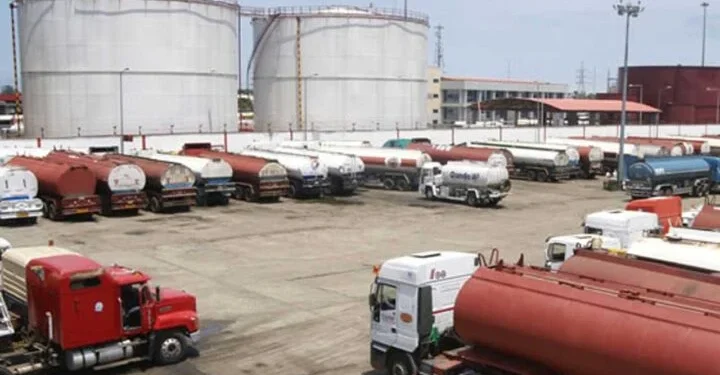
Oil marketers and industry stakeholders have raised concerns over the recent 15% import duty on petrol and diesel introduced by the Federal Government, warning that it could disrupt operations and drive fuel prices higher across the country. The duty, approved by President Bola Ahmed Tinubu, is expected to apply on the cost, insurance, and freight (CIF) value of imported petroleum products.
The approval followed a request by the Federal Inland Revenue Service (FIRS), which explained that the levy was part of ongoing reforms to support local refining, stabilize petroleum prices, and strengthen Nigeria’s naira-based oil economy under the administration’s Renewed Hope Agenda for energy security and fiscal sustainability. FIRS Chairman Zacch Adedeji noted that the measure was intended to align import costs with domestic realities and encourage investments in Nigeria’s local refining capacity.
While some economic experts have applauded the initiative as a step toward reducing Nigeria’s historic reliance on imported fuel and promoting domestic refineries, independent marketers have warned that the policy could trigger significant fuel price hikes, with pump prices potentially exceeding N1,000 per litre in some regions.
The introduction of the levy has further intensified the ongoing tension between Nigeria’s 650,000 barrels-per-day Dangote Refinery and independent marketers. Dangote claims its production capacity is sufficient to meet domestic demand, while many importers argue that local refiners are still unable to fully supply the market. Importers also contend that the levy could favor large operators, reduce competition, and make it difficult for smaller marketers to remain profitable.
In an interview with Nairametrics, Chinedu Ukadike, Publicity Secretary of the Independent Petroleum Marketers Association of Nigeria (IPMAN), expressed concern that the 15% duty threatens the viability of many filling stations. He noted that the rise in fuel prices, coupled with the growing adoption of CNG and electric vehicles, could make some outlets obsolete. Ukadike emphasized that policy should not be used to favor certain players, stating,
“In a deregulated economy, you don’t use pricing policies to advantage some players over others. Local refiners are important, but pricing must remain competitive to protect consumers and ensure market stability.”
Ukadike further argued that governments should focus on reducing bureaucratic bottlenecks for investors seeking to establish new refineries and provide financial support to encourage competition. “If local refining is to succeed, the government must remove unnecessary taxes and streamline licensing procedures,” he added.
Economic expert Paul Adams from the Department of Economics at Nasarawa State University noted that while the import duty is well-intentioned, it is a double-edged sword. “On the positive side, it encourages domestic refining and reduces dependence on imported petroleum products, creating a level playing field for local operators who face higher costs due to infrastructure and financing limitations. However, in the short term, it may tighten margins for importers, disrupt supply chains, and increase fuel prices for consumers,” he said.
Adams warned that the policy could intensify inflationary pressures, particularly in a market where consumer purchasing power is already weak. He explained that the levy could cause logistical challenges and inconsistencies in supply until domestic production fully stabilizes.
The Presidency, through Special Adviser Sunday Dare, defended the import duty, stating that the policy was designed to make imported fuel less competitive and incentivize local refining. Dare noted that by supporting domestic refineries, including the Dangote Refinery and modular plants, the policy aims to create jobs, stimulate industrial activity, conserve foreign exchange, and eventually moderate fuel prices.
Industry observers have highlighted that while the government’s objective is to strengthen Nigeria’s domestic refining capacity, the timing of the levy raises questions about short-term affordability for consumers. Many stakeholders believe that without complementary measures—such as subsidies, tax incentives for small-scale refiners, and support for logistics—fuel prices may surge in the coming months.
The move is also expected to reshape Nigeria’s petroleum market, shifting supply dynamics in favor of local refineries while pressuring independent marketers who rely heavily on imports. Analysts suggest that policymakers will need to carefully balance incentives for domestic production with the economic realities of consumers and importers, to ensure that the policy supports long-term growth without triggering severe price shocks.
As the debate continues, stakeholders agree that the success of the 15% import duty will depend on how effectively Nigeria can scale up local refining, improve supply chain efficiency, and maintain competition in the market. For now, independent marketers continue to call on the government to implement policies that encourage investment, reduce bottlenecks, and foster a competitive environment that benefits both the industry and consumers.

