

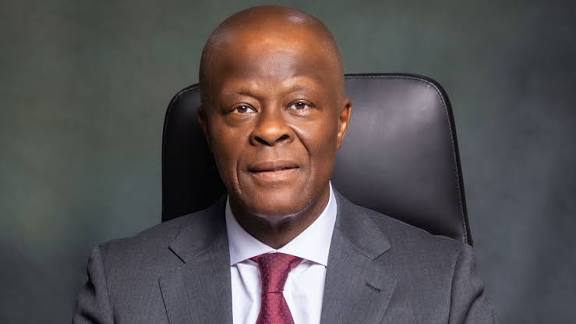
The Nigerian government is turning inward to finance its growth, prioritising domestic revenue over external borrowing as a strategy to strengthen fiscal sustainability.
Minister of Finance and Coordinating Minister of the Economy, Wale Edun, said this on Tuesday in an interview with Bloomberg Television at the World Economic Forum (WEF) in Davos.
Edun said Nigeria will continue to have access to international bond markets if needed, but the focus is increasingly on harnessing domestic resources to fund development and drive economic growth.
“The issue now is to focus on revenue, focus on domestic resource mobilisation. We’re hoping to rely less on borrowing,” Edun stated.
The minister highlighted ongoing reforms aimed at boosting tax revenue, improving collection, and expanding government income to support long-term fiscal sustainability.
He said, “Our emphasis is on investment, particularly driving domestic investment and increasing domestic savings for investment in the Nigerian economy in order to grow it.”
He noted that there are ongoing discussions with potential investors in the Middle East.
Since taking office in 2023, President Bola Tinubu’s administration has implemented a series of economic reforms designed to stabilise public finances and stimulate growth.
Key measures include the removal of currency restrictions, elimination of the fuel subsidy, and a comprehensive overhaul of the tax framework.
Government projections indicate these tax reforms could lift revenue from about 14 percent of Gross Domestic Product (GDP) currently to 18 percent in the near term, a move expected to reduce reliance on external borrowing.
Edun also pointed to Nigeria’s successful $2.35 billion bond sale in November 2025 as evidence of continued access to international capital markets.
“We have the latitude to do another deal, but our priority is to strengthen domestic resources,” he said.
Economic analysts have welcomed the reforms, with the International Monetary Fund (IMF) recently upgrading Nigeria’s growth forecast for 2026 to 4.4 percent, up from an estimated 4.2 percent in 2025, despite weaker global oil prices.
At WEF 2026, Nigeria is showcasing its first-ever official national pavilion, Nigeria House Davos, as part of its efforts to engage investors and present its policy reforms on a global stage.
Edun is expected to address investor concerns over policy consistency, inflation, foreign exchange stability, and fiscal sustainability.
The minister also hinted at the possibility of interest rate cuts if inflation continues to ease, a move that could lower debt-servicing costs and relieve pressure on public finances.
With domestic revenue generation taking centre stage, the Nigerian government is positioning itself to fund economic growth from within, reducing dependency on borrowing and enhancing fiscal resilience in an uncertain global environment.

