

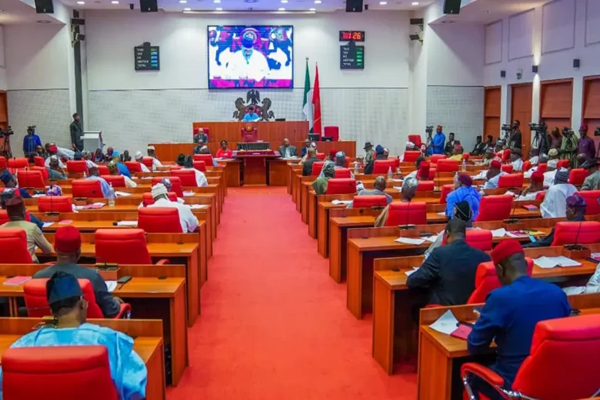
Ahead of the 2027 general election, the Senate may take a significant step in strengthening Nigeria’s electoral system, with extensive changes to the Electoral Act centered on the real-time electronic transmission of results.
When the Senate considers the report of its Committee on Electoral Matters today, the proposed provision—which requires the Independent National Electoral Commission (INEC) to electronically transmit results from polling places directly to INEC Result Viewing Portal (IREV) immediately after vote counting—will be discussed clause by clause.
Following a resolution by Senate Leader Senator Opeyemi Bamidele (Ekiti Central), who encouraged his colleagues to review the document prior to discussions on what he termed as a highly sensitive piece of legislation, the report was presented to senators yesterday for plenary consideration.
With the consent of Senate President Godswill Akpabio, Bamidele revealed that the committee-of-the-whole deliberation would be preceded by a short closed-door meeting so that senators may discuss the report before the final discussion.
According to a copy of the committee’s report that was received yesterday, the Electoral Act (Amendment) Bill, 2025 now includes a new subsection (3) that is expressly designed to prevent instances of vote box snatching and result manipulation.
“INEC shall electronically transmit election results from each polling unit to the IREV portal in real time and such transmission shall be done simultaneously with the physical collation of results,” the new clause clearly specifies.
The committee also added a new paragraph (2) to Section 77, which made it illegal for presiding officers to neglect to sign and stamp ballots and the results they announced at polling places. This was another major improvement.
The “smart card reader” was replaced with the “Bimodal Voter Accreditation System (BVAS),” formally acknowledging BVAS as the legally authorized accreditation method, in Sections 47(2) and (3) to bring the law into line with modern election technology.
In order to address claimed abuses during voting by visually impaired and handicapped people, the study further modified Section 54(1).
In order to preserve the confidentiality and integrity of these voters’ ballots, the proposed reforms would prohibit political party agents, candidates, or officials from going with them inside the voting booth.
The committee suggested harsher sanctions for the purchase and sale of Permanent Voter Cards (PVCs) in an effort to discourage vote-trading and the illegal handling of voter cards.
The proposal suggested raising the Section 22 penalties for violators from N500,000 to N5 million.
Akpabio urged senators to approach the task with attention and moderation, considering the ramifications of the proposed revisions for Nigeria’s democracy.
“Distinguished colleagues, as suggested by the leader, let us study the report very well before final consideration tomorrow, first at the closed-door session, and then at the committee of the whole,” he said.
It is anticipated that today’s discussion would lay the stage for what may be the most significant reform of Nigeria’s electoral system since electronic accreditation and result viewing were implemented.

