

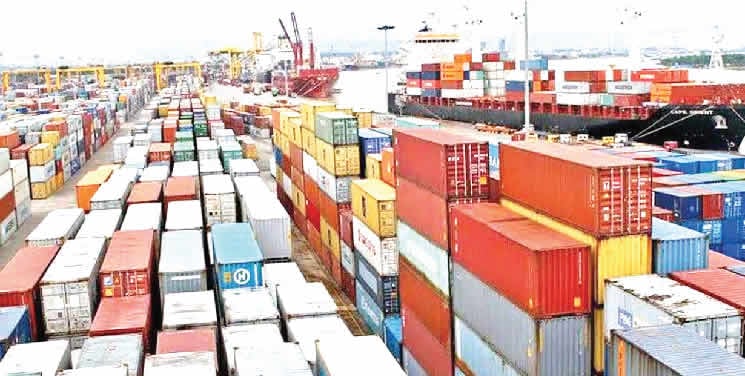
The over-concentration of port operations in the state has been blamed by stakeholders in Nigeria’s maritime sector for the ongoing congestion and inefficiency at Lagos ports, which they describe as operationally unsustainable and economically detrimental.
They argued that years of excessive reliance on the Lagos ports— Apapa, Tin Can Island, Ports and Terminal Multiservices Limited (PTML), Kirikiri Lighter Terminal (KLT) and Lilypond—have resulted in monumental traffic gridlock, systemic inefficiencies, rising corruption, and severe pressure on port access roads.
As a result, the stakeholders applauded the Federal Government’s renewed efforts to modernize and activate eastern ports, pointing out that both Lagos and the rest of the nation would benefit economically in the long run.
Industry observers rejected the Lagos State Government’s worries that reviving eastern ports would lower cargo throughput at Lagos ports, arguing that these worries were unfounded and based on insufficient data.
Ports in Warri and Koko (Delta State), Calabar (Cross River State), and Port Harcourt (Rivers State) have been underutilized for decades, pushing the majority of import and export cargo into Lagos and taxing the state’s infrastructure.
With plans to revitalize and modernize seaports around the country, President Bola Ahmed Tinubu has taken action to buck the trend. According to analysts, the program will increase government revenue, increase cargo volumes, and guarantee balanced regional development.
A $1 billion (roughly N1.6 trillion) port modernization program was recently approved by the president with the goal of putting Nigerian ports on par with those in North America, Europe, and Asia.
Additionally, he revealed during a conference of the Chartered Institute of Logistics and Transport (CILT) in
Lagos that similar upgrades at eastern ports had already started the procurement process.
The Lagos State Government, under the leadership of Governor Babajide Sanwo-Olu, voiced concerns over the decentralization of port operations after the announcement. Mr. Adekoya Hassan, his Senior Special Adviser on Transportation and Logistics, criticized the Nigerian Ports Authority (NPA) for refocusing its operations on ports in Warri and Koko, stating that it could cause traffic jams similar to those in Lagos.
However, an industry insider pointed out that more containers were being handled at the ports in Warri and Koko as a result of the decentralization program.
Ismail Aniemu, a maritime analyst, said the Federal Government’s move was both essential and timely.
“While some eastern ports like Onne and Port Harcourt are already functional, there is an urgent need to channel more cargo traffic to Warri and Calabar. The advantages are huge, but this calls for ongoing maintenance dredging, he said.
According to Aniemu, a large portion of Lagos’ traffic is caused by cargo that is routed through Lagos and transported by road to Onitsha, Aba, Owerri, Port Harcourt, and other eastern cities.
This has resulted in fierce competition for the few available road spaces, a high number of accidents, the loss of cargo, and even fatalities. Reviving eastern ports will bring about equilibrium and lessen this strain,” he stated.
He went on to say that inland logistics and trade efficiency would be further strengthened by the activation of river ports like Onitsha, which are supported by barges.
Aniemu stated that the policy would promote economic growth throughout the value chain, including employment, investment, security, and tourism, in addition to relieving congestion in Lagos.
“Where maritime trade thrives, hotels, recreation, logistics and other services flourish. This is about Nigeria, not just Lagos. Lagos cannot accommodate everybody,” he stressed.

