

Any country’s higher education system is intended to serve as a vital tool for educating the populace about the components of social harmony and order while also fostering a sense of community among the populace regarding the policies and development priorities of the state. To put it another way, a country’s higher education system is one of the most important means of defining and articulating its paths to prosperity and advancement. The university system is a vital part of the dynamics of higher education. For this reason, tertiary education is frequently in line with national goals all over the world. On this point, the Nigerian National Policy on Education is quite explicit. According to the general educational philosophy, tertiary education should accomplish the following goals: “(a) contribute to national development through high level manpower training; (b) provide accessible and affordable high quality learning opportunities in formal and informal education in response to the needs and interests of all Nigerians; (c) provide high quality career counseling and lifelong learning programs that prepare students with the knowledge and skills for self-reliance and the world of work; (d) reduce skill shortages through the production of skilled manpower relevant to the needs of the labor market; (e) promote and encourage scholarship, entrepreneurship, and community service; (f) forge and cement national unity; and (g) promote national and international understanding and interaction.
Higher education’s ability to mediate learning and growth for Nigerians and the Nigerian state has been weakened by a number of dysfunctional fissures that have developed inside Nigeria’s educational and tertiary system over the country’s lengthy 66-year evolution. In order to identify what has gone wrong, two essential symptoms are essential. First, the Nigerian academic and intellectual elite that drives the country’s higher education system is terribly estranged from the government. This anti-intellectualism makes sure that policy information produced by think tanks and universities does not contribute to the government’s policy architecture. The reduction of postsecondary education to the acquisition of degrees, diplomas, and certificates is the second symptom. Thus, Nigeria’s obsession with certification suggests that universities release graduates into the workforce who lack the necessary foundation to significantly alter the country’s socioeconomic landscape or impact its national objectives. As a result, manpower development lost its pivotal and practical advantage and crumbled under the weight of misaligned priorities.
To put it succinctly, colleges have lost touch with their original purpose, which is a vital way to conceptualize this dysfunction of the higher education system and its separation with Nigeria’s national aspirations. When combined with Nigeria’s extremely large youth population, human capital, and possibility for citizenship, this becomes extremely unstable. With more than 60% of its people under thirty, Nigeria is among the youngest nations. This suggests that the youth population is not limited to undergraduates and postgraduates. Additionally, it indicates that Nigeria has a sizable pool of prospective human resources that might be used to advance the country.
These facts guarantee that the university system has been rehabilitated by successive Nigerian governments in order to address its dysfunction and reroute its dynamics toward improved functionality on behalf of the Nigerian state and her society. The extent of these efforts’ success is still up in the air. I should use the depressing youth unemployment figures to emphasize how little progress we appear to have made. Therefore, the reformer in me believes that the university system needs to undergo an immediate and significant overhaul. The convergence of youth demography, technological advancement, creativity and innovation, and governance will be the focal point of this reform.
When it comes to trying to capture the essence of higher education, American novelist Adam Grant is quite successful. He asserts that the knowledge you acquire in your brain is not what defines a better level of education. It’s the abilities you develop in terms of learning. My 2010 monograph, The Joy of Learning, which explores what it means to learn both inside and outside of the formal tertiary processes, makes a compelling case for this basic idea. According to Grant, knowing what learning actually entails—that is, developing the abilities necessary to learn—requires reconsidering how we currently view education and the university system. Our comprehension of higher education currently rests on the system’s ability to produce skilled labor. Nothing about this aspiration is flawed. However, in the end, we will either be producing robots that lack spirituality or empathy for the workplace, or we will be discarding graduates who, despite their abundance of abilities and skills, lacked morality and compassion.
Two questions must be asked in order to have a proper view of education and how the university can support it for the benefit of both the Nigerian state and its citizens. Given that education is largely focused on the youth and their capacity to change the course of any society or state, these questions are pertinent. Thus, the first query is: for what are we preparing the youth of Nigeria? How are we getting them ready for that future? is the second query. These are two questions that should guide the current reform of Nigeria’s university system. We need to rethink the goal of education and how the university may be restructured to achieve it in order to respond to the first question. Credentials and employment are not the main purposes of education. I could not have expressed this more accurately than Wendel Berry: “Humanity is the thing being developed in a university. [W]What universities are required to create or assist in creating are human beings in the broadest meaning of the word—not merely skilled laborers or informed citizens, but also responsible heirs and participants of human civilization. The notion that good work and good citizenship are inescapable byproducts of the creation of a good—that is, a fully developed—human being is at the heart of the university concept, which unites all the disciplines into one. Nigeria has a great chance to reestablish contact with its kids and create a capable and trustworthy citizenry that will serve as the cornerstone of social order if this knowledge is put into practice. Therefore, a paradigm shift in the way that education is understood equips Nigerian young for a future in which they may fully engage with what it means to be a Nigerian human.
Character development and manpower development should consequently be balanced in the higher education system. And this brings us to the essential dynamics of change management that would enable the university system, as a component of the broader framework of higher education, to help the Nigerian state undergo transition. The second question is essentially this: how can we prepare the next generation for that human future? In order to answer this question, we must adjust the university system in a way that allows us to reconsider and change the definition of education. Let’s use the following queries as a framework for the important reform issues: (i) Are knowledge creation, skill development, employability, and social mobility important enough for colleges to prioritize? (ii) In what ways does technology influence and impact research, teaching, and learning in the framework of online and hybrid education service delivery models? (iii) In light of the expanding globalization of education and the developing knowledge society, how can the university system strike a balance between cross-disciplinary research and learning and the conventional disciplinary boundaries, which are becoming restrictive? (iv) Which financial arrangements and governance models will best assist Nigeria’s developing university autonomy and sustainable funding model? (v) How can the university balance the broader and more fundamental importance of the social sciences, humanities, and liberal arts with the critical rise of the STEM (science, technology, engineering, and mathematics) fields? In a more globalized labor market, how will universities prioritize the necessary balance between adult education and ongoing skill development as a crucial tactic to help the economy deal with the rate at which technology makes skills outdated? (vii) Without sacrificing their research agenda and academic integrity, how can the university system support and strengthen entrepreneurial education and research and development (R&D), which are based on innovation and industry partnership?
Although education fulfills Nigeria’s development goals and even parents’ desire to give their kids a purpose, an excessive emphasis on education as a return on investment needs to be viewed in the perspective of a broader goal, particularly in a critical postcolonial setting like Nigerian society. Education should equip us to coexist with others who are not of the same gender, position, ethnicity, or religion as us in every setting we may find ourselves in, including our employment, family, neighborhoods, villages, online communities, and schools. In addition to preparing Nigerian kids for life and reestablishing their humanity, education also equips them to deal with the problems of the modern world. In order to help Nigeria enter the knowledge society and the fourth and fifth industrial revolutions, for example, such education equips students to deal with life’s challenges and the needs of new technology and innovation. At that point, we can be confident that the system of higher education has begun to implement learning. And we have begun a future in which young Nigerians would have begun to pose important issues about social cohesion and ethics, as well as about clever machines in the era of artificial intelligence.
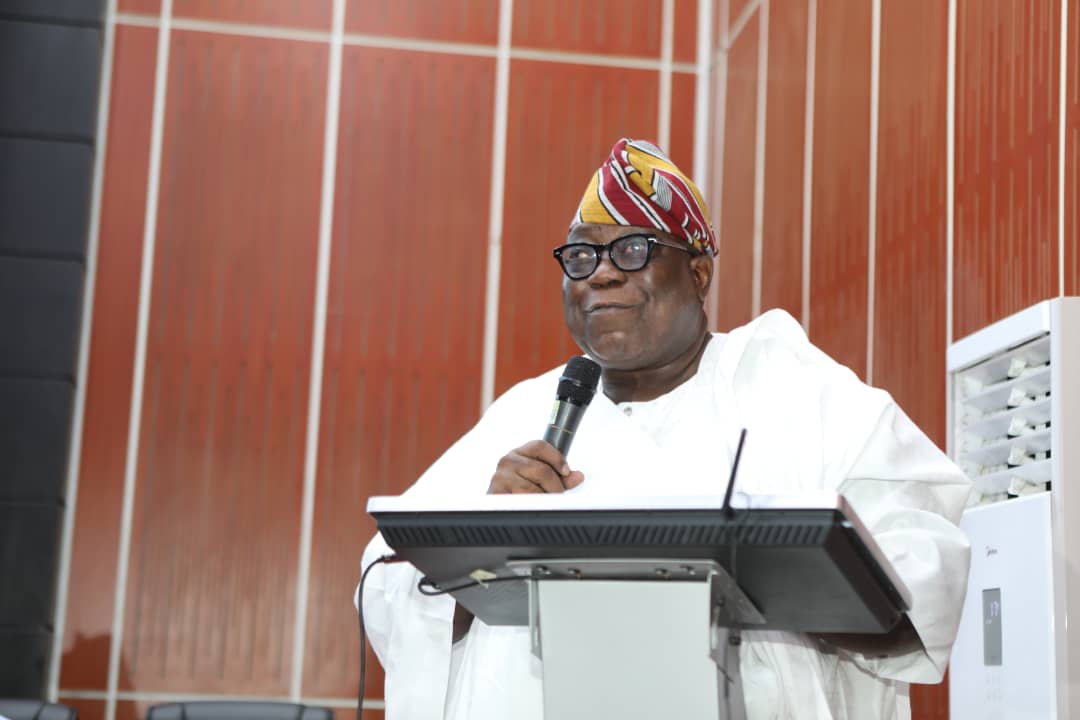
• Taken from the speech given on January 30, 2026, by Prof. Tunji Olaopa, Chairman of the Federal Civil Service Commission, as Chairman of the 2026 Convocation Lecture Program of the Federal University of Agriculture (FUNAAB), Abeokuta

