

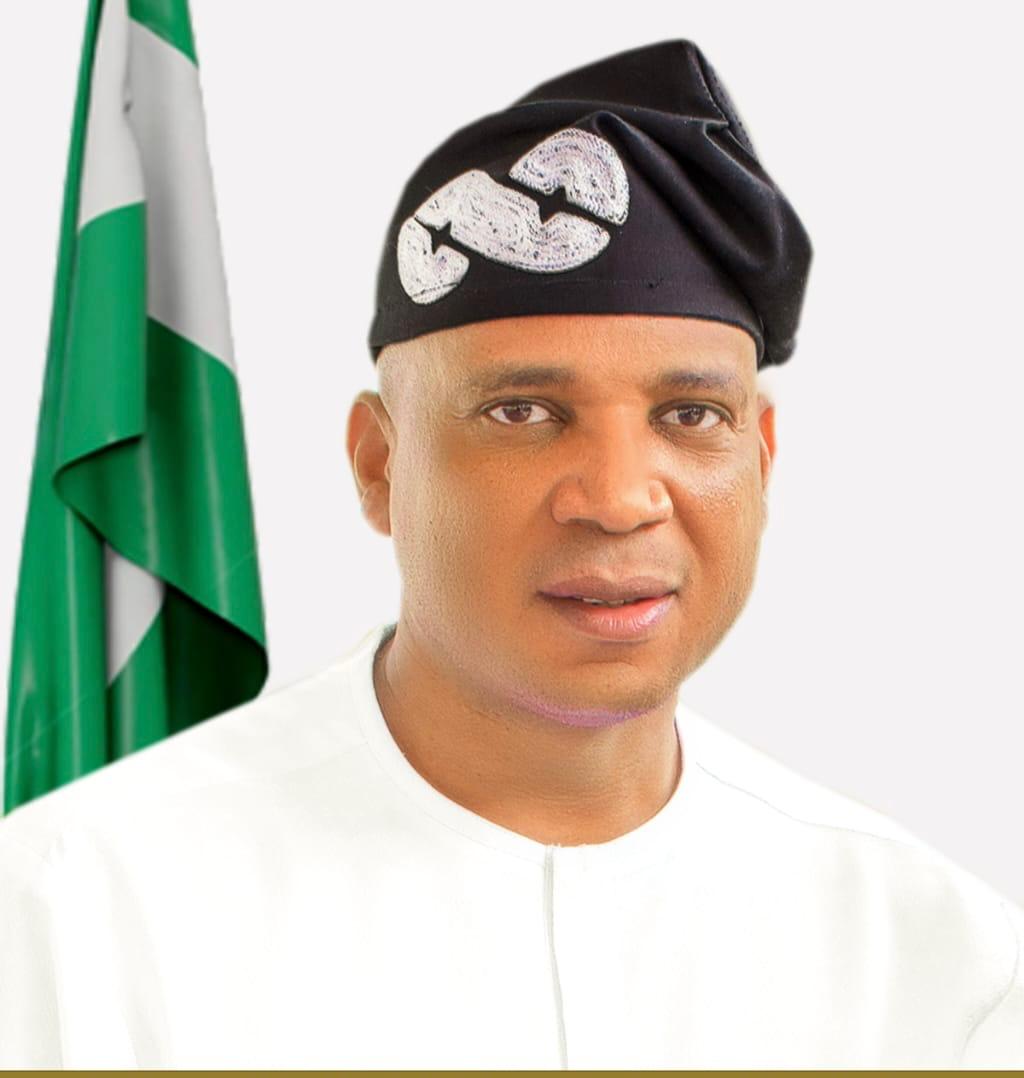
Continuity under the state’s current administration structure has failed and cannot be maintained, according to Dr. Mathias Byuan, a candidate for governor and winner of the 2023 Benue governorship.
Speaking exclusively from his home yesterday, Byuan claimed that Benue State is struggling with a seriously defective government structure that has grown reactive, over-centralized, and estranged from the people it is supposed to represent, rather than a few isolated policy errors. “Government in Benue has fundamentally collapsed,” Byuan stated.
Rather of long-term planning, political survival drives decisions. Public funds are used without having a discernible effect on basic services, livelihoods, or security.
To keep using this system is to put up with institutional weakness and stagnation. Byuan, who is putting himself in a position to win the next governorship election in 2023, stated that his fresh ambition is motivated by the need to rethink government operations rather than just swap out political players.
He says the fact that insecurity has persisted despite years of significant public spending, the steadily declining productive sectors like agriculture, and the deteriorating civil service are the best indicators that Benue needs a new direction.
“How do you explain ongoing murders and evictions following years of massive security spending?” he inquired. “How do you defend a civil service that is underpaid, demoralized, and politicized, or an agricultural state where farming hardly makes it past subsistence?”
Byuan maintained that a government’s inability to provide fundamental services, boost the economy, and protect lives on a regular basis cannot be only ascribed to subpar performance. “That’s systemic failure,” he described.
Byuan denied rumors that his aim stems from personal gain, stating that he is more interested in institutional transformation than holding public office. “This has nothing to do with taking over Government House,” he stated.
It is about establishing performance standards, restoring institutions, and holding the government responsible for outcomes. Priorities of previous administrations were short-term projects and individuals. I’m concentrating on systems.
According to him, the three main structural flaws causing Benue’s governance problems over the past ten years are: a political culture that prioritizes loyalty over competence; planning and budgeting procedures that aren’t linked to results; and institutions that rely more on people than on regulations.
In Benue politics, Byuan is hardly a newcomer.
He was one of the candidates for governor in the 2023 election and has previously run for office. His background, which he characterizes as technocratic and influenced by academic training and public service, extends beyond partisan politics.
At the Federal Housing Authority, Byuan, who holds a PhD in Business Administration (Finance), is the Executive Director, Housing (Finance and Accounts). In this role, he has managed institutional systems and public finances at the federal level.
He claimed that his work in public administration had strengthened his conviction that, in the absence of robust institutions, successful change cannot be achieved by leadership alone. “A weak system can cause you to fail even with the best of intentions,” he remarked.
On the basis of these findings, Byuan described the institutional changes he would like to see if elected president.
His administration would be built on institutional reform, he stated, emphasizing that programs cannot be successful without the systems that enable them.
According to him, “policies fail without strong institutions.” “Only when systems incentivize appropriate behavior do mindsets change.”
He revealed intentions to digitize public finance, support local governments, decentralize service delivery, and implement transparent procurement and monitoring mechanisms that let the public keep tabs on government initiatives and expenditures.
His proposed governance style, he claims, is performance-driven and people-centered, with budgets linked to quantifiable results and public officials being constantly assessed.
In order to address concerns over the sustainability of changes, Byuan stated that significant change needs to be included into institutional frameworks, technology, and the legislation.
Processes and performance standards “outlive individuals once they are codified,” he stated.
He went on to say that defined performance metrics for ministries and agencies, independent audits, public scorecards, and penalties for poor performance would all be used to ensure accountability. Regarding ingrained political interests, he argued that vested interests would inevitably be weakened by systemic reform rather than individual targeting.
He claimed that “vested interests naturally lose influence when procurement, budgeting, and recruitment become transparent and rule-based.”
“The effects of reform should be noticeable within the first two years of an administration, especially in the areas of agriculture, public service delivery, and security,” Byuan remarked.
In addition to having access to markets and extension services, farmers ought to feel safer. Welfare and merit-based promotions ought to be improved for civil officials. He said that improved infrastructure and less harassment should help traders.
Regular town hall meetings, responsive grievance procedures, and institutionalized citizen feedback mechanisms would all help restore public trust, he continued.
“When government communicates the truth, controls expectations, produces results, and owns up to its mistakes, trust grows,” he said.
As he considered how he wanted his tenure to be remembered, Byuan stated that Benue needed to transition from administration driven by politics to leadership motivated by purpose, from weak institutions to strong ones, and from broken promises to quantifiable progress.
Ultimately, he stated, “the people must serve the government, not the other way around.”

