

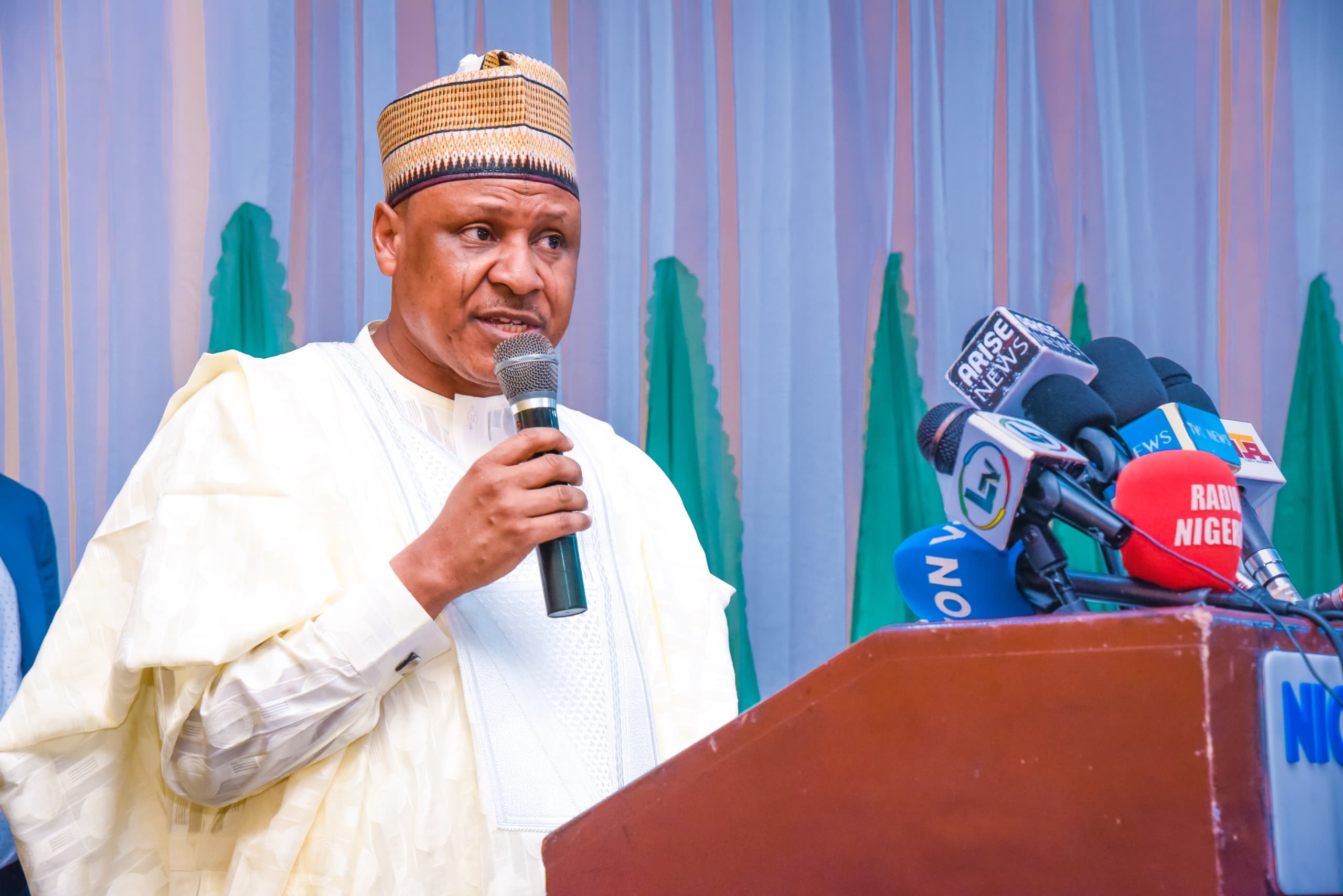
Mohammed Idris, the Honorable Minister of Information and National Orientation, has reiterated the Federal Government’s resolve to make sure that public service reforms are not only put into effect but also effectively conveyed to Nigerians in order to improve accountability, transparency, and digital governance.
The Minister made this statement on Wednesday when the Director-General Dasuki Ibrahim Arabi and the Bureau of Public Service Reforms (BPSR) management team paid him a courtesy call at his Abuja office.
He emphasized that effective communication is essential to any reform initiative’s success. “Reforms must be successfully conveyed in addition to being put into practice.
There is always opposition to reforms when they are not fully grasped.
It is our responsibility to make sure Nigerians comprehend that these reforms are intended to benefit them more broadly,” he stated.
This was stated in the statement that Rabiu Ibrahim, the Minister’s Special Assistant (Media), signed.
He characterized reform as crucial to the development of the country and praised BPSR for maintaining institutional reforms throughout the public service.
One of the most significant developments in recent years, according to the Minister, is the digitization of Nigeria’s public financial management system. He claims that the elimination of paper-based financial procedures has strengthened responsibility across Ministries, Departments, and Agencies (MDAs), increased openness, and prevented leaks.
“The days of contractors running to ministries to pick up checks at the end of the year are long gone. The system is now digital.
Our public service can function effectively if the banking industry in Nigeria can run smoothly with technology run by Nigerians, he said.
The Minister went on to say that a shift in mindset is necessary to promote structural reforms. He clarified that the Federal Government’s determination to encourage patriotism, civic duty, and shared ownership of public institutions is reflected in the Ministry’s mandate, which includes National Orientation.
In order to eliminate policy gaps and maintain institutional memory, he also revealed continuing attempts to digitize and modernize Nigeria’s archival system. In order to combat false information, deepfakes, and manipulation by artificial intelligence, he emphasized the significance of media and information literacy.
He gave the delegation his word that the Ministry’s organizations, such as the News Agency of Nigeria (NAN), Federal Radio Corporation of Nigeria (FRCN), Voice of Nigeria (VON), and Nigerian Television Authority (NTA), would keep promoting reform milestones and making sure Nigerians were informed.
The visit was intended to promote cooperation with the Ministry in order to expedite reforms, improve communication, and increase transparency among MDAs, according to the Director-General of BPSR earlier.
The visit was intended to deepen cooperation with the Ministry in order to speed up reform communication and improve openness among MDAs, according to the Director-General of the Bureau of Public Service Reforms. He described the main tenets of the National Strategy on Public Service Reforms, which include enhancing citizen involvement, digitizing public finance management, bolstering national development planning, and raising governance standards.
In order to improve outcomes for citizens, public service reform is a continual process that involves bolstering institutions, enhancing accountability, and utilizing technology.
The Director-General said, “Our collaboration with the Ministry of Information and National Orientation is essential to guaranteeing that these reforms are properly understood, communicated, and sustainably implemented across all MDAs.”
The DG stated that payroll integrity in federal, state, and local governments has improved and anomalies such ghost workers have been greatly decreased as a result of digitization changes.
He also urged MDAs to proactively publish operational and financial data on their public platforms and emphasized the need for better adherence to the Freedom of Information (FOI) Act.
In order to protect government communication systems, he also emphasized continuous initiatives to improve digital literacy among public employees, such as training on the responsible use of cutting-edge technologies like artificial intelligence.

