

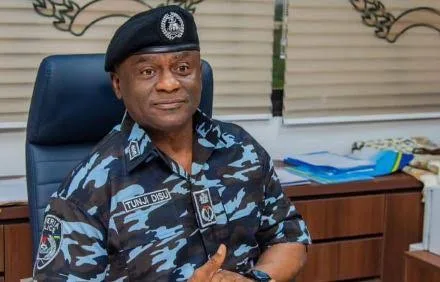
According to Linus Aleke, Nigerians and security experts have identified a number of strategic initiatives and changes that they think Acting Inspector-General of Police Olatunji Disu should implement in order to improve national security and fortify the Nigeria Police Force.
Olatunji Disu, the Acting Inspector-General of Police, has been presented with a comprehensive reform agenda by Nigerians and security professionals, who are calling on him to take decisive action to reposition the Nigeria Police Force for increased efficiency and public trust. The necessity of strong leadership that fosters professionalism, discipline, and responsibility while rebuilding trust between the police and the communities they serve is at the heart of their recommendations.
The implementation of intelligence-led policing to replace an excessive dependence on checkpoints and routine patrols is a recurrent subject in their submissions. Improved intelligence collection and analysis, according to stakeholders, would allow the Force to break up criminal networks across the country and respond more strategically to new threats.
Additionally, they emphasized that raising operating standards in accordance with global best practices will improve the police’s efficacy and reputation.
Enhancing the wellbeing of Force commanders and personnel was another important issue. Contributors emphasized the need for improved working conditions, contemporary equipment, appropriate clothes, and higher pay, pointing out that these actions would raise morale and promote a stronger dedication to duty. They emphasized that stronger cooperation between the police and local communities is essential to safeguarding lives and property across the country and asked for the full implementation of the Police Act, particularly its provisions pertaining to community policing and specialized units.
Sule Momodu, a former deputy commander-general of the National Drug Law Enforcement Agency (NDLEA), argued for broad reforms, stating that in order to effectively combat crime, no police division should have fewer than twenty operating cars.
He emphasized the significance of sufficient logistics within each division’s area of responsibility while speaking at a press conference in Abuja. He suggested using motorcycles, bicycles, and foot patrols in addition to police cars to increase security coverage, particularly in remote locations.
Momodu described the modified Police Act as crucial to repositioning the Force and encouraged the Acting Inspector-General to give it top priority.
He maintained that effective enforcement of the Act will improve service delivery and efficiency. He demanded better welfare packages, including enough uniforms and shoes, as well as upgraded radio communication equipment to guarantee smooth information exchange between divisional stations and state command headquarters, in addition to logistics.
Additionally, he insisted that routine “show of force” operations and static roadblocks should be subordinated to intelligence-led policing, which he said had little effect. Momodu congratulated Disu on his appointment and emphasized that concrete changes will eventually define his term. He also expressed faith in Disu’s ability to make the Force a more professional and people-friendly organization.
Momodu called attention to Section 20 of the Police Act, stating that police officers in Nigeria should not be paid less than those in other higher-paying law enforcement organizations. He also called for the clause to be put into effect right away. Additionally, he suggested that the Act’s provisions for specialized “spy police” teams to protect buildings and VIPs be activated, with the requesting organizations covering the expenses of hiring, training, and compensation.
He said that this would lessen the financial strain on the government, generate jobs, and enable the redeployment of thousands of officers who had previously been tasked with protecting VIPs.
In order to close the policing gaps in underprivileged neighborhoods, he also advocated for the activation of provisions pertaining to special constables. He recommended that the Acting Inspector-General acquire an executive summary of the Police Act from the Force’s legal department in order to guarantee thorough implementation of the law. Additionally, Momodu called for the establishment of community policing committees at the municipal and state levels as well as the reactivation of police call centers in all state capitals. He further stated that improving divisional police stations across the country would improve operational efficacy and foster favorable working conditions.
Ambassador Ogbole Amedu Ode, a former spokeswoman for the Ministry of Foreign Affairs, also highlighted enhanced welfare, such as better housing and compensation, as a means of raising morale. In order to comply with global best practices, he also demanded that operational standards be raised. He suggested increasing recruiting to reach the often cited ratio of one police officer to 400 inhabitants so that the police could take entire responsibility for internal security and the military could concentrate on protecting the country’s territorial integrity.
Odita Sunday, a former president of the Crime Reporters Association of Nigeria (CRAN) and a renowned crime reporter, asked Disu to request a state of emergency for police funding. He maintained that without providing the Force with sufficient tools and inspiration, significant reform would not be feasible. He states that a typical police command should have at least 500 patrol cars, assisted by drones and helicopters. He also suggested significant emergency financing, sufficient monthly operational allotments for divisional headquarters, and higher constable wages, cautioning that inadequate compensation weakens professionalism and generates bad incentives.
Former FCT Command Commissioner of Police Lawrence Alobi advocated for strong oversight procedures to stop employees from abusing their positions. He advised Disu to concentrate on training, capacity building, and efficient oversight while praising President Bola Tinubu for selecting a competent officer. Alobi emphasized that effective supervision enables senior executives to direct subordinates and guarantee seamless operations. Additionally, he argued that the Inspector-General, who is aware of the capabilities and deployment requirements of his officers, should have complete operational discretion, freeing the police from needless political meddling.
All of the writers concurred that repositioning the Nigeria Police Force requires professionalism, better welfare, intelligence-driven operations, and faithful application of the Police Act. They expressed hope that Acting Inspector-General Olatunji Disu’s resolute leadership and persistent reforms may greatly improve internal security and rebuild public trust in the Force.

