

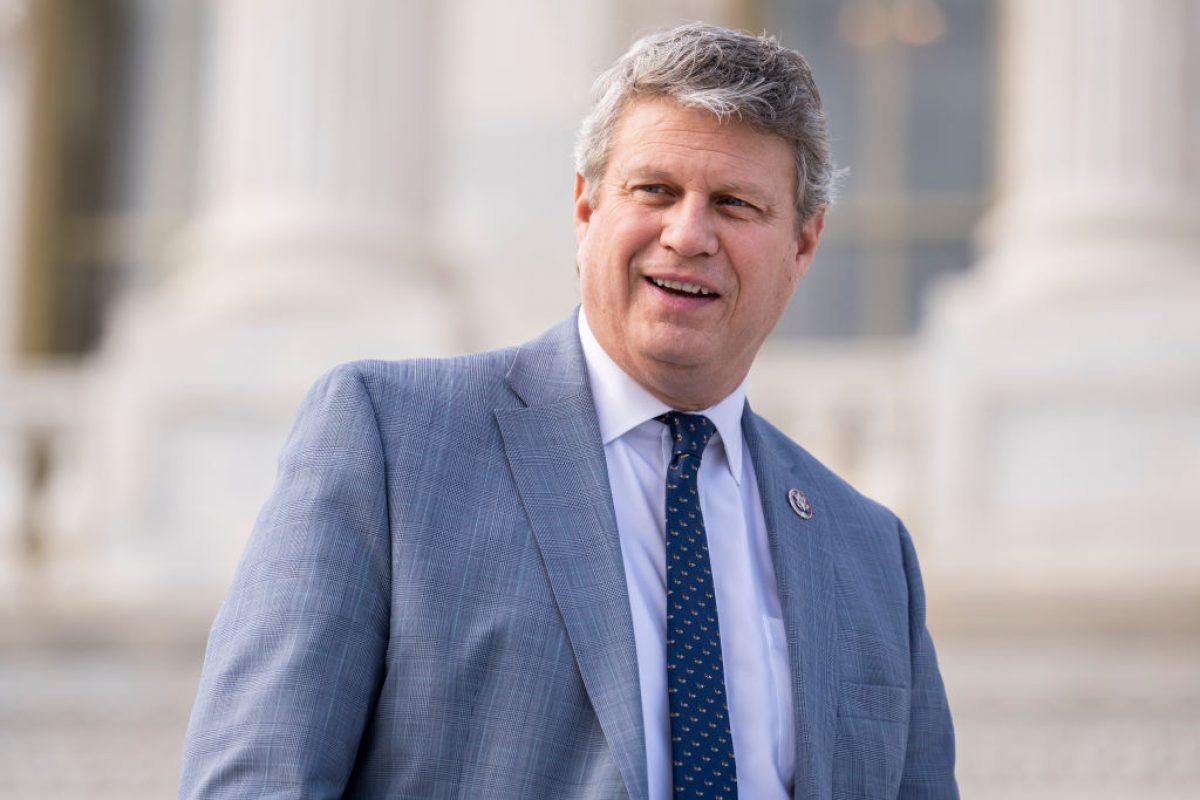
Bill Huizinga, a congressman from the United States, has criticized the Nigerian government for what he claims is a lack of seriousness in dealing with the continuous attacks on Christian communities throughout the nation.
In an interview with Arise Television, Huizinga reportedly voiced his worries and criticized Abuja’s official reaction to the issue, calling it “dismissive.”
According to the congressman, the pattern of attacks indicated organized and intentional attacks on Nigeria’s Christian communities.
Drawing comparisons to previous international failures in Rwanda and South Sudan, he asserts that the United States must intervene quickly to prevent another widespread catastrophe in Africa.
Huizinga disclosed that he had personally conversed with religious leaders and survivors who expressed a sense of being singled out by frequent attacks on their homes and communities.
He called on the Nigerian government to take more aggressive and robust steps to safeguard its people.
The congressman insisted that vague promises were no longer adequate and urged the federal government to lay out detailed plans to stop the escalating wave of violence.
Huizinga also emphasized Nigeria’s strategic importance to the stability and economic development of West Africa, cautioning that persistent instability could threaten the area as a whole. He called on Abuja to take swift action to stop additional violence.
“I’m happy that we can accomplish this,” he remarked. We were too late on Rwanda, as I’ve been telling some of my colleagues, and this has been quite crucial. When it came to South Sudan and several other crimes committed in Africa and other parts of the world, it was too late. So let’s avoid being too late once more.
“In particular, I’m worried about the Fulani and radicalized Islamists’ attacks on both Christians and moderate Muslims. And when you consider that 200 Christians were killed on Christmas Eve a few years ago, I believe it’s difficult to reject. It was obviously a well-planned assault. Additionally, I had conversations with villagers. Religious leaders who have been dealing with this for years have told me about it. They perceive a target.
“They understand that when their houses are broken into or attacked in the middle of the night, there is more going on than just people fighting. They feel like they’re being singled out. The United States has responded quickly as a result.
I’m not sure that the Nigerian government has taken the situation seriously, so I want to take it seriously. They must show how they are protecting Christians in general and Christians in particular, as well as how they are lowering the threshold for violence.
“And you know, you asked earlier if I was happy with the answer. No, since it seems like they have said, “No, there’s really not a problem.”
“Well, I believe there is a problem, and I would like them to either clearly explain why they believe there isn’t a problem—which, as I mentioned in the meeting with the Foreign Minister, I don’t think was adequately addressed at all—or, more satisfactorily, explain how they intend to address the violence in Nigeria and both against Christians.
“However, I believe that in general, a lot of the other violent situations, you know, and we previously discussed the significance of Nigeria in not just West Africa but the entire African continent, as well as the economic success and potential that they have.”

