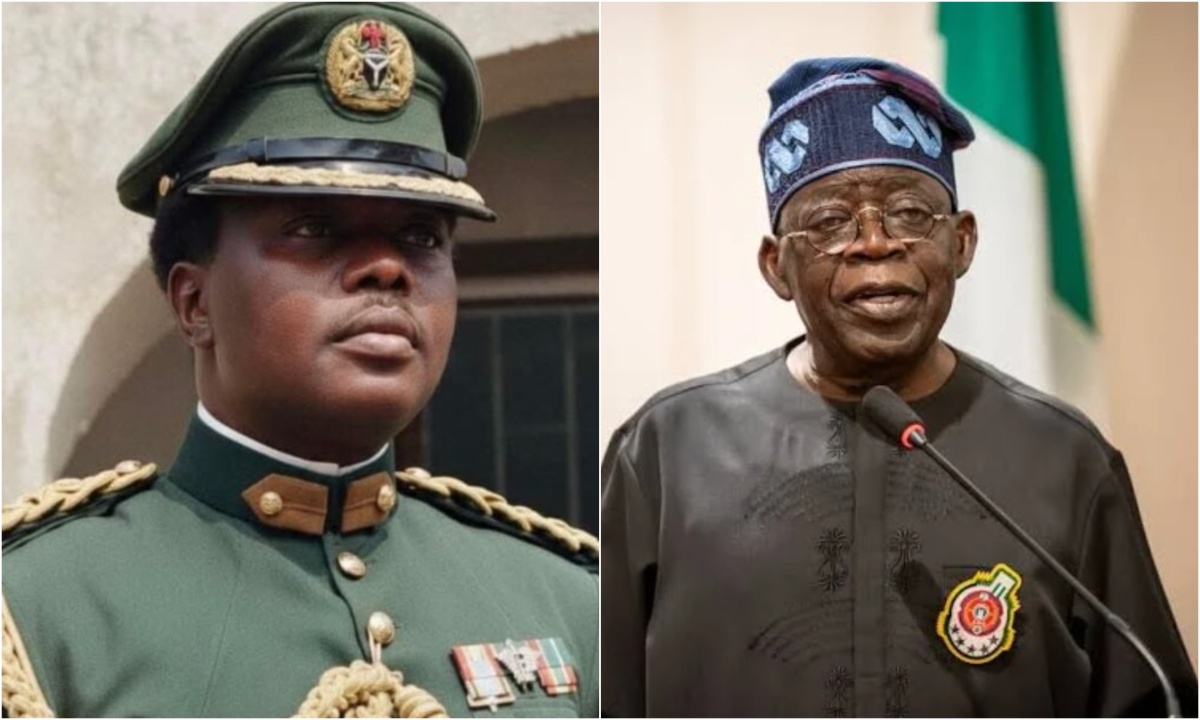
Dr. George Agbakahi, a prominent member of the All Progressives Congress (APC), has compared the policies and leadership philosophies of Chief Bola Ahmed Tinubu, the current president, to the late General Murtala Muhammad, the former military head of state.
Speaking on Nigeria Today, a program of the Nigeria Television Authority (NTA), Agbakahi called both presidents “courageous and visionary,” emphasizing their mutual dedication to daring, revolutionary changes in important areas of the Nigerian economy.
The 50th anniversary of General Muhammad’s death was recently commemorated by his friends and family.
On February 13, 1976, at the age of 37, he was killed in a failed coup headed by army Lieutenant Colonel Bukar Suka Dimka.
Agbakahi pointed out that despite the two leaders operating under quite different political systems, there are clear parallels between their policy goals.
In terms of education, he said that President Bola Ahmed Tinubu started 62 new higher education institutions (Universities, Polytechnics, Colleges of Ed) whereas General Murtala Muhammad founded seven federal universities soon after the civil war.
He claimed that President Tinubu unveiled his agriculture transformation program, a green money project that includes mechanized farming, dry season farming with modern equipment, and fertilizer proliferation among the farming population, while Gen. Murtala Muhammed introduced “Operation Feed the Nation.”
Once more, Agbakahi, the South East head of the Tinubu Support Organization (TSO), said that President Tinubu concentrated on the FCT’s long-term growth and development while the late military Head of State started the process of moving the capital to Abuja.
He attributed the Federal Capital Territory’s (FCT) basic idea to General Muhammad.
He maintained that the city would not exist as it does now if Muhammad had not taken bold steps to relocate the capital from Lagos to Abuja.
He underlined that President Tinubu is currently “working assiduously” to expand on that foundation, especially in the FCT’s infrastructural development.
As he thought back on General Muhammad’s 201-day term, Agbakahi recalled his strict anti-corruption policies and extensive civil service reforms.
He said that by addressing systemic corruption through democratic means, President Tinubu’s administration is acting in a similar manner.
“The point that I’m making and still make is that a military regime is totally different from a democracy,” he continued.
“There are many different paths in a democracy, but Murtala Muhammad ruled with the Supreme Military Council. To get some bills passed, you have to go through the Senate, the House of Representatives, and the voters.
He came to the conclusion that, in spite of these structural disparities, President Tinubu’s initiatives in infrastructure and agriculture, which span from the North to the South, reflect the spirit of development that the late General promoted throughout his brief but significant tenure.