
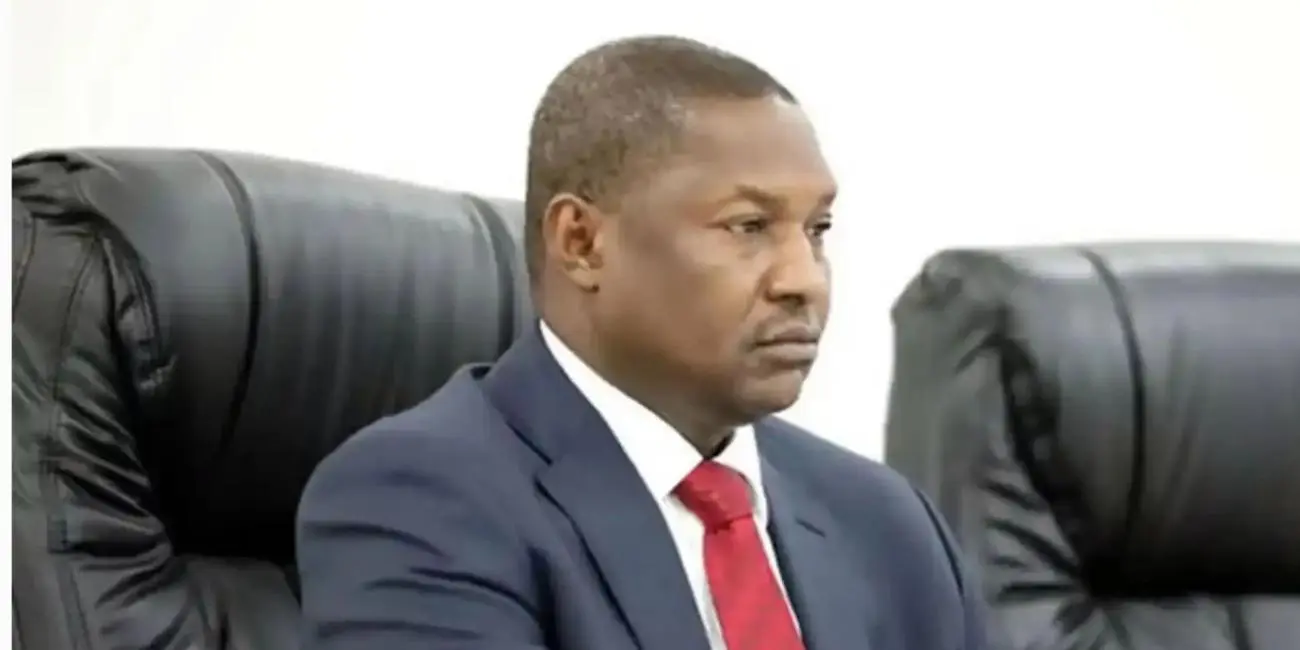
Abubakar Malami, a former Minister of Justice and Attorney General of the Federation, has called for the immediate recusal of the Chairman of the Economic and Financial Crimes Commission from his ongoing investigation, citing political persecution, personal grudges, and bias related to his recent defection to the African Democratic Congress.
Malami accused the EFCC of “illegal detention, media harassment, and procedural abuse” in a strongly worded press statement released on Monday by his media assistant, Muhammad Doka. He insisted that the investigation against him was motivated by “deep-seated historical animosity” on the part of the commission’s leadership rather than by law enforcement considerations.
“Under the current leadership of the EFCC, I have been clearly prejudiced and cannot receive a fair, objective, or lawful investigation,” Malami declared.
The former justice minister based his arguments on incidents that occurred during his time as AGF, when the Justice Ayo Salami Judicial Commission of Inquiry was established by the Federal Government to look into claims of corruption and abuse of position inside the EFCC.
Malami pointed out that the current EFCC chairman was the commission’s secretary and that the Salami Report, which is currently available to the public, included unfavorable conclusions about him.
He claimed, “The current investigation exhibits all the characteristics of retaliatory persecution driven by personal vengeance.”
Malami urged the Attorney-General of the Federation to step in as the country’s Chief Law Officer and formally called on the EFCC chairman to withdraw from the case.
He warned that inaction may result in “serious institutional damage” and stated that “another appropriate law enforcement agency must handle this matter to restore credibility and public confidence.”
Citing Sections 35(3), (4), and (5) of the 1999 Constitution (as modified), Malami further sought his quick arraignment or release within 24 hours.
He emphasized that “only a court of competent jurisdiction—not a politically compromised agency—can lawfully and credibly adjudicate this matter.”
The former AGF raised additional concerns by accusing the EFCC of trying to employ people who have been convicted by foreign courts and are currently serving criminal sentences abroad as possible witnesses.
He claimed that such individuals should typically be the topic of extradition rather than prosecution witnesses, calling such a move “desperate, scandalous, and corrosive to the integrity of Nigeria’s criminal justice system.”
The statement claims that Malami’s legal team has taken official measures to protect his rights, such as requesting Certified True Copies of the petitions that are said to have started the inquiry and the EFCC’s investigation report so that he can prepare his defense.
“Let me be clear: I seek no political settlement or inducement,” declared Malami.
“My only goal is to clear my name in front of a court with the necessary authority in an honest and open manner. Nigeria cannot turn into a country where anti-corruption organizations are used as political intimidation tools. The law must continue to take precedence above politics, authority, and individuals.
The EFCC has not yet addressed Malami’s claims at the time this report was filed.