
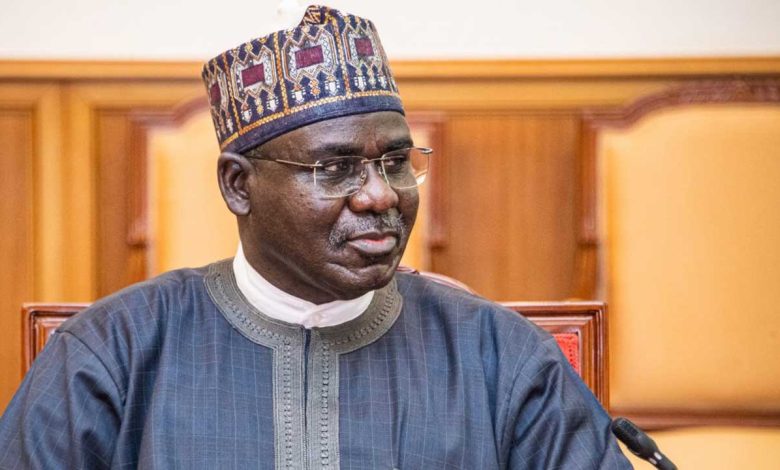
Nigeria cannot overcome insecurity by relying solely on the military, according to former Chief of Army Staff Lt.-Gen. Tukur Buratai (rtd), who cautioned that doing so could jeopardize long-term stability.
In a recent interview on Channels Television, Buratai promoted a “whole-of-society approach,” according to a post made on X by security analyst Zagazola Makama.
He maintained that combating insurgent organizations like Boko Haram should not be viewed as a military mission, but rather as a national endeavor involving all facets of society.
Buratai noted that although troops have maintained consistency in their field operations across several flashpoints, other government institutions and stakeholders must support their efforts with better governance, economic growth, and social initiatives.
He claims that even while military operations in the afflicted areas have persisted, government agencies, communities, and other sectors must make efforts through social programs, development, and governance.
He stated, “The entire nation is over-relying on the military,” pointing out that various governmental levels and agencies have distinct roles to play in addressing insecurity.
Nigeria’s National Security Strategy 2019, the former army chief remembered, had previously offered a comprehensive strategy that included infrastructure-based, social, and economic solutions.
But he questioned if the tactic has been applied consistently over time.
He emphasized that putting a stop to insurgency requires more than just fighting; problems like unemployment, poverty, and inadequate infrastructure also contribute to instability.
Buratai thinks that addressing the underlying reasons of disturbance, such as poverty, unemployment, and a lack of basic utilities, is essential to ending insurgency. He notably stated that one of the biggest obstacles facing the military is the status of the roads in combat areas.
He clarified that inadequate infrastructure not only hinders troops’ movement but also leaves them vulnerable to ambushes and concealed bombs.
“In certain cases, an operation that should take two hours could take up to five hours due to bad roads,” he added, adding that these delays give rebels the chance to set up ambushes and install explosives.
He pointed out that enhancing infrastructure, particularly roads, would increase military efficacy and lower the risks encountered by field personnel.
Buratai also called on state governments to prioritize youth development in order to address the underlying causes of insecurity.
In order to keep young people from becoming involved in violent activities, he stated it is crucial to engage them through economic empowerment, skill development, and job creation.
Speaking on the subject of identifying suspected terrorist sponsors, Buratai stated that taking action should take precedence over disclosing names.
He expressed concern that certain people connected to the insurgency have not yet been charged, saying, “It is not just about naming names; what is important is taking action.”
He insisted that ongoing collaboration between the military, government agencies, and the general public is necessary to combat insecurity in Nigeria.
In order to attain long-term peace and stability, Buratai continued, the nation may still completely embrace the whole-of-society approach.