
Lt. Gen. Tukur Buratai (retd.), a former chief of army staff, has cautioned that the expansion of the Nigerian Police Force and other civilian security agencies is being hampered by the troops’ extensive presence throughout the country’s 36 states.
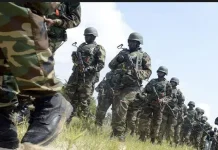
According to reports, military forces are presently supporting internal security operations throughout Nigeria, including the Federal Capital Territory.
However, Buratai contended that the development was undermining the Nigeria Police Force’s capability in his keynote speech on Monday at the 2026 Armed Forces Celebration and Remembrance Day lecture in Abuja.
According to Buratai, “the widespread use of Nigeria’s Armed Forces in internal security offers instant stability, but it also perpetuates a cycle of dependency that weakens civil police capacity and strains defense resources.”
He claims that the scenario has led to a hazardous imbalance where the Armed Forces are less prepared for conventional threats, the military is overstretched, and defense budgets are diverted to routine policing responsibilities.
According to Buratai, the Armed Forces of Nigeria’s constitutional duties include defending the country against foreign attack, maintaining territorial integrity, quelling insurrection, and supporting civil authorities as needed.
But he emphasized that the police and state security agencies should be at the forefront of domestic security, which should be essentially intelligence-driven and led by civilians.
“The state intelligence services and the police should essentially be the civil-driven and intelligence-driven entities in charge of internal security,” he stated.
He cautioned that the military’s primary duty of protecting the nation from outside threats must not be permanently replaced by tasks related to development and internal security.
Buratai stated, “The Armed Forces of Nigeria are still an essential force for stability and national development, but their expanded internal role must not compromise its core mandate or weaken civilian institutions.”
In order to maintain the military’s preparedness for its main mission, the former army chief advocated for a clear, time-bound, and conditions-based disengagement strategy that would progressively transfer internal security responsibilities to civilian authorities.