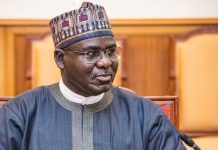

Bosun Tijani, the Minister of Communications, Innovation, and Digital Economy, has presented the Federal Government’s advanced plan to address weaknesses in the telecommunications sector in order to fight insecurity and kidnapping nationwide.
Tijani acknowledged the public’s worry over ransom talks and suspected crimes carried out via unregistered SIMs in an interview with Channels Television’s Politics Today on Friday. He claimed that the issue is “far more technical” than is commonly believed.
The Minister disclosed that although the required National Identification Number (NIN)-SIM linking was a first step, criminal networks have already moved away from straightforward unregistered lines and embraced other strategies.
He clarified that in order to avoid regular towers, criminals increasingly use technology that allow them to route calls across many towers. This strategy works best in isolated and poorly connected areas.
“They bounced calls off several towers instead of using the standard towers.” They like living in remote regions because of this, Tijani clarified.
He pointed out that President Tinubu advocated for funding for towers in those unsafe locations because the current administration recognized this shortcoming.
The Minister unveiled a multifaceted connection plan to improve security monitoring and eliminate these network blackspots.
He stated that Nigeria is still the “only West African country” with its own communications satellites, a capability that the government is currently bolstering.
He explained, “This is why we are upgrading our two satellites, so that our satellites will work in the event that our towers are not working.”
He claims that the government is making significant investments in the extension of fiber optic cable.
Tijjani revealed that a joint initiative with Huawei to install 4,000 new cellular towers throughout underprivileged rural areas was recently approved by the Federal Executive Council.
He affirmed that the initiative is anticipated to “significantly improve rural connectivity, stimulate commerce, and enhance security surveillance” when it begins next year.
Despite being crucial, the Minister pointed out that the satellite deployment is still “the third leg” of the larger operation and will take longer to launch than the tower and fiber projects, which are “well in progress.”