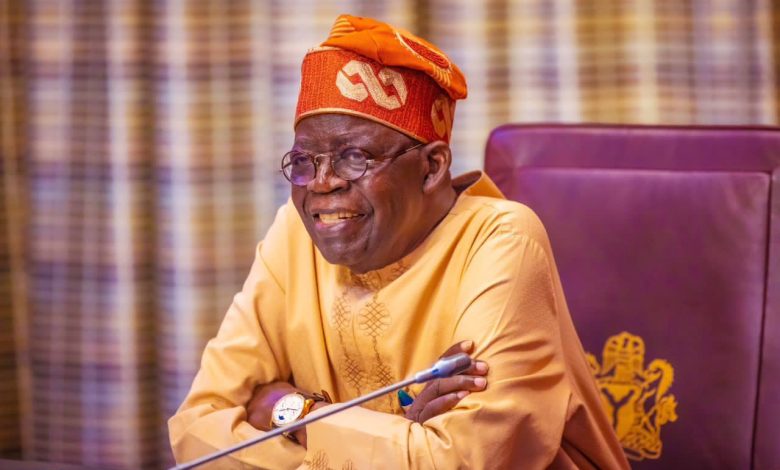
Nigerian editors have been tasked by President Bola Tinubu to maintain national unity, justice, and truth in their reporting.
The Nigerian leader emphasized how important the media is to maintaining democracy and fostering national unity.
Speaking at the opening of the Nigerian Guild of Editors’ (NGE) Annual Conference on Wednesday, November 12, 2025, at the State House in Abuja, the President reportedly commended the Nigerian press for its longstanding role in upholding democracy and encouraged editors to carry on that tradition through ethical journalism.
Tinubu referred to journalism as “an instrument of national awakening” that has influenced Nigeria’s democratic transition, describing it as more than just a career.
He praised earlier journalists who put their lives in danger during military dictatorship and colonial control, stating that their sacrifices “form part of the foundation upon which our democracy rests today.”
“Freedom gained via hardship is not sustainable.” The President cautioned that it necessitates ongoing watchfulness and careful exercise.
He reminded editors that “the integrity of public conversation” is just as vital to democracy as legislation and elections.
Narratives are shaped by you as editors and managers of the national information space. You shape the public’s perception. You determine what becomes a national priority and how our shared difficulties are seen,” he stated.
Tinubu asked editors to make sure public discourse stays constructive and nation-building, acknowledging that Nigeria’s diversity inherently creates divisions.
When constructive and well-informed, criticism benefits the country. However, cynicism that fosters distrust and hopelessness can undermine the fundamental underpinnings of the society that we all work to better,” he said.
Tinubu emphasized that despite political and ideological differences, the country’s interests must always come first.
Concerned about the increasing dissemination of misleading information via social media, the President cautioned that “falsehood can take root before truth has time to speak.”
In a time when “every citizen is now a potential publisher,” he exhorted editors to act as the gatekeepers of truth.
“Professional judgment must be your guide; balance must be your principle; and verification must be your anchor,” he stated.
Tinubu emphasized that journalism should construct rather than destroy and urged the media to “report boldly, but truthfully” and to criticize government policies “with knowledge and fairness.”
Tinubu Reiterates His Devotion to Growth and Reforms
Regarding governance, Tinubu reaffirmed the administration’s dedication to enhancing the welfare of its inhabitants and stabilizing the economy.
“The reforms we have implemented have been difficult, but they are intended to put our economy on a solid and long-lasting foundation,” he stated.
“We have implemented measures to reestablish confidence, promote investment, and restore macroeconomic equilibrium. There are indications of progress in a number of economic sectors.
Though he admitted that there is still more work to be done, he promised that his government will make sure that economic progress actually improves Nigerians’ quality of life.
The President stated that nation-building necessitates collaboration amongst all sectors, including the media, private organizations, and civil society, and extends beyond government initiatives.
The government plays a part. The private sector serves a purpose. Civil society plays a part. Additionally, he stated that the media has a clear duty to promote harmony and reason in society.
“Let us choose clarity over confusion, responsibility over recklessness, and hope over despair,” he continued, urging editors to respect the standards of their profession and concentrate on productive discourse.
President Bola Tinubu’s entire speech is shown here.
“OPENING ADDRESS BY HIS EXCELLENCY, PRESIDENT BOLA AHMED TINUBU GCFR AT THE ANNUAL CONFERENCE STATE HOUSE OF THE NIGERIAN GUILD OF EDITORS WEDNESDAY, NOVEMBER 12, 2025.”
PROCEDURE
It gives me great pleasure to welcome you to the State House for the Nigerian Guild of Editors’ annual conference this year. Your attendance here is a testament to the media’s ongoing significance in influencing national policy and bolstering democratic life. I applaud the Guild’s leadership for upholding this custom of introspection and professional involvement.
The theme you have selected, “Democratic Governance and National Cohesion: The Role of Editors,” encourages us to consider how our democracy is doing and how public debate can either improve or worsen the ties that bind our country together. As we continue to construct transparent, robust, and citizen-trusted institutions, this discussion is essential.
In Nigeria, journalism has always been more than just a vocation. It has served as a tool for the awakening of the country. The Nigerian press has stood up for reason, dignity, and advancement at pivotal moments in our country’s history, from the early publications that opposed colonial injustice to the moral voices that maintained hope during the gloomy days of military rule. Many journalists suffered personal hardships, intimidation, and incarceration while defending the public interest. Their sacrifices are a part of what makes our democracy what it is today. In addition to remembering them, we pay tribute to them by continuing to uphold the principles they stood for.
However, freedom gained from hardship is not self-sustaining. It necessitates careful practice and ongoing awareness. The integrity of public discourse is just as important to a democracy as elections and laws. Your role becomes crucial and essential at this point.
Narratives are shaped by you as editors and managers of the national information space. You shape the public’s perception. You determine what becomes a national priority and how our shared difficulties are perceived. That obligation carries a substantial burden. It must be used sensibly, fairly, and with a strong feeling of patriotism.
Nigeria is a vast and varied nation. Disagreements and debate are a part of our existence. Disagreement, however, must never result in the deterioration of national unity. When constructive and well-informed, criticism serves the country. However, cynicism that fosters distrust and hopelessness can erode the fundamental underpinnings of the society that we all work to better. The interest of the country must always come first.
These days, knowledge spreads quickly and extensively. Every individual now has the ability to post thanks to social media. Although this has advantages, it also makes false information spread more quickly and widely. Before the truth gets a chance to speak, falsehoods can spread. The editorial function is more crucial than ever in such a setting. You must use professional judgment as your guide, balance as your principle, and verification as your anchor.
Thus, I implore you to keep maintaining the greatest journalistic standards. Report fearlessly, but be honest. Criticize government policy, but do it fairly and intelligently. Your goal should always be to improve society rather than destroy it.
This administration is still dedicated to protecting our country, maintaining economic stability, and expanding opportunities for every citizen. Although the reforms we have implemented have been difficult, they are intended to put our economy on a solid and long-lasting foundation. We’ve taken action to boost confidence, promote investment, and restore macroeconomic equilibrium. There are indications of progress in a number of economic sectors. However, we are aware that there is still more work to be done, and we are committed to making sure that progress results in actual improvements in Nigerians’ day-to-day lives.
But the Nigeria we want cannot be created by institutional advancements and economic changes alone. Building a nation demands collaboration. It calls for trust. It necessitates a common awareness that our future is interconnected. The government plays a role. The private sector serves a purpose. Civil society plays a part. Additionally, the media has a clear obligation to promote harmony and reason.
I request that you continue to carry out your duty with integrity and seriousness. Let’s choose accountability over carelessness, clarity over ambiguity, and hope over despair. Let’s not forget that the narratives we tell ourselves as a people and a nation shape the nation we become.
Honorable Editors, your job is important. Our country’s course will be influenced by the standards you uphold, the tone you set in your newsrooms, and the bravery with which you stand up for the truth. Let’s fulfill this duty with intention.
I hope your talks are fruitful, thoughtful, and constructive, and I eagerly await their results.
God bless the Federal Republic of Nigeria, and thank you.
Tinubu, Bola Ahmed, GCFR
President, Head of State of the Armed Forces,
Nigerian Federal Republic.