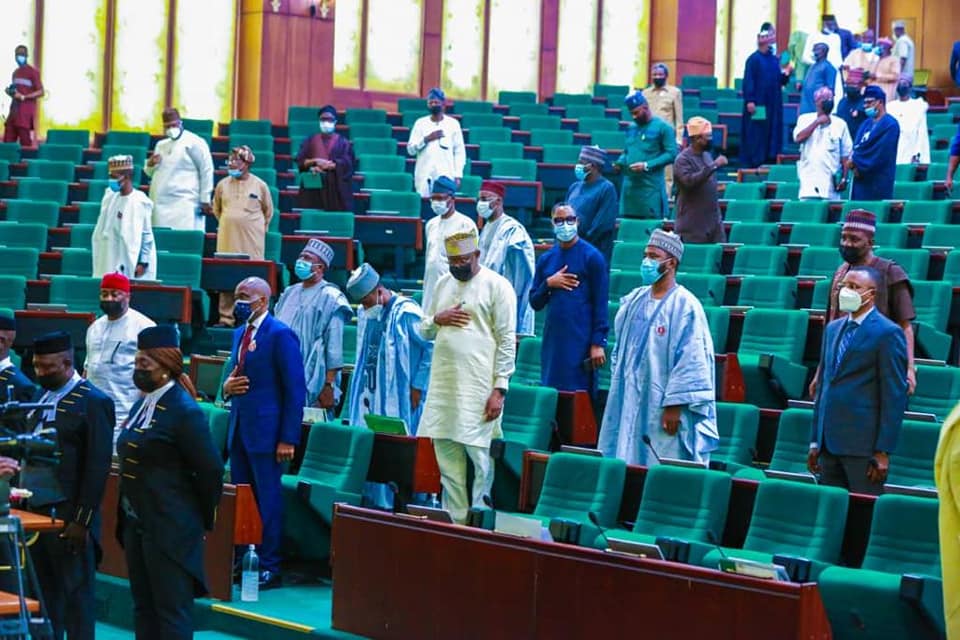
The House of Representatives has denied claims that the National Assembly is purposefully holding up the Electoral Act Amendment law, stating that the alleged hold-up is procedural rather than political and that they are confident the law would be unified the next week.
There isn’t a purposeful delay, according to Adebayo Balogun, the chairman of the House Committee on Electoral Matters, who stated that the measure is being worked on in both houses of the National Assembly.
“The Senate is debating the bill while it is in session. Balogun, who represents Lagos State’s Ibeju-Lekki Federal Constituency, told Punch, “Hopefully, the harmonisation will be finished by next week.”
In preparation for the 2027 general elections, he continued, the law would be delivered to the President for assent when the House and Senate have finished harmonizing.
The Senate again fails to pass a bill.
The Senate once again failed to complete work on the Electoral Act (Amendment) Bill on Tuesday, retreating into a protracted closed-door session that ended without any indication of what would happen to the planned revisions, despite assurances of progress.
During a four-and-a-half-hour executive session, lawmakers discussed the findings of the Senate Committee on Electoral Matters, which was chaired by Senator Simon Lalong, as well as suggestions from a seven-member ad hoc committee tasked with settling controversial provisions in the bill.
However, no information regarding the talks or outcomes was revealed when plenary reconvened at approximately 5:35 p.m., leaving the bill in limbo for the second sitting in a row.
After Senate Leader Senator Opeyemi Bamidele moved for the chamber to dissolve into a Committee of the Whole for clause-by-clause scrutiny of the bill, the executive session got underway.
Senators decided to discuss the findings of the ad hoc committee, which was led by Senator Niyi Adegbonmire (Ondo Central), behind closed doors even though it was on the Order Paper for presentation.
Senate President Godswill Akpabio gave a hazy summary of the proceedings when they resumed.
Before requesting senators to verify whether the statement accurately represented the executive session, Akpabio stated, “The Senate deliberated on matters relating to the working of the Senate in particular and the nation in general.”
With a collective “aye,” lawmakers quickly closed the issue.
Shortly after, Bamidele moved to postpone the plenary till Wednesday. He did not specify if the bill had reached third reading or when it would return for final passage.
Slow Pace Increases Fear Before the 2027 Elections
Concerns over Nigeria’s electoral framework’s preparedness for the general elections in 2027 have been raised by the frequent delays. Many believe that the election Act Amendment Bill is essential to enhancing public trust, preventing election fraud, and preserving electoral integrity.
Mandatory real-time electronic transmission of polling unit results, harsher penalties for electoral offenses like result manipulation and ballot-box snatching, substituting the Bimodal Voter Accreditation System for references to the “smart card reader,” safeguarding vulnerable voters, including those who are blind or visually impaired, from interference, and making it illegal for presiding officers to refuse to sign and stamp electoral materials are some of the major proposals currently before the Senate.
Leading opposition groups, such as the New Nigeria Peoples Party (NNPP), Labour Party (LP), and African Democratic Congress (ADC), have criticized what they see as a lack of urgency in changing the Electoral Act.
They cautioned that more postponements might damage the public’s trust in the election process and call into question the validity of the 2027 surveys.
The last quarter of 2025 saw the measure proceed slowly, which drew harsh criticism from the people. The bill was originally scheduled for discussion prior to the House’s Christmas break, but it was postponed because MPs were not given enough copies.
Nigeria’s Senior Advocate, Femi Falana, charged last week that the National Assembly is purposefully ignoring the bill, claiming that MPs would rather keep things as they are.
“It is very evident from the conduct of both chambers of the National Assembly that the members simply want the status quo retained,” Falana stated on an Arise News program.
“This rigmarole is intended to give Nigerians the impression that the proposed Electoral Act is being addressed.”
Falana emphasized that lawmakers are prioritizing defections over substantive election change in an environment of “reckless impunity.”
The National Assembly’s leadership insists that delays are caused by legislative processes and the requirement for both chambers to agree before a law can be sent for presidential assent, despite growing criticism.