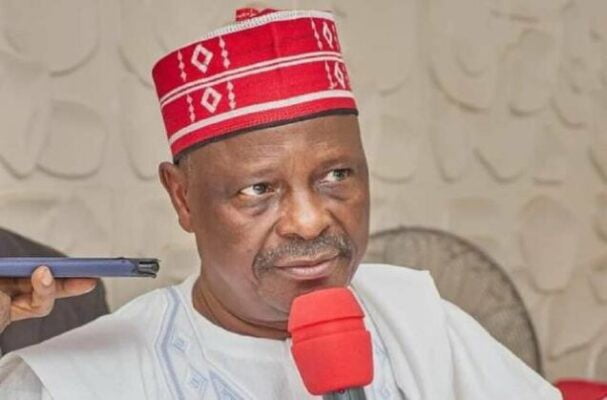
Yesterday, new information surfaced about how the president’s and the All Progressives Congress’s (APC) attempts to reach a political agreement with Senator Rabiu Kwankwaso, who was previously thought to be Kano’s “beautiful bride” and a possible election-shaping force, ultimately failed.
Courted for the perceived electoral value of his red-cap movement, Kwankwasiyya, the former Kano governor appears to be watching his political allure wane, leaving the leader of the New Nigeria Peoples Party (NNPP) increasingly isolated and struggling to translate past dominance into present influence.
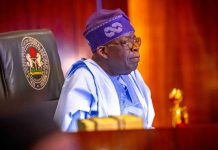
According to people familiar with the negotiations, Kwankwaso and President Bola Tinubu had numerous meetings, particularly in Abuja, over the course of several months.
Kwankwaso was initially perceived by the administration as a strategic link between Kano and portions of the Northwest, especially in light of the NNPP’s results in the 2023 general election.
However, high-ranking APC sources revealed last night that talks broke down due to what they called excessive and unreasonable demands.
Sources claim that in addition to a vice presidential position and assurances that would last until the 2031 election cycle, Kwankwaso desired control of up to 20% of the APC’s national organization.
Senior APC officials said that as maneuvering ahead of the 2027 elections picked up speed, the requests immediately raised concerns.
“Even President Bola Tinubu has not specifically asked for any percentage share of the APC. It was a deal-breaker to demand twenty percent of the APC’s national structure. Besides, the vice-presidential position was never on the table.
“At this point, there was no basis for discussions around 2031, and it was made clear to him that it was not vacant,” the impeccable source familiar with the negotiations stated.
Additionally, the NNPP’s Dr. Boniface Aniebonam bloc disclosed yesterday that Governor Abba Yusuf’s decision to quit the party was brought about by Kwankwaso’s controlling demeanor and purported slavish intent.
In response to remarks made by Buba Galadima regarding Yusuf’s defection, National Vice Chairman North-West Alhaji Sani Danmasani said in a statement that Kwankwaso’s actions were intolerable, leading Yusuf to look for “greener pastures.”
In the run-up to the deal’s collapse, presidential strategists began to doubt Kwankwaso’s claim to total control of the state’s political apparatus, despite the fact that the former Kano governor was initially motivated by the APC’s belief that he remained essential to the ruling party’s long-term electoral calculations, particularly in the North-west.
They anticipated taking advantage of the growing tension between him and Yusuf as well as indications that the NNPP was unsure about the governor’s long-term political prospects.
Given the scope of Kwankwaso’s demands, it was not surprising that negotiations quickly broke down.
Senior APC sources claim that party leaders were taken aback by the NNPP leader’s demand for control of 20% of the APC’s national political structure, which was soon determined to be unrealistic.
In addition to structural compromises, Kwankwaso pushed for the vice presidential position, even though it had already been filled and could not be renegotiated.
Kwankwaso has also publicly confirmed this, saying recently that he would only join or defect to another political party if he was offered either the presidential or vice presidential ticket ahead of the 2027 general election.
“He was clearly overreaching,” a top APC chief said.
According to those who talked, Kwankwaso’s seeming emphasis on the long game struck APC negotiators as even more remarkable. Kwankwaso was said to have sought assurances not just for immediate accommodation, but also for influence over the party’s succession plans, with an eye firmly on 2031.
The set of demands implied to the president and APC leaders that a politician was negotiating as a nearly equal partner in a party he did not create, rather than as a potential ally.
When no headway was made, Tinubu, initially open to engaging Kwankwaso as the presumed gatekeeper of Kano politics, then recalibrated his strategy.
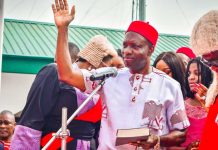
Rather than expend political capital trying to woo an opposition leader with expansive demands, the president and APC negotiators were said to have turned their attention to consolidating ties with the Kano governor, betting that incumbency, federal leverage and direct engagement would yield better results than protracted courtship with Kwankwaso.
“That was the moment of change.” The presidency decided it made more sense to deal with the governor after it became evident that Kwankwaso no longer controlled the entire Kano political space as he claimed, particularly with disagreements between him and his former political godson, according to another source.
The change seemed to have effectively deprived Kwankwaso of the negotiating leverage that once made him appealing, and it was a brilliant move. His bargaining position was damaged by his failure to produce a unified Kano bloc and what APC leaders called an exaggerated feeling of indispensability.
The sources claim that Yusuf’s chances of winning a second term in Kwankwaso’s NNPP were heightened when the president and his supporters presented the APC to him as a more reliable and stable platform.
NNPP Bloc: Kwankwaso’s “Slavish” Goals Driven Yusuf Out
The NNPP, led by Dr. Boniface Aniebonam, has disclosed that Governor Yusuf’s decision to quit the party was brought about by Kwankwaso’s controlling demeanor and purported slavish intentions.
In response to Galadima’s remarks regarding Yusuf’s defection, National Vice Chairman North-West Danmasani asserted in a statement that Kwankwaso’s actions were intolerable, leading Yusuf to look for “greener pastures.”
The head of the NNPP claimed that Yusuf’s decision to join the APC was motivated by a desire to leave Kwankwaso’s oppressive leadership style rather than by self-interest. Kwankwaso was accused by the party of trying to force his will on others, which forced Yusuf to depart.
According to the NNPP leader, Kwankwaso betrayed Aniebonam, the party’s founder, and was the mastermind behind it. According to the statement, Kwankwaso’s conceit and avarice prevented Yusuf from resolving conflicts within the party, leading the governor to look for other political refuge.
“Yusuf’s switch to the APC is affecting Galadima and Kwankwaso so much that the bitterness and pain are evident in their speeches,” Danmasani said in reference to Buba Galadima’s interview on Arise News Television.
“Galadima’s experiences traveling by road from Enugu airport to Umuawulu town in Anambra, the hometown of NNPP founder Aniebonam, are striking in the details of his expression during the session on Arise TV. He arrived in Anambra around two in the morning to meet with Aniebonam in order to secure a platform to oppose the 2023 general election for Kwankwaso and others.
Interestingly, Yusuf, a major beneficiary of the perilous trip to Umuawulu, was discovered to have betrayed the NNPP family in order to join their adversary, Ganduje, an APC stalwart and former governor of Kano State. Galadima and Kwankwaso, who were accused of betraying trust, were the same individuals who were given free use of the NNPP platform in order to run for office in 2023.
The individuals who betrayed Aniebonam and attempted to take over the party he founded in 2001 were the same ones. They are still working to hijack the structure of the NNPP without conscience, despite labeling Yusuf a betrayer. One starts to question why Kwankwaso and Buba Galadima are protesting and upsetting the social harmony as though they are unaware that God behaves differently.”I said that.”
The party, therefore, stated that rather than continue to lament over Yusuf, Kwankwaso and his group should seek the face of God and ask for forgiveness from those they betrayed.
Kano Govt: We’ve Reached Understanding on Emirship Tussle
In another development, after almost two years of unresolved crisis over who was the actual Emir of Kano, despite the various legal interventions, the impasse, it learnt, may be ending soon.
Yesterday, the state government verified the situation by announcing that a political solution had been used in place of the previous one and that an understanding had been achieved.
With the state government announcing that it was prepared to implement a political solution to the emirship struggle, the nearly two-year-old crisis has started to ease. The people were further reassured by the state government that the conflict would soon be settled by finding a way for a single substantive Emir to emerge.
Ibrahim Waiya, Commissioner for Information and Internal Affairs, revealed that the state has started procedures to guarantee that a practical solution was implemented to address the problem.
Since we are now one, the Kano state government has promised to settle the dispute over the Kano Emirate very soon. It is possible that some will step down from the throne on their own, or others will seek reconciliation because a mutual understanding has been reached,” he added.
Alhaji Mustapha Bakwana, Governor Yusuf’s political advisor, corroborated the claim on a local radio show, stating that the state’s political development depended on the emirship dispute being resolved.
He noted that the government planned to unify the Kano Emirate under one leader, putting an end to the ongoing tussle.