Both the construction of airports and their upkeep are expensive. Even if they aren’t making any money, permanent technical and administrative staff are necessary for an airport to function. However, it seems that nearly all governors prioritize building an airport in their state. Given that the Nigeria Civil Aviation Authority (NCAA) reports that only three airports handle over 90% of all passenger travel throughout the nation, we are unable to comprehend the rationale for governors’ infatuation.
According to market predictions, Nigeria’s low per capita income will prevent a sharp increase in air travel. However, Olubunmi Kuku, the Managing Director of the Federal Airports Authority of Nigeria (FAAN), recently stated that 19 of the 22 federal airports were receiving subsidies because their passenger traffic did not match their operating expenses. “We also have roughly six or seven airports that are either privately owned or owned by state governments, which we support with either fire and rescue services or aviation security,” Kuku added.
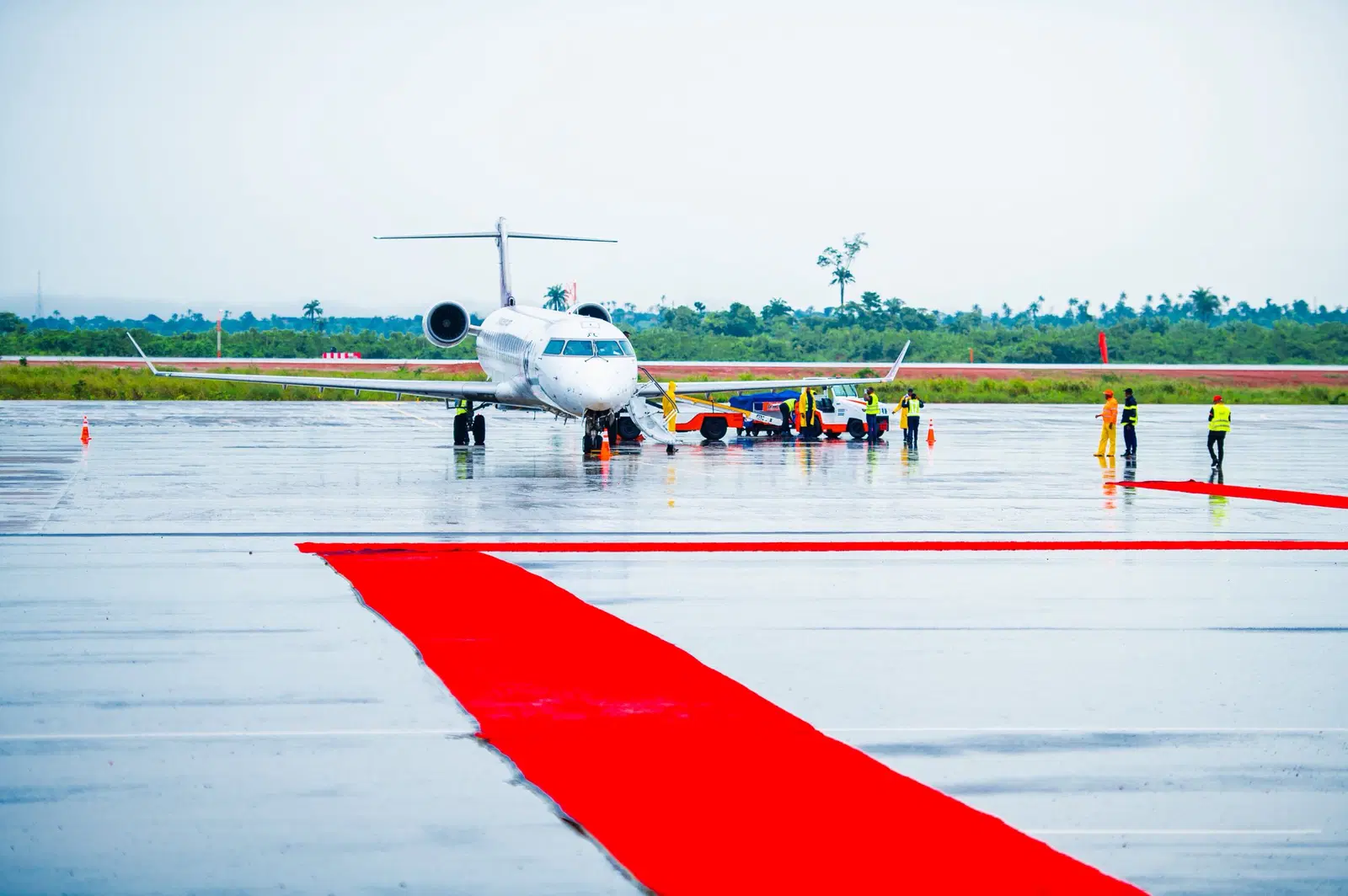
Due to financial backing from the governments of Akwa Ibom and Delta States, only the airports in Uyo and Asaba are currently considered viable among all state-built airports. For example, Kebbi State just constructed a state-of-the-art airport. With the exception of charter services, it hardly has scheduled regular flights these days. The airport was turned over to FAAN to run at a significant deficit to the aviation agency because it was unable to break even. The agency has now taken control of other state-owned airports in Bauchi and Gombe.
As a result, we do not comprehend the justification for constructing additional airports for the states outside of political concerns. Regretfully, the federal government’s poor example is all that the states are doing. We questioned the reasoning behind the federal government’s 2020 decision to allow states to construct airports in Anambra, Benue, Ekiti, Nasarawa, and Ebonyi States while taking over those constructed by Kebbi, Osubi, Dutse, and Gombe States. Just six of the 26 airports under FAAN management have more than 5,000 aircraft movements annually. These six are the only ones who can survive. The question we raised at the time is still unanswered: Why must the government burden the nation with additional cost centers during a time of limited resources when it is borrowing to fulfill obligations?
Given that several of these airports have formed a cluster, the claim that states cannot grow without an airport is untrue. In order to reach his destination more quickly than if he landed at Uyo Airport, an investor heading to a specific area of Akwa-Ibom might need to land at Calabar Airport. A businessman in Onitsha is closer to Asaba Airport than Anambra Airport in Umueri. Indeed, the air traffic controller at Asaba airport is rumored to be able to direct an aircraft to land at Umueri airport in Anambra.
The result of constructing unfeasible airports is the expenditure of enormous resources on unproductive endeavors that could have been utilized to create other necessary infrastructure and facilities. Since scheduled services cannot break even for commercial airlines due to limited passenger throughput, the majority of these airports primarily benefit the governors who use charter services to travel through them. Taking everything into account, it is absurd that states are investing enormous sums of money in the construction of new airports.