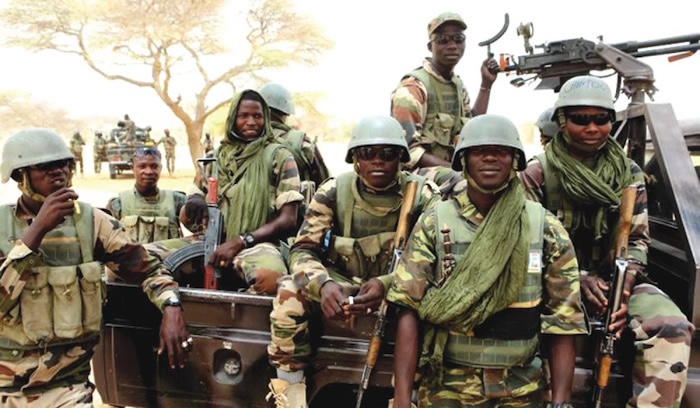
Between March 28 and 30, 2026, forces under Operation Hadin Kai prevented attacks, intercepted logistics supplies, and detained suspected collaborators, according to the Nigerian Army, which has reported a number of operational victories against militants in the Northeast.
The Nigerian Army’s official page posted the update, which described operations conducted in Damboa, Gwoza, Askira Uba, and Maiduguri, among other areas of Borno State.
The Army claims that after discovering the movement of suspected Boko Haram and ISWAP soldiers through surveillance, forces effectively thwarted their planned strikes, forcing them to retreat.
It further stated that an improvised explosive device planted along the Goniri Ngamdu road was found and successfully exploded, and that attempts to harm farmers and villages were also halted.
The Army claimed to have made a significant breakthrough when it stopped vehicles carrying substantial amounts of suspected terrorist supplies.
According to the statement, “the consignments, equal to two truckloads, included medical drugs, motorcycle parts, mosquito nets and other materials believed to be heading towards terrorist enclaves.”
In addition, troops detained a number of suspects connected to logistics supply, including Mohammed Adamu, a 26-year-old, and others in other operations.
The Army revealed in a follow-up report that another suspect, Abubakar Ali, also known as Saina, was taken into custody while purportedly conducting reconnaissance.
Drugs were found during search operations, and a suspected kidnapper was also captured, according to the statement.
Although the Army emphasized these achievements, Nigerians’ reactions to the update have been conflicting; some have questioned the overall impact of such operations given the ongoing instability in some areas of the nation.
In response, a user named King Olex remarked, “You people are failures in this country. We don’t have soldiers anymore remember you have families in those communities.”
Paul Yakubu, another commenter, suggested an alternative strategy, saying: “Go after the sponsors and financial backers.” The information that links everything is in their possession.
“The Joint Task Force failed to stop the massacre in Jos… there’s still no clear update on what really happened,” Sir Grey said in his presentation, casting doubt on the efficacy of security measures.
A different story from an abduction survivor has raised awareness of the human cost of insecurity, particularly outside of the Northeast, while discussions continue.
The victim described how he was kidnapped by armed men while working on a farm and held captive for 42 days in an internet post shared by a farm manager in Ekiti.
“They were seven, carrying AK-47 rifles. They tied my hands and took me through the forest,” he recounted.
According to him, the kidnappers demanded N100 million ransom, later reducing it after negotiations, but still subjected victims to violence despite receiving payments.
He revealed that one of the victims, a tractor operator, was shot and later died after his employer failed to meet ransom demands.
“They shot him again when the money didn’t come. I was shaking, I couldn’t move… we were told to carry his body into the bush,” he said.
The survivor added that even after his family raised money multiple times, he was not released immediately, describing how victims were moved between camps and fed poorly.
“I was the only one left at some point. Others were released after paying between N1 million and N20 million,” he said.
The account has intensified concerns over the scale of insecurity across the country, with many Nigerians pointing to a disconnect between official reports of military successes and the realities faced by citizens.
Observers say while operations in the North East continue, the spread of kidnapping and violent crimes in other regions highlights the need for a broader, more coordinated security response.
As of the time of filing this report, authorities are yet to respond directly to the reactions trailing the Army’s post or the growing concerns raised by citizens.