The Nigerian Content Consultative Forum (NCCF), a crucial forum for promoting information exchange and cooperation among important industry stakeholders and suggesting interventions and policy changes, has begun a strategic reset by the Nigerian Content Development and Monitoring Board (NCDMB). The reset aims to produce Nigerian material that has a significant impact.
The Board emphasized the need for a clear, workable path to reposition the forum as a more effective driver of in-country capacity building in the oil and gas industry during a two-day retreat and the first half of the 2026 NCCF Steering Committee Meeting.
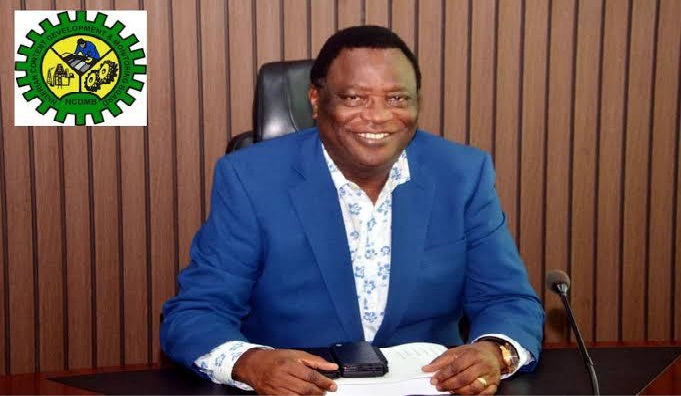
Opening the retreat, NCDMB Executive Secretary Engr. Felix Omatsola Ogbe called the meeting a “defining moment” in the NCCF’s history, pointing out that although the forum had grown steadily since its founding, a more thoughtful and purposeful course was now necessary.
“The NCCF started out as a modestly structured yet audaciously purposeful project. We can now declare with confidence that this baby has grown, supported by our shared commitment to promoting Nigerian content, fortified by teamwork, and nursed by your dedication,” he stated.
The NCDMB chairman, who was represented by the Acting Director, Planning, Research, and Statistics at NCDMB, emphasized that intentional planning must now be matched with progress and urged stakeholders to concentrate on long-term effect.
“This retreat is a turning point, not simply another gathering. He continued, “We are here to contemplate, examine our present circumstances, and map out a more lucid, strategic future for the NCCF.
In order to benchmark the forum against international best practices, find gaps, and reposition it for more relevance, he emphasized the Ernst & Young baseline research as a crucial tool. But he pointed out that people, not just ideas, will be the key to transformation.
“The quality of our engagement, the sincerity of our contributions, and our willingness to think beyond silos will depend on the success of the framework, policy guidelines, and roadmap we seek to develop,” Ogbe said, exhorting participants to think carefully, constructively, and boldly.
Mr. Damilola Aloba, a session facilitator and partner at EY, gave an overview of the retreat’s three main goals: enhancing coordination between the Forum, its Sectoral Working Groups (SWGs), and NCDMB; fostering shared ownership of its mission; and strengthening aligned leadership on NCCF’s long-term direction.
Aloba stated, “We want to strengthen aligned leadership on NCCF’s long-term direction and ensure clear expectations across NCDMB, the NCCF Secretariat, and SWGs.”
Additionally, he stated that the retreat would improve coordination frameworks to provide more seamless implementation and constant stakeholder interaction while guaranteeing a shared knowledge of execution duties throughout the ecosystem.
Aloba reported that critical structural and operational deficiencies, such as ambiguous strategic direction, project clearance delays, and a lack of transparency about post-idea decision-making, were identified through stakeholder interviews and benchmarking studies.
He pointed out that “unrefined expectations and the absence of a supportive framework” further hindered performance and that “the forum lacks clear strategic direction from NCDMB, creating uncertainty among SWGs regarding expectations and deliverables.”
Other conclusions included inadequate project evaluation and tracking capabilities, budget constraints brought on by the NCDMB’s only funding source, and the lack of clear standards for evaluating the viability and impact of projects.
He recognized the great dedication of SWG members in spite of these obstacles, especially when it came to allocating time and funds for capacity building projects throughout the oil and gas value chain.
NCCF is a statutory collaboration platform created under Sections 57 and 58 of the Nigerian Oil and Gas Industry Content Development (NOGICD) Act. Earlier, NCCF’s Acting Deputy Manager, Engineer Bright Amatoru, gave a summary of the forum’s operations.
He clarified that the NCCF has been working with stakeholders from 12 SWGs since its founding in 2014 in order to pinpoint industry gaps, create solutions, and carry out focused interventions.
Amatoru stated, “Our role is to identify issues in the priority mapping and, beyond that, provide solutions through extensive stakeholder engagement.”
Amatoru highlighted two significant accomplishments: the maritime Assets Listing System, which was created to provide an extensive database of maritime assets in the oil and gas sector, and the creation of National Operational Standards to coordinate capacity building programs throughout SWGs.
Along with programs like the Women in Oil and Gas Conference and mentorship workshop conducted earlier in the year in partnership with the Diversity SWG, he also cited benchmarking studies in fabrication that sought to close scale gaps.
He did admit, though, that the forum’s capacity to effectively prioritize actions was hampered by the lack of a well-defined strategic framework.
“As of right now, there is a lack of clarity on the selection of interventions. As we align industry standards with global best practices, that clarity is crucial,” he stated.
The retreat is a component of NCDMB’s attempts to create a thorough NCCF strategic roadmap that is in line with both industry expectations and the Board’s ten-year strategic plan.
In order to improve NCCF’s capacity to carry out its mandate in Nigeria’s oil and gas industry, participants are required to produce practical ideas, improve governance frameworks, and establish a clear execution pathway.