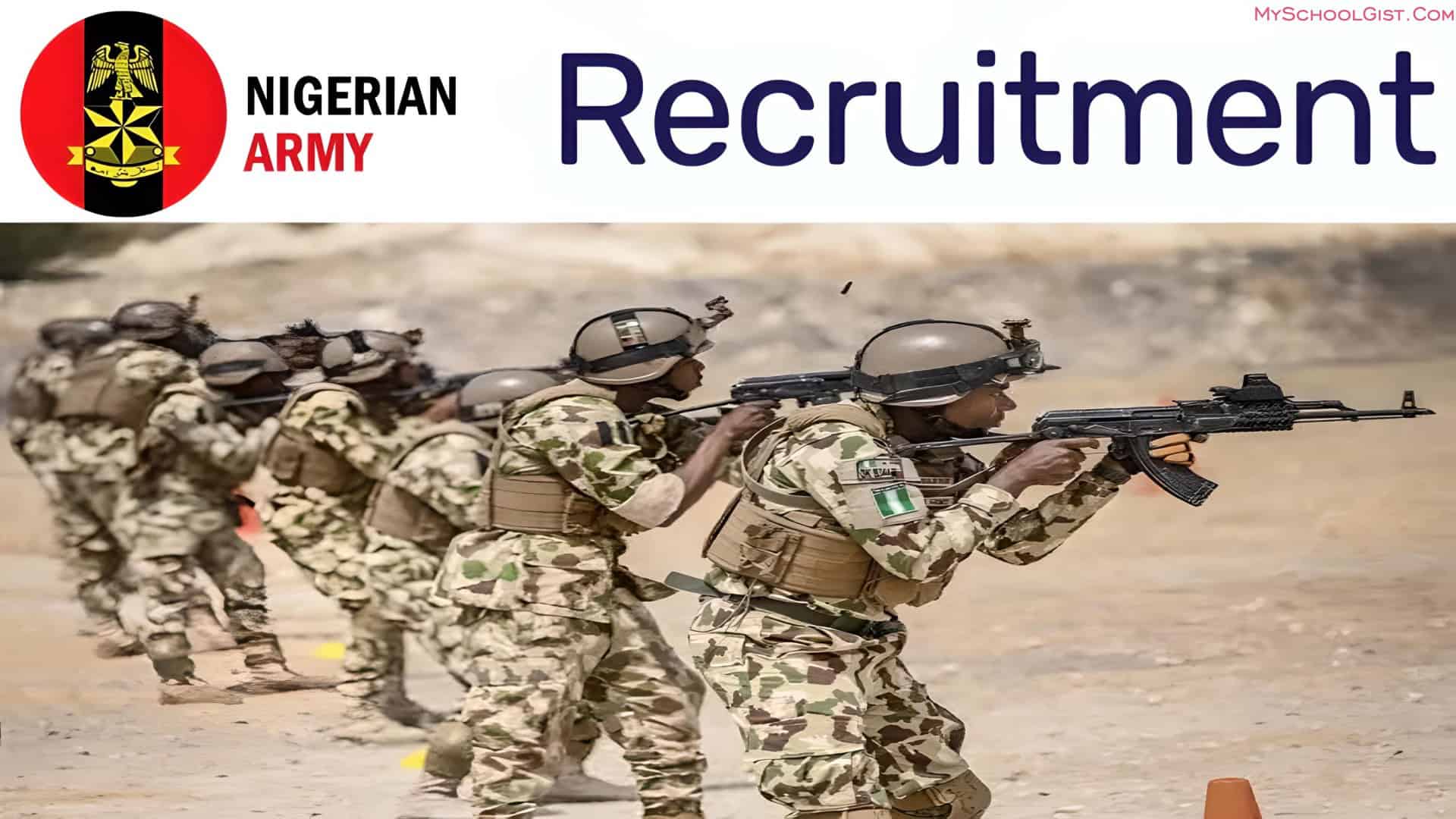
Applications for the Direct Short Service Commission (DSSC) Course 29/2026 are now open, and qualified Nigerians are encouraged to apply for commissioning as officers, according to the Nigerian Army.
The Army stated that both civilians and active military personnel with the necessary professional skills are eligible to apply for the DSSC in a statement published on its official X account on Tuesday.
The Nigerian Army’s specialized corps will commission the chosen applicants to assist with national security and defense initiatives.
Deep divisions exist among young Nigerians regarding the offer, according to a survey of their opinions. Many of them cite long-standing concerns about corruption, inadequate equipment, and poor welfare for serving, retired, and fallen personnel—issues that have, in some cases, sparked protests by impacted families.
Some young people maintain that they are prepared to serve despite these worries. The 28-year-old Abubakar Haruna stated that although other people’s grievances are valid, they shouldn’t deter patriotic duty during a crucial period for the nation.
“Who will defend the country if everyone says they won’t join the Army?” he questioned. “We need to be prepared to protect our nation, our parents, and our lives. We’re ready to carry that out.
In stark contrast, 30-year-old Faisal Muhammad, a recent college graduate, stated that he would only think about enlisting in the military if significant reforms were put into place.
“The welfare of soldiers and the provision of sufficient equipment must come first. How am I supposed to deal with criminals who have more sophisticated weaponry than I do? Soldiers often lament that bandits have superior weaponry. I doubt my parents would even permit me to enlist in such a circumstance, and I lack the confidence to do so. Says Faisal
In a similar vein, Ibrahim Aminu, who has been jobless for three years after graduating, declared that he would not enlist in the military even if he wished to see Nigeria’s security issues resolved.
“I don’t see myself joining the Army, even with the hardship of unemployment,” he stated.
The lives of police officers, soldiers, security guards, and others seem to be of little significance to the administration. Retired subordinate officers are frequently neglected. Second, soldiers’ sacrifices are not always valued by society; some even regard them as collaborators or oppressors. That destroys any motivation.
These differing opinions are a reflection of a larger discussion among young Nigerians; some contend that the current security crisis necessitates immediate sacrifice and service, while others claim that significant reforms in the welfare and recruitment processes of troops must happen first.
Major Muhammad Bashir Shu’aibu Galma (Rtd.), MNI, a former senior officer, responded to the argument by stating that disagreements are common and shouldn’t be taken seriously.
According to him, enlisting in the Nigerian Army has never been required.
“Many of our peers had no interest in serving in the military, even in our day.”
He claims that people who join with a sincere dedication seldom regret their choice. Additionally, he refuted statements made by some former officers on social media that they regret their years of service, cautioning that such accounts shouldn’t deter prospective candidates.
He pointed out that many of today’s senior officers—soldiers, police officers, and paramilitary members—are the offspring of previous security personnel.
Major Galma did, however, recognize shortcomings in the recruitment process, especially political meddling, which he claimed frequently permits unfit applicants to join the armed forces.
“I urge legislators to permit the recruitment of only competent and willing individuals,” he declared.
“Many people who are coerced into the system either desert after training or turn into security risks, including supporting criminal elements.”
There is still time for the government to rebuild young Nigerians’ faith in military duty, according to some security specialists.
Detective Auwal Durumin Iya, a security expert, stated that Nigeria is currently experiencing a soldier shortfall, necessitating new recruiting.
“Inadequate manpower affects not only the military but also the police, who are unable to secure communities while the insurgency continues in border areas and forests,” he stated.
“Trained workers are still required to operate equipment, regardless of its sophistication. Protecting the country from foreign and internal threats is not the same as policing.
He called on the government to give welfare reforms a priority for all security agencies.
“The government must enhance welfare, guarantee timely salary payments, supply sufficient equipment, and take care of the health and families of employees,” he stated.
“The state must support cops who are hurt or killed. This is what will motivate youth to enlist.
The discussion takes place as the country’s security situation gets worse. Just last Sunday, their convoy struck a landmine and came under fire close to Bindundul hamlet, around 20 kilometers from Kareto in Borno State, reportedly killing at least nine Nigerian soldiers and injuring several more.
Experts have once again connected the tragedy to the military’s lack of sophisticated bomb-detection technology that is often utilized by more industrialized nations.
The focus now shifts to how Nigerian youngsters will react as the DSSC application deadline of February 4, 2026 draws near, whether cries for reform will prevail over calls to serve, or whether patriotism would triumph despite the risks.