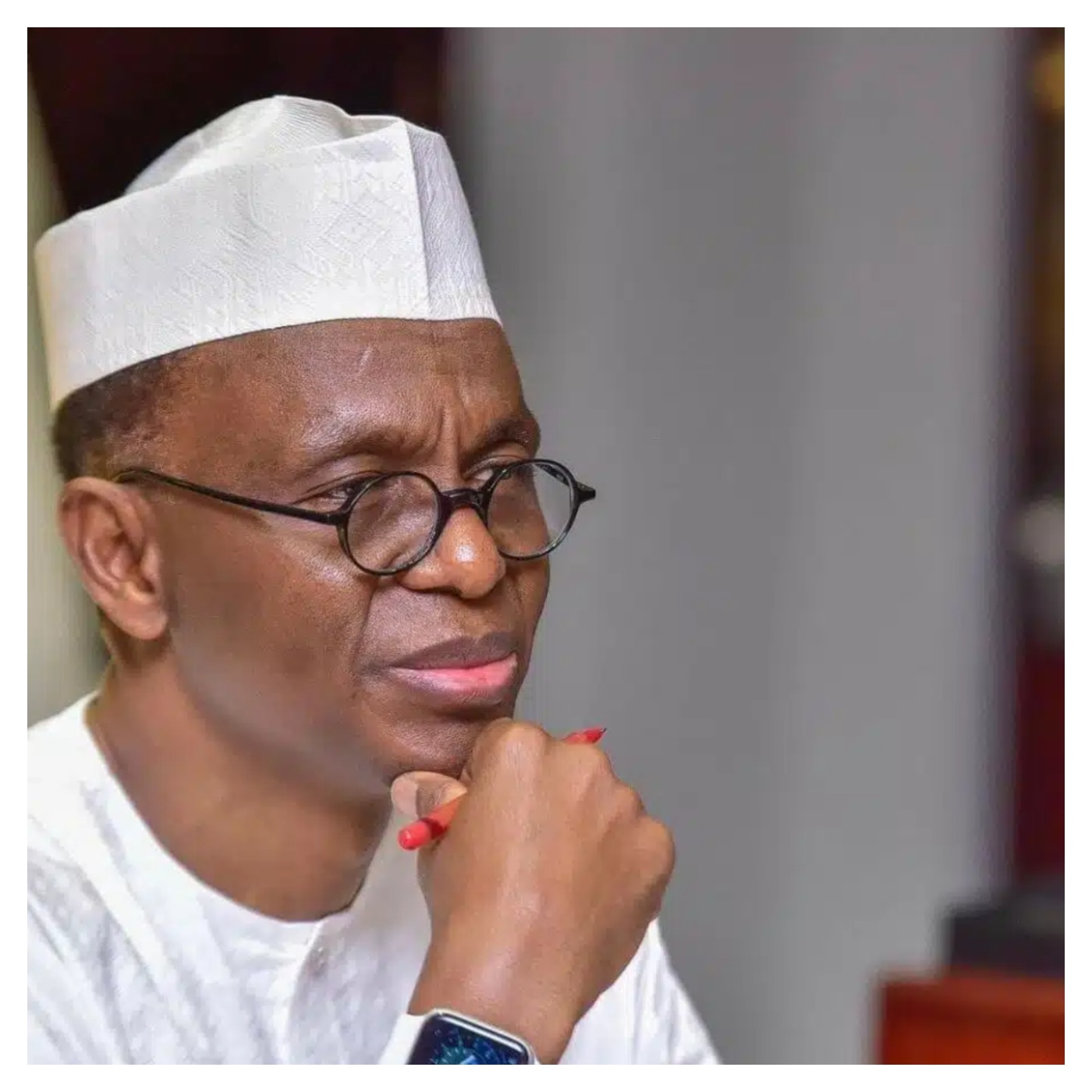
Nasir El-Rufai, a former governor of Kaduna State, gave an explanation for his refusal to respond to inquiries from the Independent Corrupt Practices Commission (ICPC), stating that his silence was a constitutional privilege rather than a sign of disobedience.
On February 19 and 20, 2026, El-Rufai, who is presently the subject of an anti-graft agency probe, gave two handwritten statements to ICPC officers while being cautious and in front of his attorney, Ubong E. Akpan.
According to reports, the former governor admitted reading the warning and said he grasped its significance in his initial statement, which was dated February 19.
“I have read the aforementioned warning and am aware of its implications. In the presence of my attorney, Ubong Akpan, Esq., from Ubong Akpan’s chambers, I would like to freely declare,” he wrote.
He continued by giving personal background information on his upbringing in Kaduna, his birth in Dandawa, Katsina State, in 1960, and his academic career at Harvard University, the University of London, and Ahmadu Bello University.
El-Rufai emphasized his background in quantity surveying, telecommunications, and public service, citing his positions as Minister of the Federal Capital Territory (2003–2007), Director General of the Bureau of Public Enterprises (1999–2003), and two terms as governor of Kaduna State (2015–2023).
He also mentioned that he is retired and spends most of his time in Egypt with his mother, who is 96 years old, and half of his family.
He refuses to answer the commission’s inquiries, though.
“On the advice of counsel, I have chosen to exercise my right to quiet in response to your query (and indeed all of your queries). He wrote, “I will not answer any questions or make any more statements.”
“Present Findings to a Tribunal”
El-Rufai claimed that rather than questioning him further, the ICPC should present its conclusions to a court after nearly two years of investigations.
“I think the ICPC should deliver its conclusions to a judicial panel rather than to me, following nearly two years of intense investigation. I will only address any accusations in a court of law,” he declared.
Additionally, he said that the probe was driven by politics.
“The true reason you are looking into me is because I am a prominent member of the African Democratic Congress (ADC), which is the only opposition party still in existence in Nigeria,” he wrote.
“This is because, unlike political persecution, which is a matter that only a judge can decide upon, I do not think these investigations amount to lawful entitlement.”
El-Rufai stuck to his position in a follow-up statement dated February 20, 2026, after investigators allegedly showed him more documents.
“In accordance with my statement dated February 19, 2026, and in the presence of my attorney, Ubong E. Akpan, I would like to further state that I reserve my constitutional right to remain silent in response to all further documents and questions,” he wrote.
“As I made clear in my statement dated February 19, 2026, I will only answer these documents and inquiries in a court of law.”
The Chief Magistrate’s Court in Bwari had already granted the ICPC a 14-day remand order, which is scheduled to expire on March 5, 2026.
As legal and political factors continue to influence the inquiry’s narrative, this discovery represents the most recent development in the continuing investigation concerning the former governor.