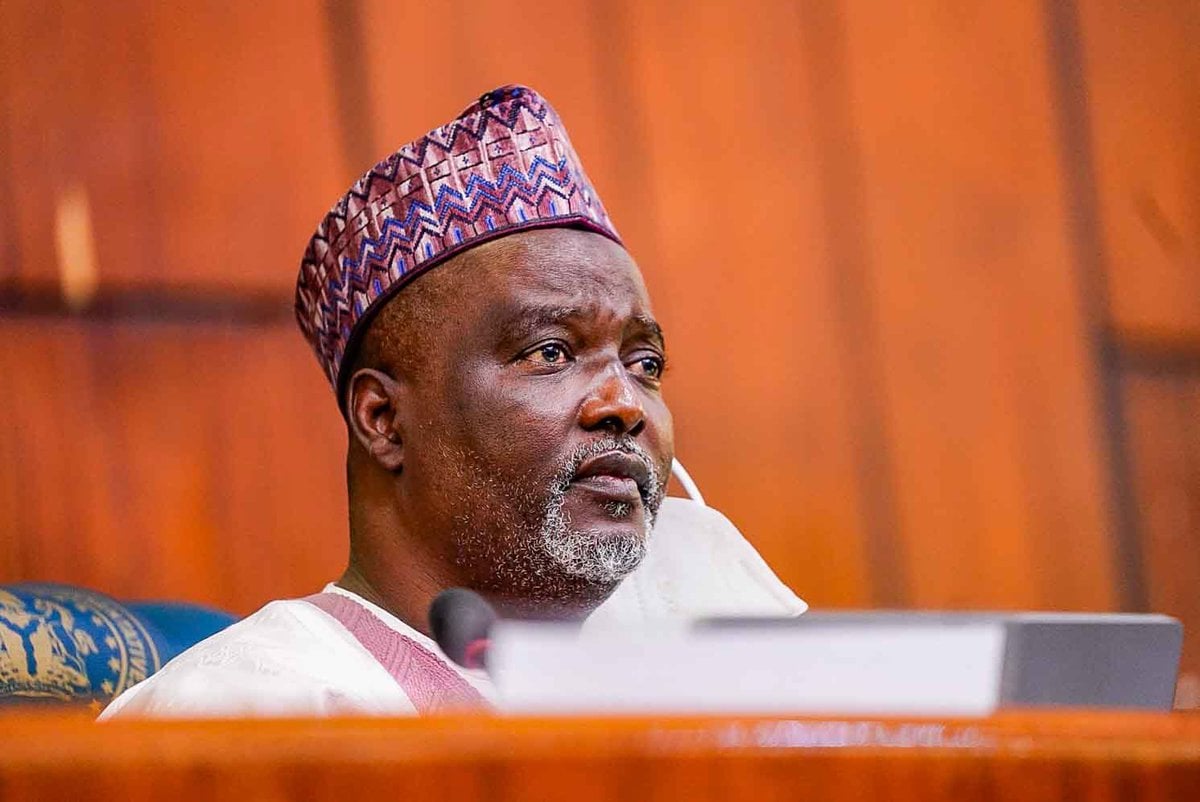
In a shocking revelation on Wednesday, Hon. Ahmed Idris-Wase, the former deputy speaker of the House of Representatives, said that people connected to Boko Haram and other criminal networks had previously been found on official recruitment lists of the Nigerian Army and Police.
Wase, who leads the North Central Caucus and represents the Wase Federal Constituency of Plateau State, stated that the infiltration of security agencies by criminal elements poses a serious threat to national stability during a special plenary session devoted to reviewing the country’s escalating security challenges.
He said that Hon. Muktar Betara, the previous chairman of the House Committee on Defense, could attest to his claim.
He claims that vulnerabilities in Nigeria’s hiring procedures have allowed dangerous people to infiltrate delicate organizations designed to protect civilians.
“The former Chairman of Defense, my brother and friend, can attest to this. The names of Boko Haram members occasionally showed up on the list during recruitment efforts. Wase told the House that among those shortlisted for the Army and Police were criminal gangs and armed robbers.
He underlined that only individuals with integrity and excellent character should be recommended for recruitment, urging lawmakers to exercise responsibility in this regard.
The North Central region is responsible for 52% of the nation’s instability, according to Wase, who said that he lost a brother, cousin, and nephew to terrorist strikes. He related a tragic request from his younger brother, who begged for assistance in leaving their unstable neighborhood.
Additionally, he called for a review of the presidential order removing police from VIP protection positions, pointing out that although the policy is praiseworthy, appropriate classification is necessary to prevent officials from being put in danger.
Speaking on behalf of the North West Caucus, Hon. Sada Soli (APC, Katsina) stated that environmental challenges, poor governance, economic disruption, and criminal activity are all contributing factors to the region’s “complex, multi-layered” security situation.
He emphasized that military solutions by themselves are insufficient and called for a comprehensive strategy that combines security operations with social, economic, and environmental changes.
“Rebuilding trust in state institutions, reforming land and livestock management, and making sure communities are active participants in finding solutions are all necessary for long-term peace,” he stated.
Hon. Muktar Betara, who represents the North East Caucus, described the area as the “epicenter of terrorism, insurgency, and recurrent communal bloodshed.”
He recalled disasters like the Baga massacre in 2015 and recent IED assaults that killed scores of people, including civilians and military personnel.
“We have enormous security challenges, but we can rebuild public confidence and stop the spread of violence with coordinated action, political will, and strategic planning,” Betara said.
Hon. Solomon Bob criticized legislators from the South South for not having the guts to take strong action against insecurity.
Since 1999, we have seen instances of poor leadership. He cautioned that misrepresenting terrorism as simple banditry would only make the situation worse. Instead of enforcing the law, governments have turned to appeasing terrorists and talking with killers.
Hon. Kafilat Ogbara, the chairperson of the House Committee on Women Affairs, bemoaned the disproportionate effects of insecurity on women and children and called the recent mass kidnappings in Papiri and Kamba a national tragedy.
“These are violations of the state’s most basic duty, to protect lives and property, not just security lapses,” she stated.