
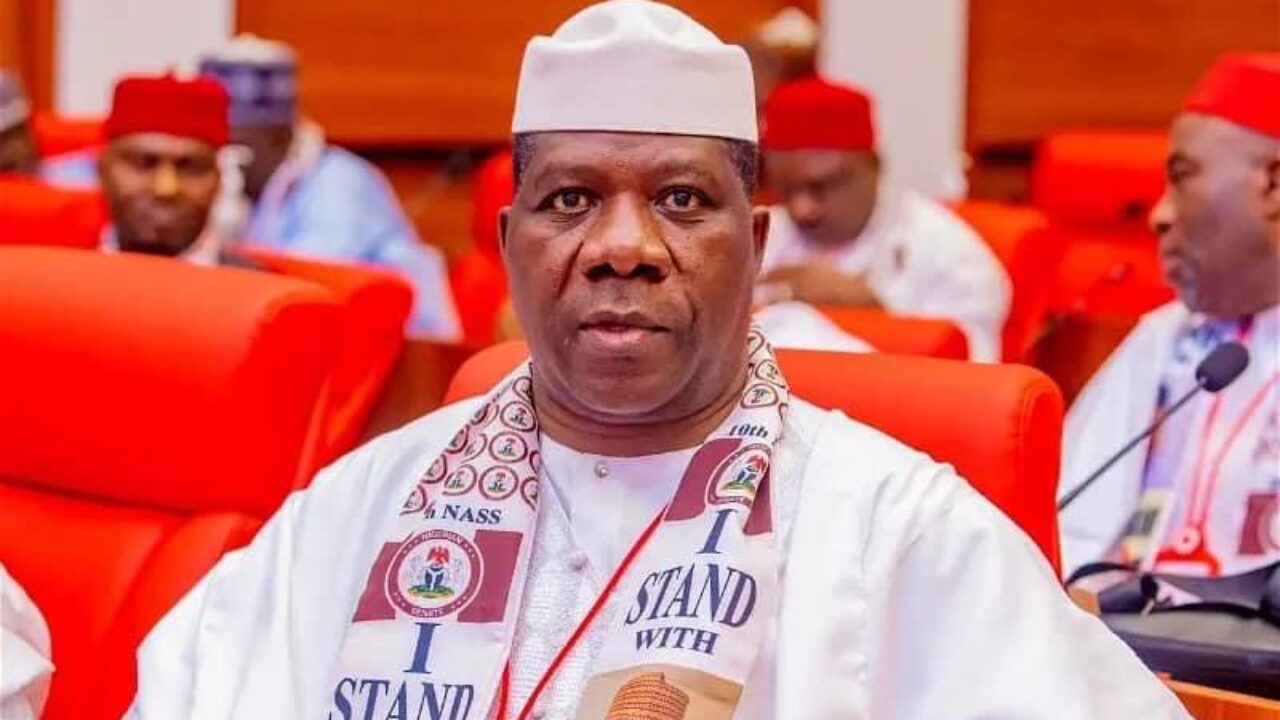
The recently passed Electoral Act, 2026 is a comprehensive framework intended to improve accountability, transparency, and institutional independence in Nigeria’s electoral system, according to the Senate, which yesterday emphasized its extensive improvements.
The highlights were revealed by Senate Leader Opeyemi Bamidele’s office’s Directorate of Media and Public Affairs in a statement.
After two years of intensive deliberations with the Office of the Attorney-General of the Federation (OAGF), civil society organizations (CSOs), development partners, and the Independent National Electoral Commission (INEC), Bamidele said the new law was finally passed.
He clarified that, in contrast to what some people have implied, the legislative process was inclusive and cooperative, incorporating the opinions of all parties involved into the final draft before sending it to President Bola Ahmed Tinubu for approval.
After what lawmakers characterized as a two-year redrafting process aimed at avoiding constitutional ambiguities ahead of the general election in 2027, Tinubu signed the Electoral Bill 2026 into law within 24 hours of its transmission.
One of the main changes, according to Bamidele, is the creation of a special fund for INEC under Section 3 of the Act, which is meant to ensure the commission’s operational stability, administrative continuity, and financial independence.
Additionally, he noted, the law requires that election funds be released at least six months before to general elections.
He emphasized that voter accreditation now requires the use of the Bimodal Voter Accreditation System (BVAS) or any other technology that INEC prescribes, as mandated by Section 47.
He added that while Section 60(6) stipulates that any presiding officer who willfully obstructs the electronic transmission of results faces a six-month jail sentence, a fine of ₦500,000, or both, Section 60(3) mandates that election results be transmitted electronically to the INEC Result Viewing Portal (IReV).
In the event of a demonstrated communication failure, he said, the Act allows for the conditional use of Form EC8A for manual transmission.
Additionally, severe penalties for election malfeasance are introduced by the statute. Resident Electoral Commissioners (RECs) are required by Section 74(1) to release certified true copies of papers within 24 hours after payment; failure to do so carries a minimum two-year prison sentence without the possibility of a fine.
According to Bamidele, “violences such vote buying, impersonation, and result manipulation now carry a maximum sentence of two years in prison or fines ranging from ₦500,000 to ₦2 million, or both, under Section 1105.
In a significant departure from the 2022 Act that was abolished, Bamidele stated that the 2026 law essentially phases out indirect primaries by allowing only direct and consensus primaries.
Political parties must issue membership cards, keep a digital register of members, and submit the register to INEC at least 21 days before to primaries, congresses, or conventions, according to Section 77, he added.
A party will not be allowed to file candidates in the impacted election if they do not comply, he stressed.
Campaign expenditure caps are also reviewed upward for all elective offices under the Act. The governorship limit was raised from ₦1 billion to ₦3 billion, and the presidential expenditure restriction was raised from ₦5 billion to ₦10 billion. Positions in local government, state assemblies, and the National Assembly were also modified.
Other noteworthy aspects, he said, include steps to improve inclusivity, like guidelines allowing gender-based queue separation in locations where cultural norms demand it and assistance mechanisms for people with visual impairments.
Nigeria’s election governance structure has been consolidated and improved, according to Bamidele, with the new election Act.
He added that the Act places a strong emphasis on INEC’s operational and financial independence, technological integration with safeguards, harsher penalties for infractions, and robust political party regulation. “The Act seeks to enhance electoral credibility, reduce disputes, and strengthen democratic governance in Nigeria,” he said.