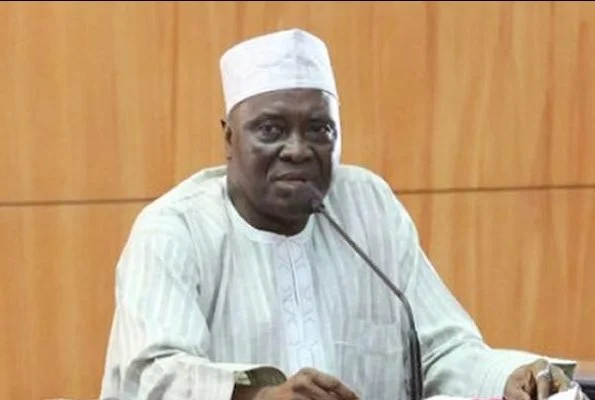
In this interview, former Inspector-General of Police Alhaji Musiliu Smith praises the federal and subnational governments’ present efforts to guarantee the establishment of state police in order to strengthen the nation’s internal security system. Folalumi Alaran provides snippets.
Please give us a brief account of your early life.
I was born on April 17, 1946, in Offin, Lagos State, into the distinguished and devout Smith family. My parents, Alhaja Abadat Eniola Smith and Alhaji Liasu Akande Smith, passed away. Education was highly valued in my household. As a result, every one of their kids has a good education. From 1952 to 1959, I went to Ansar ud Deen Primary School in Alakoro, where His Royal Majesty, Alaiyeluwa Oba Rilwan Osuolale Akiolu, the Eleko of Eko, was a classmate. We were both in the police force, and we have been together ever since.
I attended Ansar ud Deen College in Isolo from 1960 to 1964 for my secondary education. After that, I completed my “A” levels in government-sponsored tuition classes. Before being accepted to study sociology at the University of Lagos, Akoka, as one of the first students in the Department between 1967 and 1970, I temporarily worked as an accounts clerk at Lagos City Council.
After graduating, I worked briefly as an assistant secretary at the Lagos State Ministry of Works before enlisting in the Nigeria Police Force in 1972. I started out as an Assistant Superintendent of Police and worked my way up to become an Inspector General of Police (IGP) till I retired in 2002.
During my career, I had the honor of being appointed by General Abdul Salam Abubakar to serve on the Provisional Ruling Council (PRC) until 1999, when the civilian administration took over.
Despite being marked by religious and cultural discipline, my upbringing was good, methodical, memorable, and helpful. This helped to form my life into one that is integrity-based and focused.
How did you enlist in the Nigerian Police Force, and why did you do it?
I subscribed to a foreign magazine called “True Detective” while in high school and enjoyed reading newspapers, which I still do. The magazine describes how crimes are looked into, suspects are detained, and prosecutions are carried out. It was undoubtedly a major factor in my desire to join the police force, along with my passion of wearing uniforms. My parents reluctantly agreed with my decision.
I appreciate their faith in my intuition. My family and I were always trying to learn more, and one of our favorite things to do was read.
When did you tell your parents you wanted to become a police officer?
That’s exactly what I told them. Due to their education, they didn’t raise any objections. In addition, my granddad was very educated. No one prevented me. I usually tell folks to be well-prepared for whatever they wish to do.
How simple was it for you to advance in the police hierarchy, and could you manage the pressure?
I never made it up the ranks. As a graduate, I entered. I was among the first group of sociology graduates to enlist in the police. We all did a fantastic job.
During the administration of President Olusegun Obasanjo, were you the Inspector General?
Indeed, I was the IG.
You held elections at that time?
Every member of the police force, not just me, had a part to play. Everybody has a part to play. Our elections are becoming better and better, and I anticipate that these gains will continue.
What do you think about the State Police problem that several governors are currently advocating for?
If executed properly, this is a welcome development. The State Police proposal was filed by the current IG. This will strengthen our internal security, which will lead to a robust economy.
How would you rate the nation’s level of security, and how can we get over the obstacles?
Inadequate financing for security services, corruption, lack of mentorship, population growth, poverty, inflation, and a lack of vision and planning all contributed to the current state of security. It has little effect on our young people. Economic hardship is becoming more severe and the level of living is declining; this threat ought to have been addressed earlier.
Due to financial difficulty and the extravagant lives of a select few, our young people have been forced out of school and into fraud, robbery, kidnapping for ransom, banditry, and, in extreme circumstances, terrorism as a result of false indoctrination.
I believe that if we make significant, sufficient investments in the education of our young people, properly fund security services, and support the officers who work there, we can overcome instability. Businesses should be encouraged to prosper so that young people can participate in meaningful activities.
Many of us do not know who Alhaji Musiliu Smith is.
Nothing is hidden from me. I urge the younger ones to be open and honest about what they do. If you adhere to those guidelines, the possibilities are endless.
How did you manage to maintain a healthy work-life balance?
I was able to maintain a healthy work-life balance since my family was very supportive.
Your private family life, that is. When you relocated as a police officer, did you bring your family along?
Well, no. Their schooling would be hampered. Moving the entire family is not a smart decision and makes no sense, especially in this country. The danger is excessive. That is still very uncommon. Stable environments make children happier. The most crucial thing is to provide your kids with a solid education.
Oba Akiolu was a classmate of yours?
Yes, from 1952 to 1959, we were only classmates in Ansar-ud-Deen, Alakoro, elementary school.
Do you still have some of your classmates?
Waheed Kassim is a retired DIG, yet you must have heard of him outside of elementary school. Only a handful of us remain. We all attended separate schools.
What amusing childhood antics do you still recall?
We had quite severe teachers at the time, which was fortunate. Alhaji Alao Bashorun was not an instructor you encountered. He was the principal of Isolo. Between 70 and 80 percent of our teachers were graduates. Especially Bashorun, who could deal with anyone, they were quite strict. Strong leadership in schools is essential to children’s success. Good leadership will prevent students from having the chance to misbehave. May his soul rest in peace, Alhaji Alao Bashorun. We were by him until the end of his life. Do you know Nurudeen Alao, the late professor? An old pupil, he was also at Isolo.
Was there a problem between your work as a police officer and your Muslim faith?
Since we were raised in a decent Muslim home and blended both without any problems, I didn’t notice any tension.
Describe a bit about your own way of living.
I read my newspapers cover to cover; I don’t make jokes about them. When raising kids, provide them with such resources. My father was a surveyor who eventually rose to the position of Chief Surveyor, so I began reading newspapers before I was twelve. He was urged by Brigadier-General Mobolaji Johnson to assist in establishing the Lagos State Survey Department. He received newspapers every day as a senior official, and I would read them. Exposure of this kind is crucial. True Detective was even purchased with my allowance. That was useful to me in the future.
Do you still communicate with the higher-ups in the police?
Many of them are, in fact, my boys. For more than four or five years, my personal assistant was the present IG. I gave him encouragement because we are close. I will correct you if you act inappropriately. They should provide a positive example for junior cops, in my opinion.
What do you want young Nigerians to take away from your professional experience?
Make sure you take advantage of your parents’ educational opportunities. You create a serious issue for yourself if you do. You could be overtaken by younger ones. But some will give you encouragement. I have funded and assisted numerous individuals in gaining admission to universities. My family does not take schooling lightly.
I have traveled all around Nigeria, therefore I sponsor a lot of kids from both the North and the South. I am well-known around the country because of this. Some parents don’t have opportunities, and it’s not necessarily their fault.
Is Nigeria in the right place?
It’s not solely their fault that many people are not where they ought to be.
The economy can occasionally cause problems. To make things better for everyone, serious-minded people need to band together.
I’ll keep helping pupils, for my part.
Do you have a foundation? If not, how do you find students to sponsor?
It’s through the pupils I’ve previously helped. I am introduced to others by them. If they are sincere, I sponsor them after evaluating them. I’ve been doing this ever since I dropped out of high school.
What does celebrating your 80th birthday mean to you?
When a person reaches the age of forty, Allah SWT commands them in Quran 46:15 to be thankful to their parents for providing for them and to the Almighty Allah (SWT) for the blessings He has given us. They are also instructed to be nice and make an effort to act morally. Additionally, he requested that we confess our sins and seek pardon.
God’s warning has given me excellent guidance. Furthermore, I am forever grateful if I consider how many of us began this life together and are no longer with us, how many are fortunate enough to reach the heights I have, especially after traveling the all of Nigeria by road and yet being able to reach this age, four scores (20 x 4). Being alive simply indicates grace rather than being unique. I am so incredibly thankful for Allah’s boundless kindness and grace.
According to the Psalms, a person’s lifespan is three scores plus ten, or twenty times three plus ten is seventy years. As a result, anything that comes following is extra. I pray that God gives elders greater strength and wisdom, and that the grace of reaching 80 years of age is not tinged with deteriorating health and grief.
Would you like to recollect some of the difficulties you encountered and how you overcame them?
Allah (SWT) has stated in Chapter 2 of the Holy Quran that man would undoubtedly be put through hardships, poverty, and death, among other trials, in order to improve us as believers. However, He has pledged not to put responsibilities on us that we cannot handle. It went on to educate us that everything comes from Him and will return to Him, and that there will be ease after every hardship. “Inna lillahi wa inna alayhi rajiun” is so said. It also taught us that we should be patient, pray, and persevere during the challenges since relief follows every hardship.
As a result, I have indeed had my fair share of challenges in life, but as promised, I have overcome them with perseverance, fortitude, faith, and by praying to Allah for assistance.
What would you wish for if time could be turned back?
It’s not possible. On that, the Quran is quite explicit. In any case, “Which of Allah’s favor can I deny”? None! Despite my flaws, Allah SWT has been gracious and favorable to me. As a result, I offer up a lot of praise, worship, and appreciation for the mercy and grace He has given me. I wouldn’t have done anything differently. I am so appreciative of them and I treasure the grace I experienced.
What are your life’s guiding principles?
My primary guiding concept is my fear of God, which also serves as the pivot point for my obligations and human relationships. It entails upholding accountability, duty, and integrity.
For what would you like to be remembered?
Not too many items. Over the years, I’ve accomplished a lot. Elders have wisdom to impart, therefore you should heed their advice. I am an advocate for youth. I assist them if they are sincere students and have problems with school costs. I advise them to be sincere.
God is the ultimate arbiter. Nevertheless, I would like to be remembered for my commitment to duty, the good effects I had, and the lives I touched. My nice deeds, to sum up. I ask Allah (SWT) to pardon me for my transgressions after serving humanity to the fullest extent of His mercy.